

yttria stabilized zirconia beads for battery slurry milling are selected for production lines that need efficient particle-size reduction while keeping metal contamination and media wear under control. For battery materials, coatings, pigments, electronic ceramics, inks, and specialty chemicals, the correct bead specification depends on the mill, slurry, target fineness, viscosity, and acceptable contamination level.
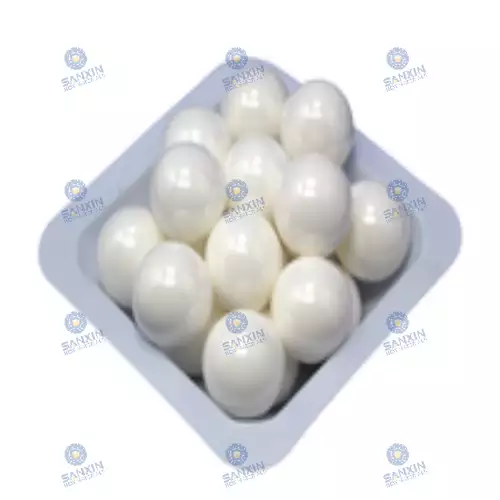
Yttria-stabilized zirconia beads combine high density, hardness, fracture resistance, and a smooth surface. Their density improves impact and shear inside bead mills, while controlled microstructure helps reduce abnormal breakage. Buyers should compare total processing cost rather than bead price alone, because wear, replacement frequency, product contamination, cleaning time, and milling speed all affect operating economics.
Start with zirconia composition and stabilizer type, then confirm bead diameter, bulk density, true density, hardness, crushing strength, roundness, surface finish, wear rate, and packaging. The useful bead-size range must match the mill separator and product feed size. A bead that is too large may reduce contact frequency, while one that is too small may overload the separator or escape from an unsuitable screen.
For sensitive formulations, ask how the supplier controls raw-material purity, sintering, polishing, magnetic separation, washing, and final inspection. Batch traceability and a consistent size distribution are important for repeat production. Request a technical data sheet and a representative sample before approving a bulk order.
Battery slurry milling requires close control of contamination, temperature, viscosity, and particle-size distribution. YSZ beads are commonly evaluated for cathode and anode materials because they provide high density and low wear. The final selection should be validated against the specific chemistry, dispersant, solids loading, and downstream quality limits.
Mill type also matters. Horizontal bead mills, basket mills, and laboratory mills can require different loading ratios and operating conditions. Share chamber volume, rotor design, separator gap, rotational speed, current media, target particle size, temperature limit, and expected throughput. This information lets the supplier recommend a practical bead diameter and trial plan.
Use the same formulation and operating conditions when comparing media. Record initial particle-size distribution, milling time, energy use, product temperature, viscosity, color or chemical change, bead loss, and final contamination. Inspect the media after the test for flattening, chipping, fragments, and unusual surface damage. A controlled trial is more useful than comparing catalog density values in isolation.
For high-viscosity material, verify that the mill can circulate the slurry without excessive pressure or temperature. Smaller beads increase contact points but can also increase hydraulic resistance. The practical choice balances energy transfer, flow, separator capability, and the target fineness.
Contamination may come from the media, mill chamber, rotor, separator, feed system, or cleaning process. Buyers should define which elements are critical and how they will be measured. For demanding products, compare samples before and after milling using the same analytical method. Low wear is valuable only when it is repeatable across production batches.
Good incoming inspection can include package condition, label and lot number, bead-size sampling, visual roundness, density checks, and a short mill trial. Keep approved reference samples when the media will be used in regulated or tightly controlled production.
Confirm net weight per bag or pail, inner liner, pallet method, moisture protection, label language, lot identification, and export marks. Heavy ceramic media needs strong packaging and careful pallet limits. For repeat orders, discuss forecast quantity, safety stock, lead time, and whether the supplier can maintain the same formulation and inspection standard.
Which composition and stabilizer are used?
What bead sizes are available and how is distribution controlled?
What wear test method supports the published value?
Which mills and separator gaps suit the recommended size?
Can a sample and batch certificate be supplied?
What packaging, MOQ, lead time, and export documents are available?
For battery slurry production, prioritize verified wear performance, stable composition, clean packaging, and a trial under actual process conditions. Confirm whether trace elements from the media could affect electrochemical performance, and agree on batch documentation before scale-up.
Send the formulation type, feed and target particle size, viscosity, mill model, separator gap, current media, contamination limit, trial quantity, and annual demand. With these details, the supplier can recommend a bead size and provide a technically meaningful quotation.

Submit your demand,
we will contact you ASAP.

Sanxin New Materials Co., Ltd. focus on producing and selling ceramic beads and parts such as grinding media, blasting beads, bearing ball, structure part, ceramic wear-resistant liners, Nanoparticles Nano Powder


 English
 English
 Russian
 French
 Spanish
 Portuguese
 Arabic