
Silicon carbide (SiC) is a high-performance advanced ceramic material that has revolutionized industrial manufacturing across multiple sectors, from semiconductor fabrication to high-temperature furnace operations. Known for its exceptional hardness, thermal stability, corrosion resistance, and mechanical strength, SiC is the material of choice for extreme environment applications where traditional metals, oxides, and even other ceramics fail.Within the SiC family, two dominant manufacturing processes produce two distinct material variants that dominate industrial use: Recrystallized Silicon Carbide (RSiC) and Reaction-Bonded Silicon Carbide (SiSiC / RBSiC). While both share the core SiC chemical composition, their production methods, microstructures, and resulting properties create unique performance profiles that make each ideal for specific use cases.This comprehensive guide will break down every critical difference between RSiC and SiSiC, including their manufacturing processes, key physical, mechanical, thermal, and chemical properties, ideal application fields, and how to select the right material for your industrial project. Whether you’re sourcing SiC components for a semiconductor furnace, a high-temperature kiln, or a corrosive industrial process, this guide will provide the technical depth and practical insights needed to make an informed decision.
The fundamental difference between RSiC and SiSiC begins with their production methods, which directly shape every aspect of their performance.
Recrystallized SiC is produced through a high-temperature sintering process that leverages the self-bonding properties of SiC powder.
Raw Material: High-purity, submicron SiC powder (typically α-SiC) with minimal impurities.
Forming: The powder is mixed with organic binders and formed into the desired shape via extrusion, isostatic pressing, or injection molding.
Sintering: The green body is fired at extremely high temperatures (>2100°C) in an inert atmosphere (argon or nitrogen). At these temperatures, the SiC particles undergo solid-state recrystallization, where smaller particles dissolve and precipitate onto larger ones, creating a strong, porous SiC-SiC bond without any additional sintering aids or binders.
Final Structure: The result is a >99% pure SiC component with a controlled open porosity (typically 15-25%) and no free silicon in the microstructure.
Reaction-bonded SiC is manufactured through a reactive infiltration process that creates a dense, composite microstructure.
Raw Material: A mixture of SiC powder, carbon (graphite or carbon black), and organic binders.
Forming: The mixture is shaped into the desired component geometry.
Reaction Infiltration: The green body is heated to 1400-1700°C in the presence of molten silicon metal. The molten silicon reacts with the carbon in the preform to form new SiC, which bonds the original SiC particles together.
Final Structure: The excess molten silicon fills the remaining pores, resulting in a dense composite material consisting of SiC particles bound by a continuous free silicon (Si) phase. The final composition is typically 80-95% SiC and 5-15% free silicon, with near-zero open porosity (<0.5%).
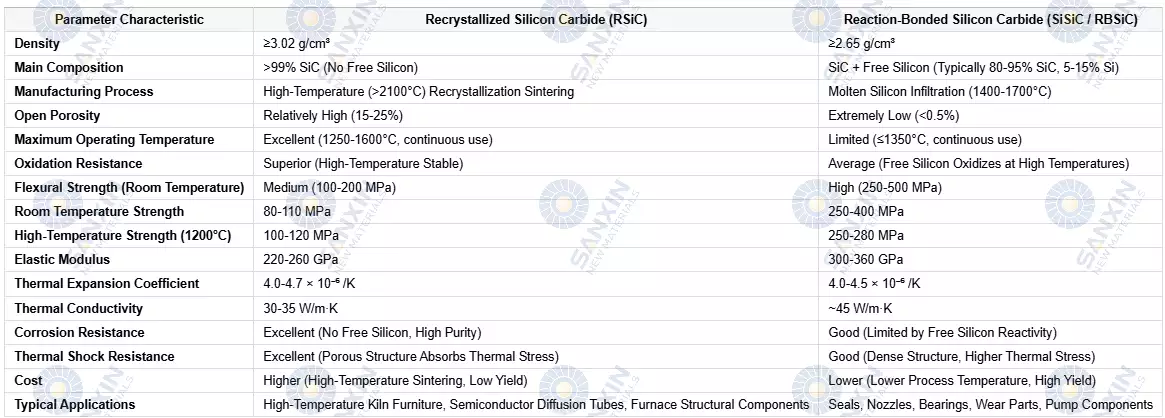
RSiC: The recrystallization process eliminates all binders, sintering aids, and free silicon, resulting in a near-100% pure SiC structure. The only impurity is the controlled open porosity, which is a deliberate feature of the material. This high purity makes RSiC ideal for applications where contamination is a critical concern, such as semiconductor manufacturing.
SiSiC: The reaction-bonding process leaves a significant amount of free silicon in the final component. While this creates a fully dense, non-porous structure, the free silicon phase introduces limitations in high-temperature and corrosive environments, as silicon is more reactive than SiC.
RSiC: The 15-25% open porosity is a defining characteristic. While it reduces the material’s density and mechanical strength, it creates a lightweight structure with exceptional thermal shock resistance, as the pores act as stress absorbers during rapid temperature changes.
SiSiC: The <0.5% open porosity makes SiSiC fully impermeable to gases and liquids, a critical requirement for sealing components, pump parts, and nozzles that must contain high-pressure fluids or corrosive chemicals.
RSiC: RSiC is the undisputed leader in high-temperature applications. With a continuous operating temperature up to 1600°C in oxidizing atmospheres, it outperforms SiSiC by 250°C or more. The absence of free silicon means RSiC does not oxidize or degrade at extreme temperatures, making it the only viable SiC material for the hottest industrial furnaces.
SiSiC: The free silicon phase limits SiSiC’s maximum operating temperature to 1350°C. Above this temperature, the free silicon begins to soften, oxidize, and volatilize, leading to permanent structural damage and performance degradation.
SiSiC: The dense, composite microstructure gives SiSiC significantly higher mechanical strength at both room and high temperatures. With a flexural strength of 250-500 MPa (2-3x higher than RSiC), SiSiC is far more resistant to impact, abrasion, and mechanical stress. This makes it the preferred material for wear parts, seals, bearings, and structural components that must withstand heavy loads.
RSiC: While RSiC has lower mechanical strength, its strength actually increases with temperature up to 1400°C, a unique property that makes it ideal for high-temperature structural applications where room-temperature strength is less critical.
Thermal Conductivity: SiSiC has a higher thermal conductivity (~45 W/m·K) than RSiC (30-35 W/m·K), making it better for applications requiring efficient heat transfer, such as heat exchangers.
Thermal Expansion: Both materials have very low, similar thermal expansion coefficients (~4 × 10⁻⁶ /K), which gives them excellent dimensional stability under temperature changes.
Thermal Shock Resistance: RSiC’s porous structure gives it superior thermal shock resistance, allowing it to survive rapid heating and cooling cycles without cracking, a critical requirement for kiln furniture and furnace components.
RSiC: The high-purity SiC structure provides exceptional corrosion resistance to almost all acids, alkalis, and molten metals. The absence of free silicon eliminates a common point of chemical attack, making RSiC ideal for semiconductor and solar manufacturing processes that require ultra-clean, corrosion-resistant materials.
SiSiC: While SiSiC has good corrosion resistance, the free silicon phase is vulnerable to attack by strong alkalis, hydrofluoric acid, and molten metals that react with silicon. This limits its use in highly corrosive environments compared to RSiC.
Both RSiC and SiSiC are used across a wide range of industrial sectors, but their unique properties make each material the optimal choice for specific applications.
RSiC’s high purity, extreme temperature resistance, and thermal shock stability make it the material of choice for high-temperature, contamination-sensitive applications:
As a high-end thermal field material for advanced lithium-ion battery manufacturing, RSiC ensures the stability of production environments. Its high purity eliminates contamination risks, while its thermal stability maintains uniform temperatures during battery cell sintering and processing, improving product yield and performance.
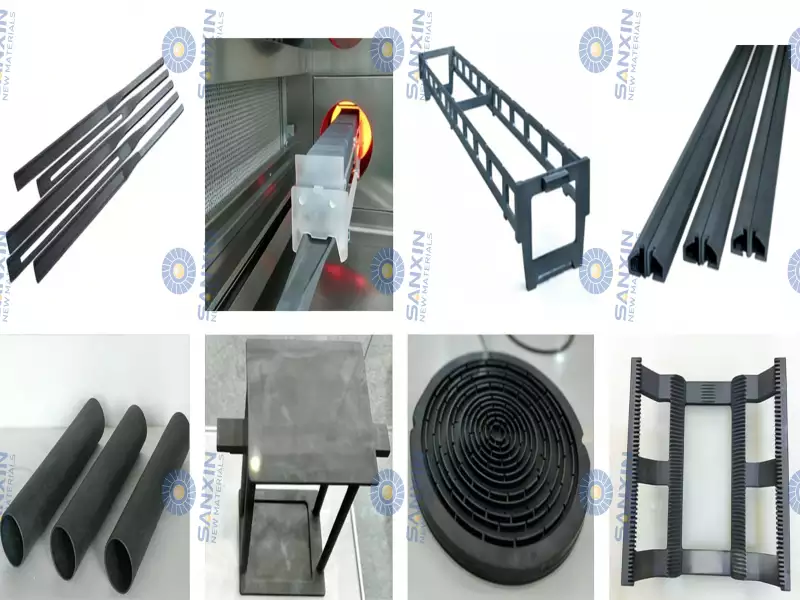
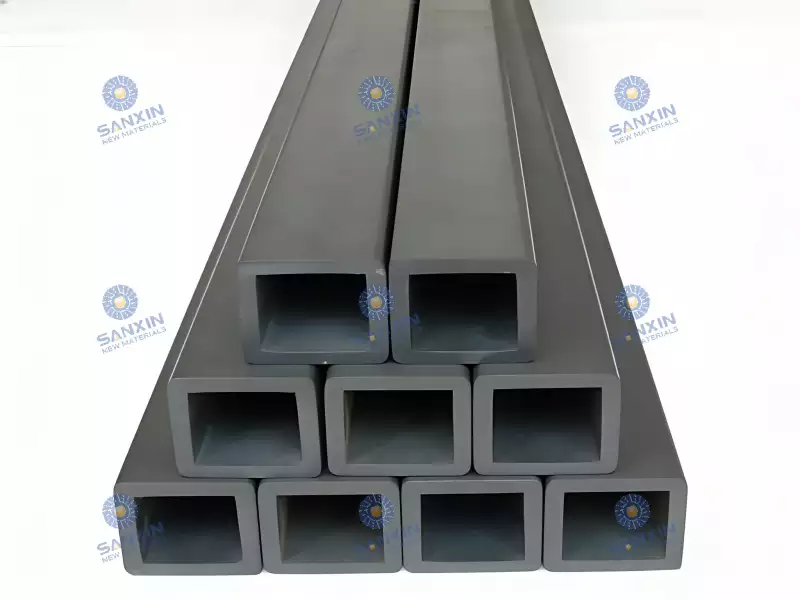
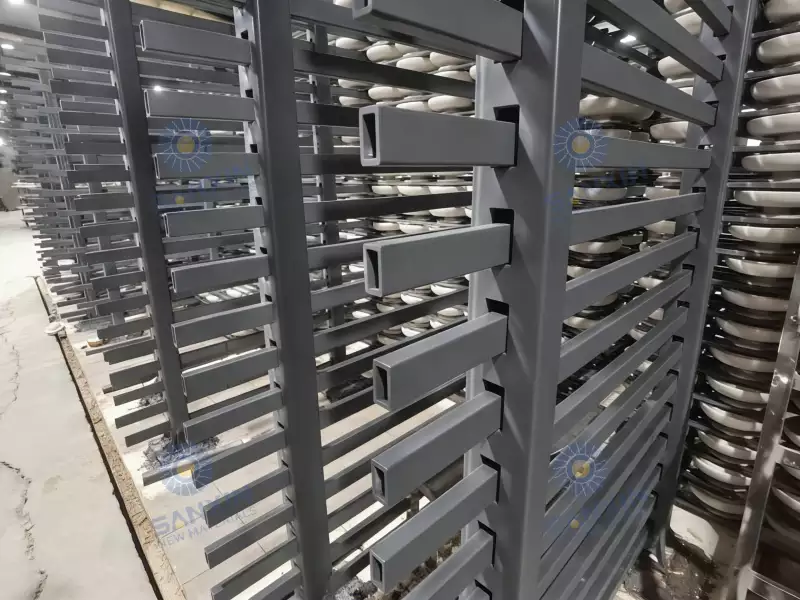
RSiC is the global standard for high-temperature kiln furniture, including setters, rollers, beams, and support structures for ceramic, powder metallurgy, and refractory manufacturing. Its high-temperature load-bearing capacity, thermal shock resistance, and long service life (up to 10x longer than traditional refractory materials) reduce downtime and operating costs for industrial furnaces operating at 1200-1600°C.
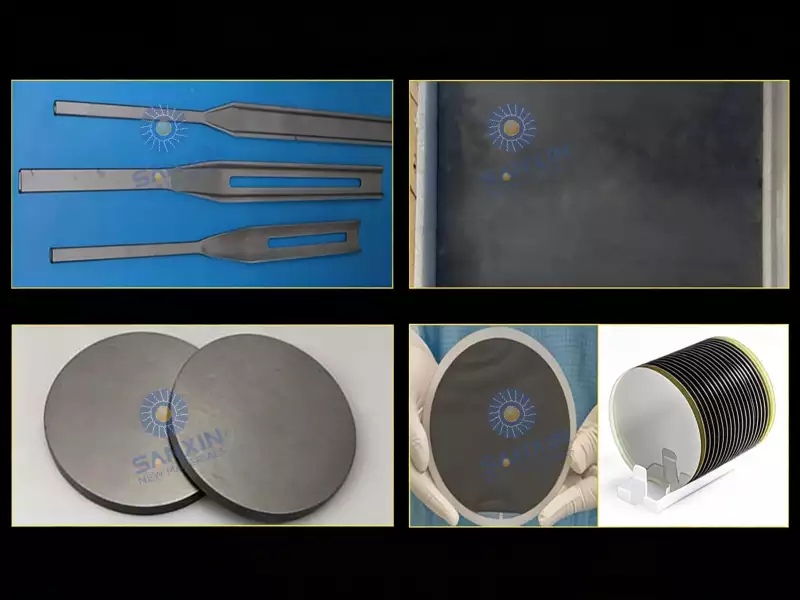
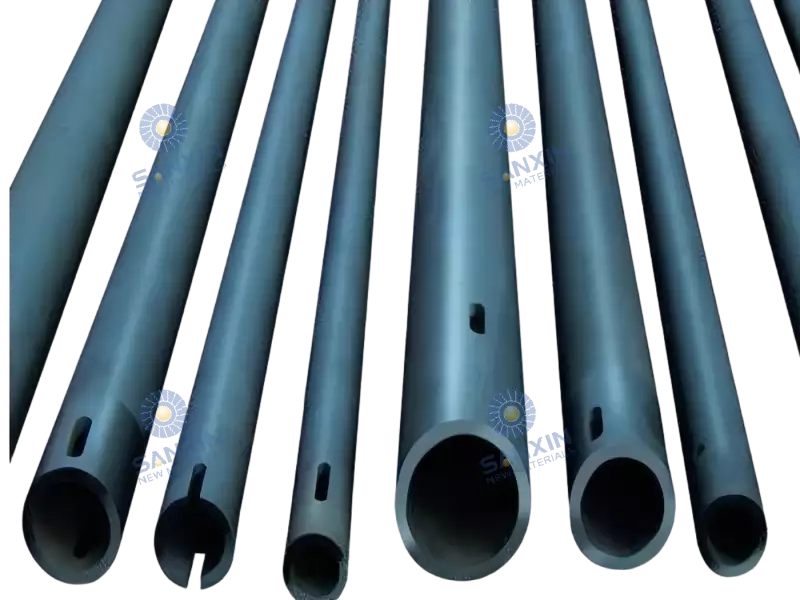
RSiC’s ultra-high purity and chemical stability make it an essential material for semiconductor wafer processing. It is used for diffusion furnace tubes, wafer carriers, boat racks, and other critical components in ion implantation, oxidation, and annealing processes. The absence of free silicon prevents contamination of silicon wafers, ensuring the performance and reliability of microchips.
RSiC’s high-temperature resistance and corrosion resistance make it a key component in polysilicon production and solar cell manufacturing. It is used for crucibles, thermal insulation components, and furnace parts in the Siemens process for polysilicon purification, where it withstands extreme temperatures and corrosive chlorosilane gases.
RSiC is used for furnace linings, burner nozzles, heat exchangers, and thermocouple protection tubes in a wide range of industrial furnaces, including steel annealing furnaces, glass melting furnaces, and ceramic sintering furnaces. Its ability to operate continuously at 1600°C in oxidizing atmospheres makes it irreplaceable for the most demanding high-temperature processes.
SiSiC’s high mechanical strength, low porosity, and wear resistance make it the preferred material for mechanical, sealing, and wear applications:
SiSiC is the global standard for mechanical seal faces in centrifugal pumps, mixers, and agitators used in chemical, oil and gas, and water treatment industries. Its high hardness, wear resistance, and low porosity create a perfect sealing surface that can withstand high pressures, corrosive fluids, and abrasive slurries, reducing leakage and extending service life.
SiSiC nozzles are used in a wide range of industrial processes, including sandblasting, descaling, and chemical spraying. Their exceptional wear resistance and dimensional stability ensure consistent flow rates and long service life, even in highly abrasive environments.
SiSiC bearings and bushings are used in high-speed, high-temperature, and corrosive applications where traditional metal bearings fail. Their low friction, high hardness, and corrosion resistance make them ideal for pumps, compressors, and other rotating equipment in chemical processing and aerospace applications.
SiSiC is used for a wide range of wear parts, including cyclone liners, chute liners, and grinding media, in mining, mineral processing, and cement manufacturing. Its extreme hardness (9 on the Mohs scale, second only to diamond) provides exceptional abrasion resistance, reducing maintenance costs and equipment downtime.
SiSiC’s high thermal conductivity and corrosion resistance make it ideal for heat exchangers used in chemical processing, power generation, and waste heat recovery systems. Its ability to transfer heat efficiently while withstanding corrosive fluids and high temperatures improves energy efficiency and system reliability.
Selecting the right SiC material for your application requires a systematic evaluation of your operating conditions and performance requirements. Use this guide to make the optimal choice:
Your application requires continuous operation at temperatures above 1350°C (up to 1600°C).
Contamination is a critical concern (e.g., semiconductor, solar, lithium battery manufacturing).
You need exceptional thermal shock resistance for rapid heating/cooling cycles.
The component is exposed to highly corrosive chemicals or molten metals that attack free silicon.
The primary load is high-temperature structural support, not room-temperature mechanical impact.
Your application requires high mechanical strength, wear resistance, and impact resistance at room or moderate temperatures.
You need a fully dense, non-porous component for sealing, fluid containment, or pressure applications.
The component is used in mechanical systems (pumps, seals, bearings) that require high hardness and low friction.
Cost is a primary concern, as SiSiC has a lower manufacturing cost and higher yield than RSiC.
The operating temperature is below 1350°C, and high-temperature oxidation resistance is not a critical requirement.
Extreme high-temperature performance (up to 1600°C continuous use)
Ultra-high purity with no free silicon, eliminating contamination risks
Exceptional thermal shock resistance for rapid temperature cycles
Superior corrosion resistance to almost all chemicals and molten metals
Strength increases with temperature up to 1400°C
Lower mechanical strength compared to SiSiC
Higher manufacturing cost due to high-temperature sintering
Open porosity makes it unsuitable for sealing or fluid containment applications
Lower thermal conductivity than SiSiC
High mechanical strength and wear resistance (2-3x stronger than RSiC)
Fully dense, non-porous structure ideal for sealing and pressure applications
Higher thermal conductivity for efficient heat transfer
Lower manufacturing cost and higher production yield
Excellent dimensional stability and precision machining
Limited high-temperature performance (max 1350°C continuous use)
Free silicon phase reduces corrosion resistance and oxidation stability
Lower thermal shock resistance than RSiC
Contamination risk from free silicon in semiconductor applications
The global demand for advanced SiC ceramics is growing rapidly, driven by the expansion of high-temperature industrial processes, semiconductor manufacturing, and renewable energy technologies. Key trends shaping the future of RSiC and SiSiC include:
Semiconductor Industry Growth: The global semiconductor boom is driving massive demand for high-purity RSiC components for wafer processing, as 5G, AI, and electric vehicle (EV) microchips require increasingly advanced manufacturing environments.
EV and Energy Transition: The rise of electric vehicles and renewable energy is increasing demand for SiC power semiconductors, which rely on high-purity SiC substrates and components. RSiC is used in the manufacturing of SiC wafers, while SiSiC is used in thermal management components for EV batteries and charging systems.
High-Temperature Industrial Furnace Efficiency: Manufacturers are increasingly replacing traditional refractory materials with RSiC kiln furniture to improve energy efficiency, reduce downtime, and lower operating costs.
Advanced Manufacturing Processes: New manufacturing technologies, such as 3D printing of SiC ceramics, are expanding the design possibilities for both RSiC and SiSiC components, enabling complex geometries that were previously impossible to produce.
Material Optimization: Ongoing R&D is focused on improving the performance of both materials, including reducing porosity in RSiC and eliminating free silicon in SiSiC to create new hybrid SiC materials that combine the best properties of both variants.
Recrystallized Silicon Carbide (RSiC) and Reaction-Bonded Silicon Carbide (SiSiC) are two exceptional advanced ceramic materials that are essential to modern industrial manufacturing. While both are based on silicon carbide, their unique manufacturing processes and microstructures create distinct performance profiles that make each ideal for specific applications.
RSiC is the material of choice for extreme high-temperature, high-purity, and thermal shock applications, including semiconductor manufacturing, kiln furniture, and solar polysilicon production.
SiSiC is the preferred material for high-strength, wear-resistant, and sealing applications, including mechanical seals, pump components, nozzles, and wear parts.
By understanding the key differences in their properties, applications, and performance, you can select the right SiC material for your project, ensuring optimal performance, reliability, and cost-effectiveness. Whether you need a high-temperature furnace component or a high-wear mechanical seal, SiC ceramics provide the performance and durability required for the most demanding industrial environments.
A: While SiSiC has good properties, its free silicon phase makes it unsuitable for direct wafer contact in semiconductor manufacturing, where contamination is a critical concern. RSiC is the standard material for semiconductor furnace components.
A: RSiC is the clear choice for kiln furniture, as its high-temperature resistance, thermal shock stability, and long service life make it far more durable than SiSiC in high-temperature furnace environments.
A: Yes, RSiC is typically more expensive than SiSiC due to its high-temperature sintering process, lower production yield, and higher raw material purity.
A: SiSiC can be used in oxidizing atmospheres up to 1350°C, but above this temperature, the free silicon phase will oxidize, leading to component degradation. RSiC is recommended for temperatures above 1350°C.
A: SiSiC has significantly better wear resistance than RSiC, due to its higher density, hardness, and mechanical strength, making it ideal for wear parts and seals.

Submit your demand,
we will contact you ASAP.

Sanxin New Materials Co., Ltd. focus on producing and selling ceramic beads and parts such as grinding media, blasting beads, bearing ball, structure part, ceramic wear-resistant liners, Nanoparticles Nano Powder


 English
 English
 Russian
 French
 Spanish
 Portuguese
 Arabic