

Modern bulk cargo port terminals undertake massive throughput of coal, iron ore, mineral pellets, grain and other granular bulk commodities. Berth receiving hoppers, bucket‑wheel machinery, belt transfer stations and ship‑unloader facilities operate around‑the‑clock under harsh open‑air marine conditions. Bulk mineral cargo brings combined damage mechanisms: high‑energy free‑fall particle impact, continuous sliding abrasion from high‑hardness ore lumps, salt‑fog coastal corrosion, and cyclic temperature and humidity changes. Traditional carbon steel and manganese steel hopper liners suffer rapid wall thinning, local gouging deformation, perforation and material leakage after short‑term operation. Frequent shutdown for liner replacement cuts down port throughput, raises spare‑part expenditure and creates safety risks during high‑altitude maintenance work on large port machinery.For bulk port operators, unplanned downtime caused by worn hoppers and conveyor components directly reduces annual cargo handling volume. Many terminals report that conventional steel hopper inner plates need overhaul every 3‑8 months. Material spillage from worn‑through hoppers also increases site cleaning workload and environmental pollution risks. As a proven heavy‑duty anti‑abrasion solution, wear‑resistant ceramic parts adopt high‑purity alumina and toughened ZTA ceramic materials. These components deliver Mohs‑9 hardness, excellent salt‑atmosphere corrosion resistance and balanced impact‑resistant performance. Field‑proven in multiple seaport renovation projects, properly‑installed ceramic lining can extend port hopper and conveyor‑component service life by 7‑12 times compared with original steel liners, greatly lowering maintenance frequency and overall operational expenditure. This SEO article elaborates full‑scene application scope of wear‑resistant ceramic lining in bulk‑cargo port terminals, analyzes working‑condition pain‑points of each core equipment, and delivers practical technical references for port equipment‑management teams planning anti‑wear retrofits.
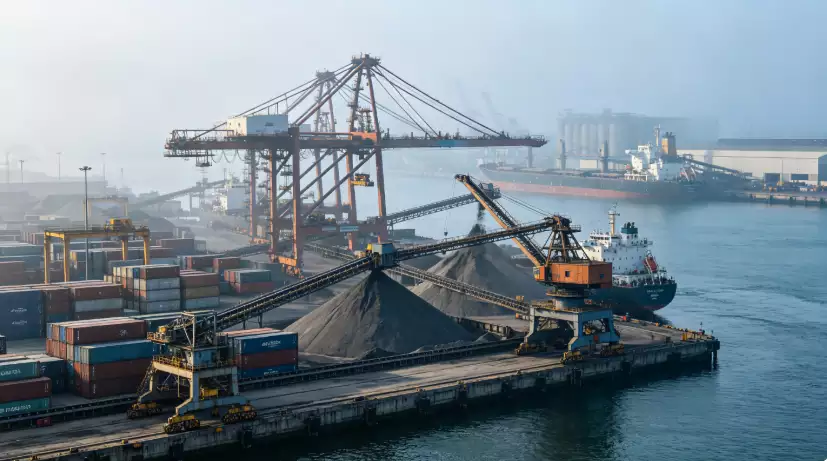
Port working environments differ significantly from inland mineral‑processing workshops. Equipment must cope with heavy lump‑ore impact, coastal salt‑fog corrosion, alternating hot‑cold open‑air climate, and 24‑hour non‑stop bulk‑material circulation. Port‑specialized wear‑resistant ceramic composite products are developed to match these complex multi‑factor service conditions.First, superior composite anti‑abrasion and moderate impact‑bearing capacity. For port hoppers receiving large falling ore lumps, toughened ZTA‑series ceramic tiles and ceramic‑rubber‑steel three‑in‑one composite liners absorb partial impact energy, avoiding brittle tile spalling under heavy lump‑material striking. Second, marine‑environment corrosion resistance. Dense ceramic material will not be eroded by coastal salt mist, solving the aging‑corrosion problem that troubles ordinary steel and rubber accessories at dock terminals. Third, low‑adhesion smooth surface. Compact ceramic working surface reduces sticking of damp ore, coal and sticky bulk cargo, minimizing material bridging and blockage inside hopper cavities and cutting manual cleaning workload.Fourth, diversified installation forms adapt to large port‑machinery structures. Mosaic bonded ceramic tiles, bolt‑fastened ceramic‑steel composite plates and vulcanized ceramic‑rubber assemblies can be selected for berth hoppers, bucket‑wheel equipment, transfer‑station structures and conveyor drums respectively.Custom‑manufactured wear‑resistant ceramic parts can be tailor‑made according to on‑site equipment dimension drawings, realizing full‑coverage protection for irregular curved surfaces and complex‑shaped hopper inner chambers. Fifth, convenient partial‑repair property. When local individual tiles suffer accidental damage, maintenance crews only replace damaged segments instead of the whole liner set, shortening time‑cost for port equipment routine overhaul.
Various fixed receiving hoppers constitute the core material‑reception infrastructure of bulk‑cargo ports. These stationary hopper facilities undertake initial receiving, buffering and diversion of bulk cargo unloaded from ships or bucket‑wheel machines. Material free‑fall generates concentrated impact and sliding scouring on hopper bottom plates, side‑walls and cone transition zones. Wear‑resistant ceramic lining is widely applied for berth fixed hoppers, bucket‑wheel fixed hoppers and belt‑conveyor transfer‑station fixed hoppers.
Berth fixed hoppers are located at dockside berth positions, directly accepting bulk cargo discharged by ship‑unloader grab buckets. Material drop height is large; lump coal and iron ore produce violent concentrated impact onto hopper bottom impact zones. Original manganese‑steel hopper bottom plates are gouged and worn rapidly, and local perforation often occurs within half‑a‑year of high‑intensity operation, leading to massive cargo leakage and dock‑site dust pollution. If the hopper inner wall deforms due to wear, material flow trajectory will shift, further triggering downstream belt‑conveyor deviation problems.For berth fixed‑hopper renovation, engineering teams usually lay toughened ceramic‑rubber‑steel composite liners on high‑stress impact zones such as bottom‑plate receiving areas, while adopting mosaic alumina ceramic tiles for side‑wall sliding‑wear sections. Composite structures buffer lump‑ore striking force and prevent ceramic tile cracking under heavy‑impact working‑conditions. After ceramic‑lining upgrade, berth hoppers maintain complete inner‑wall geometry for a long time, reduce cargo spill‑over failures, and stabilize subsequent material‑feeding flow toward belt‑conveyor systems.
Bucket‑wheel stacker‑reclaimer fixed hoppers serve as intermediate buffer equipment for stock‑yard material stacking and reclaiming. During continuous stock‑yard operation, bulk ore and coal fall into fixed hoppers from bucket‑wheel machines, creating cyclic alternating impact and sliding friction on hopper inner walls. In practical port‑stock‑yard operation, fine‑particle damp cargo tends to adhere to steel hopper inner surfaces, forming material buildup and bridging blockage which require regular shutdown cleaning work.Pasting high‑density wear‑resistant ceramic composite tiles over bucket‑wheel fixed‑hopper inner chambers brings two‑fold benefits. On the one hand, high‑hardness ceramic resists cyclic particle abrasion and extends liner service cycle. On the other hand, smooth non‑stick ceramic surface greatly reduces damp‑cargo adhesion probability, lowering the frequency of manual hopper‑cleaning operations and improving stock‑yard machinery effective operating time. For port stock‑yard anti‑wear‑upgrade solutions, complete‑set components are available via port‑stockyard dedicated wear‑resistant ceramic parts.
Belt‑conveyor transfer‑station fixed hoppers connect multi‑stage belt‑conveyor lines inside port terminals, realizing material direction change and cross‑elevation transfer. At transfer stations, bulk material falls from upper‑level belts into hoppers before feeding onto downstream belts. Hopper impact‑receiving plates, diversion baffles and cone discharge sections are severely worn by continuous material scouring. Once the steel‑plate liner wears thin and deforms, material flow‑pattern becomes disordered, easily triggering belt deviation, material overflow and dust emission inside transfer‑station buildings.Wear‑resistant ceramic liners provide full‑coverage protection for transfer‑station fixed‑hopper impact plates, diversion baffles and cone‑shaped discharge sections. Bolt‑on ceramic‑steel composite plates are preferred for transfer‑station hopper flat surfaces for convenient on‑site installation during port‑maintenance‑window periods. After retrofitting, transfer‑station hoppers keep stable material‑diversion performance, decrease belt‑fault rate, and improve the continuous conveying capacity of the whole port bulk‑material transportation network.
Ship‑unloader hoppers are key core components of port ship‑unloading machinery. Grab buckets drop large‑volume bulk cargo into unloader receiving hoppers at considerable drop heights. Hopper bottom plates and front baffle plates bear the strongest instantaneous particle impact across the whole port equipment system. Traditional steel‑plate liners of ship‑unloader hoppers suffer frequent gouging, denting and local penetration. Ship‑unloader machinery must stop working for liner replacement, which directly lowers ship‑unloading efficiency and extends vessel‑berthing‑time, bringing extra berthing‑fee costs for port enterprises.Ship‑unloader hoppers combine heavy lump‑impact and sliding‑abrasion working‑conditions, so simple pure‑alumina ceramic tiles are not suitable for direct use on main impact zones. Industry‑standard practice adopts ZTA toughened ceramic‑rubber‑steel three‑in‑one composite liners for bottom‑plate grab‑material impact‑receiving zones; common high‑alumina mosaic ceramic tiles are applied for side‑wall and chute sections which mainly suffer sliding friction. The rubber intermediate layer absorbs heavy‑ore impact energy and effectively avoids ceramic tile chipping and spalling. Custom‑shaped ceramic wear‑resistant components can perfectly match complex inner‑chamber contours of different‑model ship‑unloader hoppers, maintaining smooth material‑flow channel geometry. Reliable anti‑wear components for ship‑unloader hopper renovation can be sourced at wear‑resistant ceramic parts for port ship‑unloader equipment.
Belt conveyors form the main arterial network for bulk‑cargo transportation inside port terminals. Conveyor driving and return drums are vital power‑transmission components. In port open‑air operating environments, mineral dust, fine‑ore particles and seawater mist penetrate between conveyor‑belt and drum shell surfaces. Metal‑shell drums without anti‑wear protection will gradually wear, and friction coefficient decreases, which leads to belt slippage, belt deviation, accelerated belt aging and even safety‑accident risks. Traditional pure‑rubber drum lagging wears rapidly under mixed ore‑dust abrasion and moist marine atmosphere, requiring frequent re‑lagging maintenance work.Ceramic drum rubber coating is a mature composite anti‑wear and anti‑slip solution specially designed for heavy‑duty port conveyor drums. This product is composed of high‑elasticity rubber substrate with embedded hard‑alumina ceramic particles. Exposed ceramic particles greatly raise friction coefficient between drum and conveyor belt, effectively eliminating belt‑slippage and deviation failures. Meanwhile, embedded ceramic particles resist abrasive damage caused by mineral dust, fully protecting the metal drum base‑material from wear and corrosion under coastal salt‑fog conditions. It not only extends drum overhaul cycles, but also significantly prolongs expensive steel‑cord conveyor‑belt service life, lowering long‑term spare‑part consumption of port conveyor‑systems. For port‑conveyor‑system anti‑wear upgrading projects, high‑quality ceramic drum‑rubber‑coating products are available from port‑conveyor‑specialized ceramic wear‑resistant parts.
Deploying wear‑resistant ceramic lining on port fixed hoppers, ship‑unloader hoppers and conveyor‑drum facilities delivers multi‑dimensional operational and economic value for seaport enterprises.First, greatly extend equipment service life and cut maintenance shutdown frequency. Ceramic‑lined hopper and conveyor‑drum assemblies achieve service‑life several‑fold longer than traditional steel and rubber components. Fewer overhaul‑shutdown events mean higher annual port cargo‑throughput capacity and shorter ship‑berthing waiting‑time for calling vessels.Second, reduce material‑spillage and site‑cleaning workload. Intact ceramic‑protected hopper inner walls avoid cargo leakage caused by steel‑plate perforation, lower dust‑pollution risk inside terminal areas, and ease environmental‑protection‑management pressure for port operators.Third, stabilize bulk‑material conveying performance. Ceramic‑lining preserves original hopper and transfer‑station structural dimensions, ensuring stable material‑flow trajectory, reducing belt‑conveyor deviation and blockage‑related failures, improving overall continuity of port bulk‑cargo handling workflow.Fourth, optimize total‑cost‑of‑ownership. Although one‑time procurement investment for ceramic composite parts is higher than ordinary steel plates, ports can save large sums on spare‑part purchases, high‑altitude‑maintenance labor costs, vessel‑berthing‑fee losses and throughput‑reduction losses caused by equipment shutdown. Most bulk‑port renovation projects show obvious return‑on‑investment within 1‑2 years after ceramic‑lining retrofits.Fifth, improve on‑site operation‑safety. Reducing high‑altitude hopper‑liner replacement work lowers safety‑accident risks for maintenance personnel working on large port machinery.
Global bulk‑cargo seaports keep pursuing higher throughput, longer equipment‑service‑cycles and lower‑cost intelligent operation. Under the trend of increasing single‑ship‑loading capacity and rising port‑cargo‑handling intensity, traditional steel‑based anti‑wear components can hardly satisfy modern terminal operational requirements. Wear‑resistant ceramic‑composite anti‑abrasion technology has been widely verified in numerous domestic and international port renovation projects. It realizes targeted anti‑wear protection for berth fixed hoppers, bucket‑wheel fixed hoppers, belt‑transfer‑station fixed hoppers, ship‑unloader hoppers and ceramic‑drum‑rubber‑coating conveyor‑drums, solving major industry pain‑points such as rapid‑wear, frequent‑shutdown and material‑spillage for bulk‑cargo‑port material‑receiving and conveying equipment.Not all ceramic products fit every port‑working‑condition. Port engineering teams need to distinguish impact‑dominated zones and sliding‑abrasion‑dominated zones, select matching toughened‑ceramic, mosaic‑tile or ceramic‑rubber‑steel composite structures according to actual drop‑height, lump‑size and coastal‑environment factors. When properly material‑matched and professionally installed, wear‑resistant ceramic parts bring prominent comprehensive‑benefits for port terminals: extended component‑lifespan, reduced maintenance workload, stabilized cargo‑handling‑efficiency and lowered full‑life‑cycle operational‑costs. As a cost‑effective mature anti‑wear solution, ceramic composite lining will gain further promotion and application in more new‑built and upgraded bulk‑cargo port terminals around the world.

Submit your demand,
we will contact you ASAP.

Sanxin New Materials Co., Ltd. focus on producing and selling ceramic beads and parts such as grinding media, blasting beads, bearing ball, structure part, ceramic wear-resistant liners, Nanoparticles Nano Powder


 English
 English
 Russian
 French
 Spanish
 Portuguese
 Arabic