

Heavy‑industry sectors including mining, thermal power generation, cement production, metallurgy, chemical processing and bulk‑cargo port terminals are constantly challenged by severe equipment wear problems. Conveying pipelines, material chutes, silo hoppers, fan housings, cyclone inner walls and expansion joints operate under combined destructive conditions: high‑speed particle scouring, heavy lump‑material impact, abrasive slurry erosion, temperature cycling and medium corrosion. Traditional carbon steel, alloy steel and ordinary rubber liners can hardly satisfy long‑cycle continuous production requirements. Steel components wear thin quickly, develop gouging deformation or local perforation; rubber accessories suffer aging and delamination under high‑temperature or wet environments. Frequent shutdown for inspection, patching and component replacement brings huge losses in throughput, labor expense and spare‑part procurement for plant operators.In order to resolve universal industrial wear‑related pain‑points, Sanxin New Materials has developed a complete portfolio of wear‑resistant ceramic parts covering pure ceramic components and multi‑layer composite ceramic liners. The product range includes adhesive‑bonded ceramic‑lined pipes, sulfurized ceramic pipes, integral ceramic pipes, ceramic‑lined sleeve expansion joints, bolt‑weld ceramic liners, 2‑in‑1 ceramic‑steel liners, 2‑in‑1 ceramic‑rubber liners, 3‑in‑1 ceramic‑rubber‑steel liners and SHS‑self‑propagating ceramic‑steel pipes. These product series adopt high‑purity alumina corundum ceramic as core wear‑resistant layer, matched with rubber buffer layer and steel backing layer according to different working‑condition requirements. Customers can find full‑range technical solutions via wear‑resistant ceramic parts for diverse sliding‑abrasion, impact‑abrasion and corrosive‑slurry application scenarios.This article systematically introduces product structures, core performance characteristics, applicable working‑conditions and cross‑industry practical applications of Sanxin New Materials’ full‑line ceramic wear‑resistant components. It also delivers practical guidance for equipment engineers on product‑selection principles, installation notes and total‑cost‑of‑ownership evaluation, providing valuable reference for anti‑wear renovation and new‑project specification work across multiple heavy‑industry verticals.
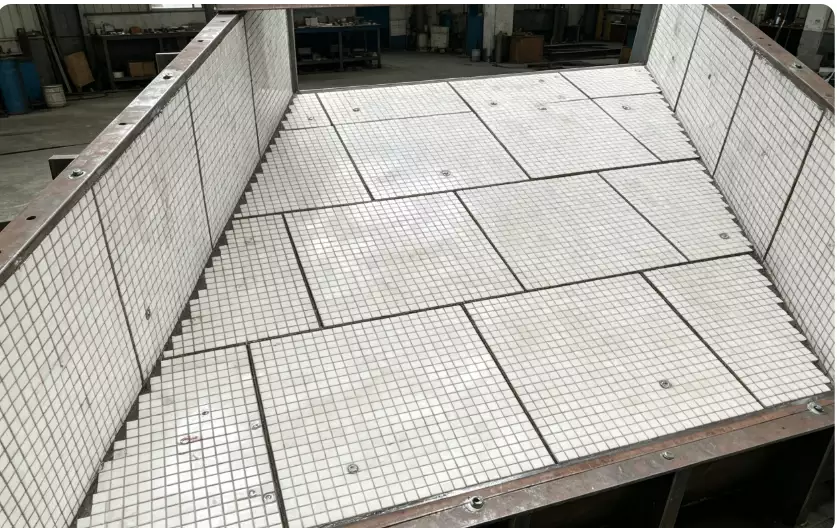
Sanxin New Materials divides its wear‑resistant ceramic‑component portfolio into two major categories: monolithic ceramic‑lined pipeline fittings and composite ceramic liner panels. Different manufacturing processes including adhesive pasting, high‑temperature vulcanization, bolt‑weld fastening and SHS self‑propagating high‑temperature synthesis determine product mechanical performance, impact‑bearing capacity and suitable operating environments. Correct understanding of structural differences is the precondition for proper model‑selection for field projects.
Ceramic‑lined piping products are widely deployed for pneumatic conveying and slurry‑transport loops. Adhesive ceramic‑lining pipes adopt mosaic alumina ceramic tiles pasted onto inner steel‑pipe surface with high‑strength inorganic adhesive. This solution is cost‑effective for medium‑abrasion, low‑impact working‑conditions. Sulfurized ceramic pipes embed ceramic blocks inside vulcanized rubber matrix to obtain moderate shock‑absorbing capability. Integral ceramic pipes are manufactured from one‑piece sintered alumina ceramic sleeves fitted within outer steel housings, delivering ultra‑smooth inner surface and excellent corrosion‑resistance, ideal for fine‑particle slurry with limited heavy lump impact.Ceramic‑lined sleeve expansion joints are special‑purpose compensating components. The inner flow‑contact surface is fully protected by ceramic lining while the outer metal bellows absorbs thermal displacement and mechanical vibration from piping networks. They solve the contradiction between pipeline thermal‑compensation function and severe inner‑wall abrasion, frequently used for pulverized‑coal pipes, ash‑slag pipelines and desulfurization slurry lines. SHS‑self‑propagating ceramic‑steel pipes utilize self‑propagating high‑temperature synthesis chemical reaction to generate dense alumina ceramic inner layer metallurgically bonded with steel substrate. The metallurgical bonding interface delivers extremely high peel‑off resistance, suitable for high‑temperature, strong‑scouring pipeline sections where adhesive‑bonded tiles tend to fall off.
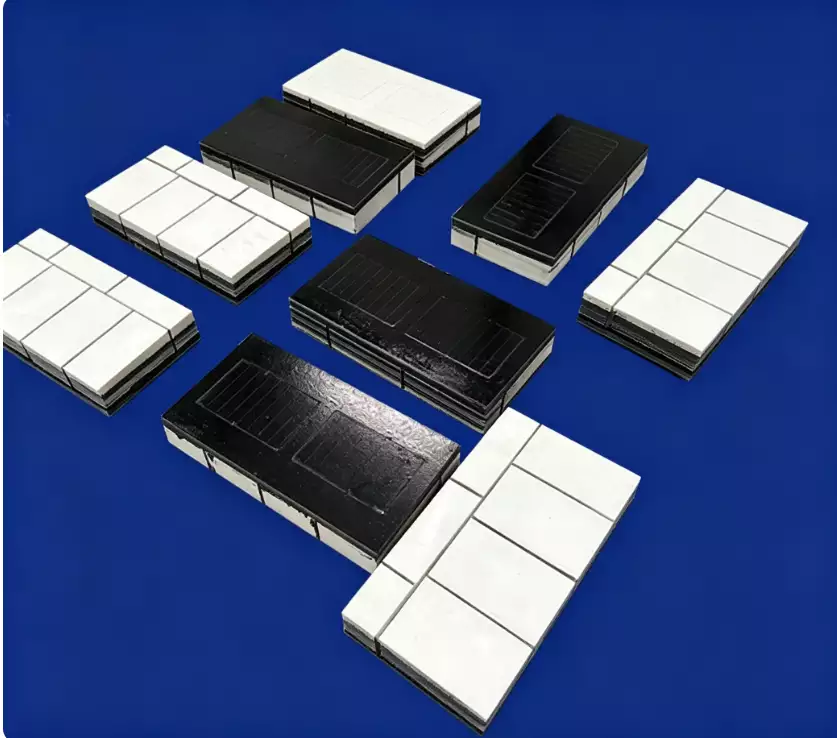
For flat‑surface and curved‑surface protection on hoppers, chutes, transfer‑station baffles, separator casings and fan housings, Sanxin New Materials supplies multiple composite liner options. Bolt‑weld ceramic liners are pre‑fabricated ceramic tiles with reserved bolt holes for direct welding or bolting onto steel equipment substrates, convenient for partial‑replacement maintenance.2‑in‑1 composite liners contain two sub‑types: ceramic‑steel 2‑in‑1 liners (corundum ceramic layer bonded directly to special‑steel backing plates with ceramic adhesive), and ceramic‑rubber 2‑in‑1 liners (corundum ceramic vulcanized into special‑rubber substrate without steel baseplate). Ceramic‑steel 2‑in‑1 liners feature high structural rigidity for flat equipment surfaces with mainly sliding abrasion; ceramic‑rubber 2‑in‑1 liners provide prominent shock‑absorbing performance for medium‑impact locations without requirement for rigid steel backing.The flagship 3‑in‑1 ceramic‑rubber‑steel liners integrate three functional layers: surface corundum ceramic wear‑resistant layer, intermediate special‑rubber buffer layer, and bottom special‑steel‑parts supporting layer, manufactured by integrated high‑temperature vulcanization process. The rubber intermediate layer can absorb most of kinetic energy generated by falling bulk‑material lumps, effectively preventing ceramic tile cracking and spalling under heavy‑impact loads. The steel bottom plate offers rigid support and installation bases for bolting‑fixing. This three‑layer composite structure perfectly balances wear‑resistance, impact‑resistance and structural stability, and becomes the preferred solution for severe mixed impact‑and‑abrasion working‑conditions. Complete technical parameters for composite liners can be accessed at Sanxin New Materials composite ceramic wear‑resistant parts.
High‑purity alumina corundum ceramic used by Sanxin New Materials reaches Mohs hardness 9, far exceeding the hardness index of carbon steel, high‑chromium cast iron and ordinary rubber materials. Combined with diversified composite structural design, the whole‑series products show multiple prominent comprehensive advantages compared with traditional anti‑wear materials.First‑class abrasion‑resisting property: Under sliding‑abrasion test conditions, volumetric wear loss of alumina ceramic is only 1/10‑1/20 of carbon‑steel material, greatly extending component service cycle. Second, good chemical inertness: Dense ceramic structure resists erosion from most weak‑acid, weak‑alkali slurry and industrial flue gas, avoiding corrosion‑accelerated‑wear failure. Third, flexible impact‑resistance grading: Users can select pure ceramic, 2‑in‑1 or 3‑in‑1 composite structures according to actual impact intensity. 3‑in‑1 liners absorb impact energy through rubber buffer layer to overcome the inherent brittleness shortcoming of single‑phase ceramics. Fourth, smooth non‑sticking surface: Compact ceramic inner surface reduces adhesion of damp coal, mineral fines and slurry residues, lowering material bridging and pipeline‑blockage probability, and cutting manual cleaning workload.Fifth, diversified installation methods: Support adhesive pasting, bolt‑weld fixing, flange connection and field modular assembly, adapting to new‑equipment pre‑installation and old‑equipment retrofitting maintenance‑window construction requirements. Sixth, wide temperature adaptability: Different product sub‑series can operate stably from room temperature up to 750℃, matching working‑condition requirements of milling, powder conveying, ash‑removal and flue‑gas‑treatment systems. Seventh, convenient partial‑repair characteristic: Modular tile‑based design allows maintenance crews to replace only locally‑damaged individual tiles or liner blocks instead of whole‑component disassembly, shortening overhaul time and lowering spare‑part waste.
Benefiting from rich‑product‑matrix covering pure ceramic and multi‑form composite liners, Sanxin New Materials wear‑resistant ceramic parts are widely adopted across mining, thermal‑power, cement‑building‑materials, metallurgy, chemical‑industry and bulk‑cargo‑port sectors, solving equipment wear bottlenecks in different process links.
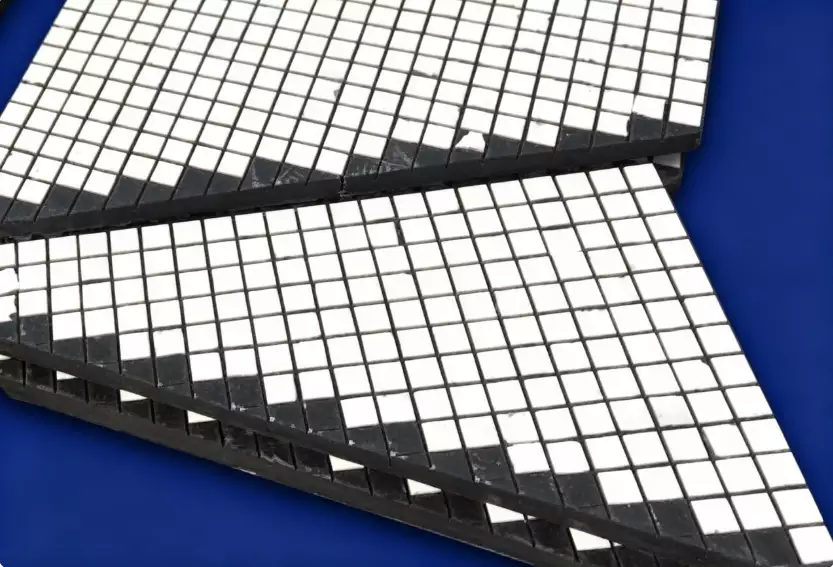
In mineral‑processing plants, wear‑resistant ceramic products serve for silos, intermediate hoppers, collecting hoppers, transfer hoppers, hydrocyclones, diverter valves, chutes, agitation tanks, mechanical classifiers, tailings‑transport pipelines, mineral‑slurry pipelines, flotation‑machine auxiliary components and belt‑conveyor pulleys. For stirred‑mill equipment including IsaMill and HIG‑Mill, ceramic‑lined components protect stator segments and chamber liners against fine‑particle high‑speed scouring. For SAG‑mill systems, ceramic composite liners are applied for peripheral auxiliary chutes and overflow return pipelines. Cyclone cone sections and slurry elbows are normally fitted with adhesive‑bonded ceramic‑lined pipes or SHS self‑propagating ceramic steel pipes. Hopper and chute high‑impact zones select 3‑in‑1 ceramic‑rubber‑steel liners to cope with lump‑ore dropping impact.
For coal‑fired power‑plant auxiliary systems, product applications cover coal‑handling systems (coal drop hoppers, coal drop pipes, bucket‑wheel discs, ceramic drum rubber‑coating, raw‑coal silos); pulverizing‑systems (medium‑speed mill cylinders, separator‑outlet pipelines, primary‑air ducts and elbows, separator inner cones, guide vanes); powder‑feeding‑systems (exhaust‑fan housings and impellers, pulverized‑coal pipelines, thermometer protection sleeves, pulverized‑coal mixers, ceramic‑lined sleeve expansion joints); steel‑ball‑mill‑auxiliary‑systems (mill‑outlet pipelines, wood‑chip separators, coarse‑and‑fine‑powder separators, powder‑return‑pipes); ash‑discharge‑systems (ash‑discharge pipelines, dry‑ash‑fan housings and impellers, air‑valve plates and cylinder‑walls, slag‑conveying‑pipes); desulfurization‑systems (limestone‑conveying‑pipes, slurry‑transport‑pipes); dust‑removal‑systems (induced‑draft‑fan guide‑impellers and housings, dust‑removal‑pipelines, elbows and tees). Pipeline elbows and expansion‑joints adopt ceramic‑lined sleeve expansion‑joint products; large‑size hopper impact‑areas choose 3‑in‑1 composite liners.
Cement‑plant scenarios include raw‑material chutes, silo liners, separator casings, mill‑discharge pipelines and clinker‑conveying‑piping. Metallurgical‑industry sites deploy ceramic‑lined pipes for sinter‑ore conveying, blast‑furnace‑gas‑dust‑removal pipelines and slag‑transport‑systems. Chemical‑factories use ceramic‑lined fittings for abrasive‑corrosive slurry, powder‑material pneumatic‑conveying loops, where SHS‑self‑propagating ceramic‑steel pipes perform well under high‑temperature corrosive mixed‑media conditions.
At seaport bulk‑cargo terminals, Sanxin New Materials ceramic‑composite‑liners are used for berth fixed hoppers, bucket‑wheel‑machine fixed hoppers, belt‑transfer‑station fixed hoppers, ship‑unloader hoppers and ceramic‑drum‑rubber‑coating. Berth hoppers and ship‑unloader‑hopper high‑impact receiving zones prioritize 3‑in‑1 ceramic‑rubber‑steel liners to absorb huge impact energy from ore‑lump free‑fall. Transfer‑station side‑wall sliding‑wear sections adopt 2‑in‑1 ceramic‑steel liners. Ceramic drum rubber‑coating improves friction coefficient of conveyor‑drums to prevent belt‑slippage under coastal salt‑fog environment.
Even high‑quality wear‑resistant ceramic parts cannot achieve expected service‑life without correct model‑selection according to actual working‑conditions. Plant engineers need to comprehensively evaluate four core factors: particle‑impact intensity, medium‑corrosiveness, operating‑temperature range and equipment‑structure‑form before confirming product type.When working‑condition is dominated by sliding‑abrasion with slight impact, such as straight slurry‑pipes, cyclone cone sections, inner walls of separator cylinders: choose adhesive‑bonded ceramic‑lined pipes, integral ceramic‑pipes or 2‑in‑1 ceramic‑steel liners. For locations bearing medium‑level lump‑material impact, for example transfer‑station chute baffles and silo transition‑cone areas: select 2‑in‑1 ceramic‑rubber liners or 3‑in‑1 ceramic‑rubber‑steel liners. Positions suffering heavy concentrated lump‑impact (ship‑unloader‑hopper bottom plates, berth‑hopper receiving‑zones, raw‑coal‑silo material‑falling‑points): must adopt 3‑in‑1 ceramic‑rubber‑steel composite liners, avoid applying pure‑ceramic tiles directly, otherwise ceramic‑spalling failure will occur quickly.For piping‑systems requiring thermal‑displacement compensation and simultaneously facing serious inner‑wall abrasion, ceramic‑lined sleeve expansion‑joints shall be specified. High‑temperature pipeline sections where adhesive‑bonded tiles risk peeling off should adopt SHS‑self‑propagating ceramic‑steel pipes. Corrosive slurry environment should prioritize high‑density integral‑ceramic‑lining products. Flat‑large‑area equipment surfaces are suitable for bolt‑weld composite‑liner panels; complex curved‑surfaces inside pipelines and cyclones are more fit for mosaic‑tile‑based lining solutions. For complete project‑consulting support, industrial customers can turn to Sanxin New Materials wear‑resistant ceramic‑component technical resources.
Although the initial procurement investment of Sanxin New Materials wear‑resistant ceramic‑components is higher than ordinary steel‑plates and rubber‑sheets, full‑life‑cycle economic‑analysis shows prominent return‑on‑investment for most heavy‑industry projects.Firstly, service‑life is greatly extended. Depending on specific working‑conditions, ceramic‑protected equipment components achieve service‑life 7‑15 times longer than carbon‑steel counterparts. This directly reduces component‑replacement frequency and cuts unplanned‑shutdown events. For continuous‑production‑oriented mining concentrators, power‑plants and cement‑factories, every unplanned‑shutdown will bring massive production‑loss; reducing shutdown times creates far greater economic‑benefit than saving spare‑part‑purchase‑cost.Secondly, reduce maintenance‑labor and safety risks. Wear‑part replacement work on high‑altitude chutes, large‑size silos and complex‑pipeline‑networks requires scaffolding erection, confined‑space‑operation and heavy‑component‑handling. Lower overhaul‑frequency decreases workers’ exposure to high‑risk‑maintenance‑scenarios and improves site‑safety‑KPIs.Thirdly, preserve original equipment geometry‑dimension for stable‑process‑performance. Ceramic‑lined hoppers, pipelines and cyclone‑equipment keep original flow‑channel geometry for long‑term‑operation. Classification‑precision of cyclones, material‑flow‑state inside chutes and conveying‑resistance‑coefficient of pipelines will not degrade rapidly as metal‑wall gradually wears away. Stable‑process‑parameters help maintain product‑quality‑consistency and reduce production‑fluctuation‑loss.Fourthly, indirect energy‑saving and environmental‑protection‑gain. Smooth ceramic inner‑surface lowers fluid‑flow‑resistance of slurry‑pipes and material‑chutes, cutting power‑consumption of pumps and conveying‑systems. Meanwhile, effective anti‑wear protection prevents medium‑leakage and dust‑spillage caused by equipment‑perforation, improving on‑site environmental‑protection‑performance.
Against the background that modern heavy‑industry continuously pursues high‑throughput, long‑period‑stable‑production and low‑comprehensive‑operating‑cost, equipment anti‑wear‑protection becomes an indispensable link of plant‑system‑optimization. Sanxin New Materials provides a full‑spectrum wear‑resistant‑ceramic‑product‑portfolio, covering ceramic‑lined‑sleeve‑expansion‑joints, adhesive‑ceramic‑lining‑pipes, sulfurized‑ceramic‑pipes, integral‑ceramic‑pipes, bolt‑weld‑ceramic‑liners, 2‑in‑1 composite‑liners, flagship‑3‑in‑1 ceramic‑rubber‑steel‑liners and SHS‑self‑propagating ceramic‑steel‑pipes. This complete‑product‑matrix can match diversified working‑conditions from pure‑sliding‑abrasion to heavy‑impact mixed‑abrasion‑corrosion environment, serving mining, power‑generation, cement‑metallurgy, chemical‑industry and bulk‑cargo‑port‑terminal‑anti‑wear‑renovation‑projects.Successful application of ceramic‑wear‑parts does not mean blindly choosing highest‑grade‑products. Engineering teams must analyze local wear‑mechanism, impact‑intensity, medium‑corrosiveness and equipment‑structural‑characteristics, to select appropriate product‑series, lining‑thickness and installation‑process. After scientific‑model‑selection and standardized‑installation, Sanxin New Materials wear‑resistant ceramic‑components can effectively reduce unplanned‑downtime, cut‑maintenance‑expense, improve‑site‑safety‑level and stabilize‑production‑process‑indicators, bringing comprehensive economic‑value for heavy‑industrial‑enterprises. As mature‑and‑reliable heavy‑duty‑anti‑abrasion‑solutions, Sanxin New Materials wear‑resistant‑ceramic‑parts will gain broader‑popularization in global heavy‑industry‑equipment‑upgrading‑market.

Submit your demand,
we will contact you ASAP.

Sanxin New Materials Co., Ltd. focus on producing and selling ceramic beads and parts such as grinding media, blasting beads, bearing ball, structure part, ceramic wear-resistant liners, Nanoparticles Nano Powder


 English
 English
 Russian
 French
 Spanish
 Portuguese
 Arabic