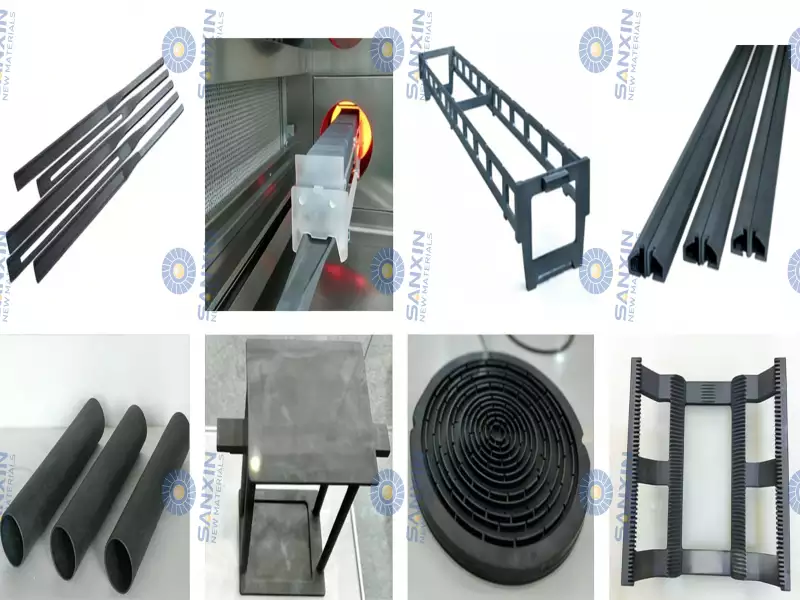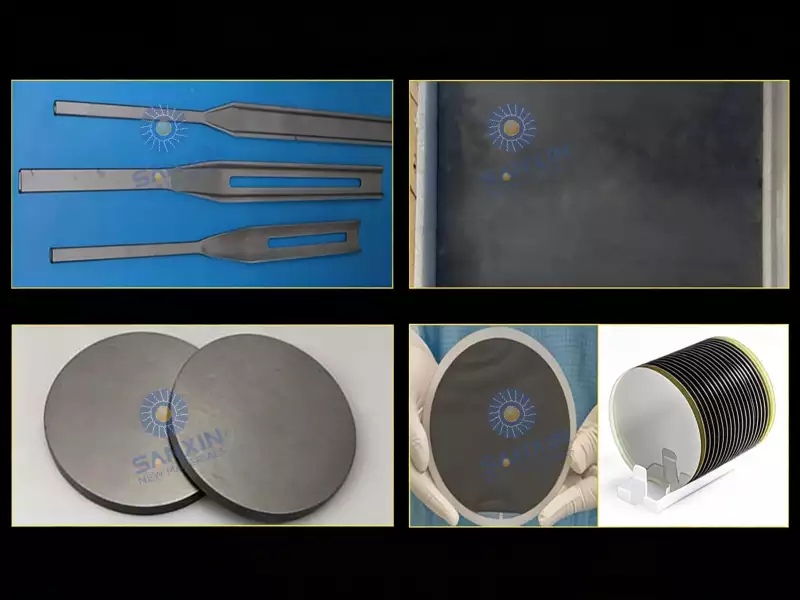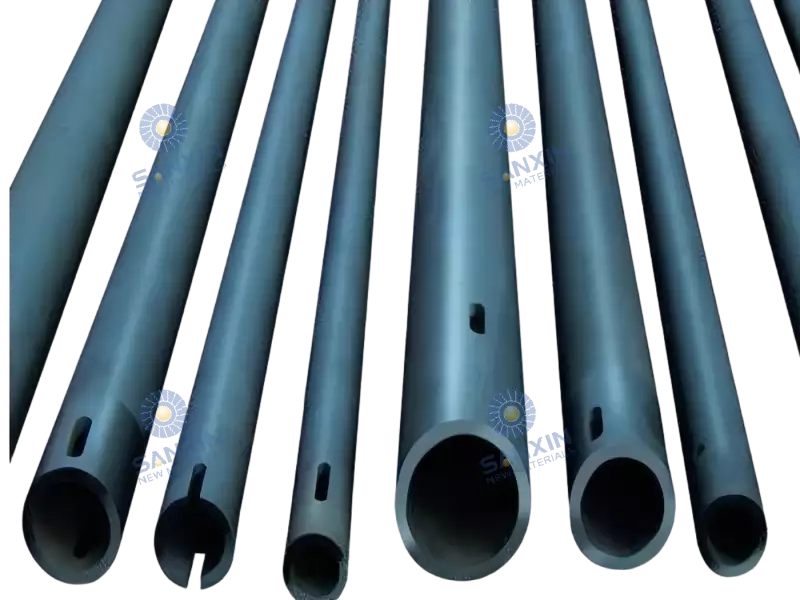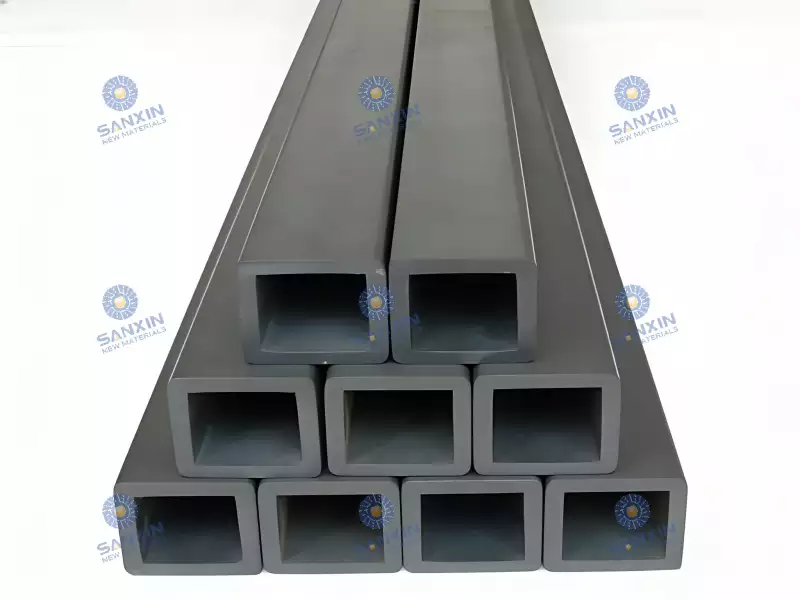

Jiangxi Sanxin New Materials Co., Ltd. – Your Trusted Partner in Advanced Wear-Resistant Ceramics
Dense medium cyclones (DMCs) operate in one of the most punishing environments in mineral processing: high-velocity, highly abrasive slurries containing magnetite, ferrosilicon, quartz, and coal particles moving at 10–25 m/s, often at elevated temperatures and under corrosive conditions. The liners inside these cyclones are the first line of defense against catastrophic wear. For decades, high-purity alumina (Al₂O₃) has been the default choice due to its good hardness and reasonable cost. However, as plants push for higher throughput, longer uptime, and lower maintenance costs, the limitations of alumina have become impossible to ignore.
Enter silicon carbide (SiC) ceramic liners — a material that consistently outperforms alumina across every critical performance metric in dense medium cyclone service. Below is a detailed, evidence-based comparison that explains why leading mining companies worldwide are making the switch to SiC.
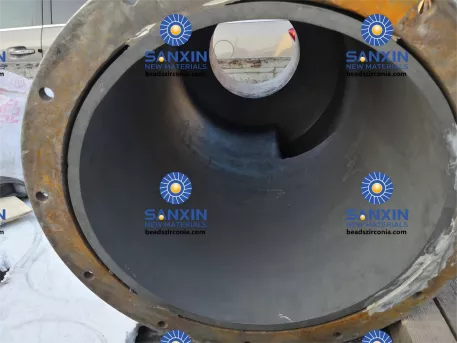
Silicon carbide exhibits a Vickers microhardness of approximately 2,800 HV, compared to only 1,800 HV for 99.5%+ alumina. This 55%+ hardness advantage translates directly into dramatically reduced wear rates under the erosive impact of dense media.
Independent laboratory tests on SiC/Al composites show that increasing SiC content from 67 wt% to 75 wt% reduces both the friction coefficient and the specific wear rate by more than 40% under identical sliding conditions. Commercial reaction-bonded and sintered SiC grades routinely achieve wear rates 5–10 times lower than the best alumina grades in magnetite-ferrosilicon slurries.
Dense medium cyclones operate in near-saturated conditions. Tribological studies reveal that the wear rate of SiC/SiC pairs can drop by two full orders of magnitude when humidity increases, due to the formation of lubricious silica gel films. Alumina/SiC or pure alumina systems only see a one-order-of-magnitude reduction—meaning SiC maintains its superiority even in the wettest conditions.
Advanced biomimetic and sintered SiC ceramics exhibit controlled low porosity (<0.5%). In contrast, even high-grade alumina typically contains 2–5% porosity and glassy grain-boundary phases. The result: SiC liners resist micro-cutting and particle pull-out far more effectively, delivering 3–8 times longer service life in real-world DMC installations.
Many dense medium circuits (especially coal and iron ore) operate at 60–120°C, with occasional excursions far higher. Glass-phase-free SiC ceramics—such as those sintered with AlN–Sc₂O₃ or YAG additives—retain nearly 100% of their room-temperature flexural strength at 1,500°C. Alumina, however, begins to soften above 1,000°C due to viscous flow in intergranular glassy phases, leading to accelerated creep and spalling.
Modern ultra-high-conductivity SiC composites (e.g., Ta₀.₈Hf₀.₂C–SiC) achieve thermal conductivity values up to 41.5 W/m·K — a 123% improvement over baseline materials—while simultaneously reducing the coefficient of thermal expansion (CTE) by 8.6% to approximately 4.0 × 10⁻⁶/K.
Alumina’s CTE remains stubbornly around 8 × 10⁻⁶/K, creating severe thermal stress at metal–ceramic interfaces (e.g., bolted or cast-in steel housings). The lower CTE and higher conductivity of SiC eliminate hot spots, minimize thermal fatigue cracking, and virtually eliminate delamination failures that plague alumina-lined cyclones.
In oxidizing environments, SiC rapidly forms a thin, coherent SiO₂ protective layer that passivates further attack. This layer is stable across a wide pH range and dramatically slows parabolic oxidation kinetics. Alumina, while generally stable, suffers pitting and grain-boundary attack in acidic (pH < 4) or highly alkaline (pH > 12) process waters common in coal and phosphate circuits.
When accidental metal ingress occurs (e.g., copper alloy pump impellers or steel tramp), SiC exhibits contact angles >140° with most molten metals, preventing wetting and chemical bonding. Alumina is readily wetted by many metals and silicates, accelerating localized corrosion and liner degradation.
Using stereolithography-based 3D printing or gel-casting combined with hot-press bonding at 1,850°C, SiC liners can be produced as single-piece, seamless structures with flexural strengths exceeding 340 MPa. Alumina’s higher brittleness and larger sintering shrinkage (15–20%) make such complex, thin-walled designs risky and expensive.
SiC-based functionally graded materials (e.g., SiC–TiB₂ or SiC–ZrB₂ layered systems) allow engineers to tailor hardness, toughness, and residual stress profiles. Compressive surface stresses introduced during manufacturing act as a barrier against thermal shock and impact damage — a capability alumina multilayer systems cannot reliably replicate due to CTE mismatch and weak interlayer bonding.
In colder climates or LNG-adjacent plants, temperatures can drop well below zero. At 77 K (liquid nitrogen temperature), SiC’s fracture toughness actually increases due to pore-blunting and crack-deflection mechanisms. Alumina becomes significantly more brittle, raising the risk of catastrophic brittle failure.
Graded SiC–TiC materials with engineered porous “arch-type” microstructures excel at dissipating dynamic impact energy from large tramp material or pressure surges. Independent drop-weight tests show SiC composites absorbing 3–5 times more energy before macroscopic cracking than equivalent alumina tiles.
A major South African coal operation replaced 92% alumina liners with reaction-bonded SiC in 1,200 mm DMCs: liner life increased from 9 months to over 48 months, with zero unplanned shutdowns.
An Australian iron ore plant using 99.7% alumina tiles switched to sintered α-SiC: wear rate dropped 78%, and cyclone availability rose from 91% to 99.2%.
A Chinese magnetite operation reported a 62% reduction in total liner replacement costs within the first 18 months after converting to hot-pressed SiC.
When every hour of unplanned downtime costs tens of thousands of dollars, and when sustainability targets demand longer equipment life and lower energy consumption, silicon carbide ceramic liners represent the new gold standard for dense medium cyclones.
Compared to traditional alumina, SiC delivers:
5–10× longer wear life
Superior performance from -200°C to +1,500°C
Dramatically better corrosion and oxidation resistance
Greater design freedom and impact tolerance
Lower total cost of ownership and reduced environmental impact
Jiangxi Sanxin New Materials Co., Ltd. has been at the forefront of SiC ceramic development since 2008. Our reaction-bonded, sintered, and hot-pressed SiC liner systems are trusted by the world’s leading mining companies to protect their most critical assets.
Ready to extend your cyclone life, cut maintenance costs, and boost plant availability?
Contact Sanxin today for a free technical consultation and see how our advanced SiC ceramic solutions can transform your dense medium circuit performance.
Jiangxi Sanxin New Materials—Engineering Tomorrow’s Wear Solutions Today

Submit your demand,
we will contact you ASAP.

Sanxin New Materials Co., Ltd. focus on producing and selling ceramic beads and parts such as grinding media, blasting beads, bearing ball, structure part, ceramic wear-resistant liners, Nanoparticles Nano Powder


 English
 English
 Russian
 French
 Spanish
 Portuguese
 Arabic