

In core heavy industrial sectors including mining, cement manufacturing, thermal power generation, metallurgy and chemical engineering, equipment abrasion and corrosion have long been recognized as dominant factors that undermine continuous production stability and inflate long-term operational expenditures. Mechanical scouring from granular materials, repetitive particle impact loads, high-temperature oxidation, flue gas chemical corrosion, and continuous slurry friction gradually erode metal equipment surfaces, resulting in pipeline wall thinning, silo interior damage, chute deformation, and cyclone performance degradation. To effectively mitigate progressive equipment wear, extend asset service life, and minimize unplanned downtime, modern industrial enterprises extensively deploy high-performance wear-resistant liner and high-density ceramic lining as standardized anti-abrasion protective solutions for critical production equipment.As a mature and cost-efficient engineering material, alumina wear-resistant ceramics possess exceptional mechanical hardness, superior structural density, outstanding abrasion resistance, and stable chemical inertness. These comprehensive properties enable alumina ceramic products to progressively replace traditional protective materials, including carbon steel plates, alloy wear plates, natural rubber liners, and cast stone liners, across a wide spectrum of industrial working conditions. Despite the universal application of ceramic wear protection technology, procurement teams and industrial engineering professionals frequently encounter inconsistent field performance amongwear-protection liner products with seemingly identical exterior specifications, leading to divergent service lifespans and protective outcomes.Based on decades of manufacturing experience and extensive on-site project practice accumulated by Sanxin New Materials Co., Ltd, the majority of premature ceramic failure cases—including surface cracking, interface peeling, excessive material abrasion, structural loosening, and insufficient anti-wear performance—originate primarily from improper product selection and parameter mismatch with actual working environments, rather than installation defects or operational errors. In conventional industrial procurement workflows, purchasing decisions often prioritize unit pricing advantage while overlooking core technical indicators that determine long-term service performance, such as standardized alumina purity grades, high-precision sintering craftsmanship, structural design rationality, and comprehensive working condition adaptability of ceramic lining.To assist global industrial users in systematically avoiding prevalent procurement risks, eliminating ineffective investment, and configuring the most compatible wear-resistant liner solutions for diversified equipment scenarios, this technical guide comprehensively elaborates on industrial-standard alumina purity classification systems, professional high-temperature sintering production specifications, multi-type structural product characteristics, and scientific working condition matching principles. Compiled with practical project data and industrial verification results, this standardized document serves as an authoritative technical reference for industrial engineers, procurement specialists, project contractors, and equipment maintenance personnel involved in industrial anti-wear renovation and new construction projects.
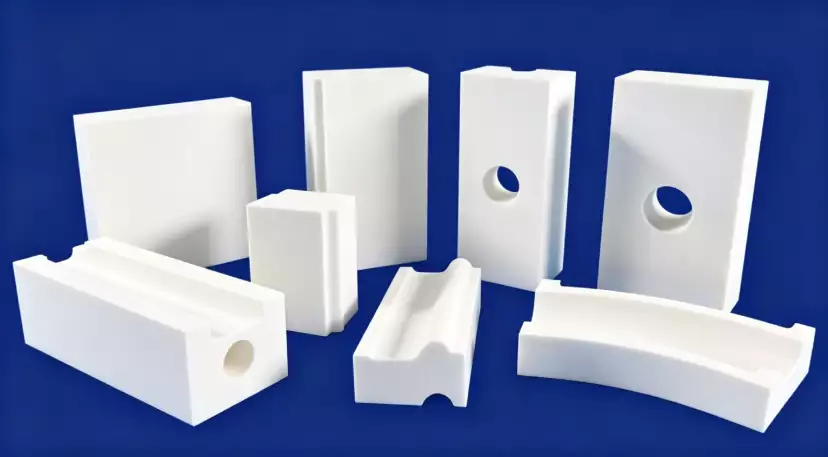
Alumina purity represents the most fundamental and decisive technical indicator that governs the overall performance of industrial ceramic lining. The internal crystal density, mechanical hardness, compressive strength, abrasion resistance, high-temperature stability, and chemical corrosion resistance of finished wear-protection liner products are all directly determined by alumina content. The modern industrial anti-wear ceramic market adopts three standardized and universally recognized purity grades: 92% alumina, 95% alumina, and 99% high-purity alumina. Each grade features unique material composition, mechanical properties, and environmental adaptability, requiring precise scientific matching with actual operational parameters rather than arbitrary selection or price-based decision-making.
92% alumina wear-resistant ceramic is classified as the foundational universal-grade anti-wear material in the industrial sector, maintaining a highly balanced combination of mechanical hardness, structural compactness, fracture toughness, and economic efficiency. With stable physical and chemical properties under normal-temperature conventional environments, this material exhibits extremely low natural abrasion loss and excellent structural stability during long-term continuous operation. This grade of wear-resistant liner is specifically optimized for room-temperature working conditions characterized by mild powder scouring, low-frequency friction, and negligible mechanical impact, delivering remarkable cost-performance advantages for medium and light-duty industrial anti-wear projects.Typical industrial application scenarios for 92% alumina ceramic include conventional thermal power ash-conveying pipelines, factory raw material silo inner wall protection, low-pressure powder conveying equipment, general ventilation and dust removal pipelines, and common material buffer chutes. For conventional industrial anti-wear renovation projects without severe mechanical impact, high-temperature fluctuation, and strong chemical corrosion, 92% alumina ceramic lining fully meets daily operational protection requirements and effectively avoids excessive capital investment caused by unnecessary high-grade material over-specification, achieving optimal balance between protective performance and project cost control.
95% high-alumina ceramic stands as the most widely adopted high-performance grade for heavy-abrasion industrial working conditions, serving as the mainstream upgraded anti-wear material for modern industrial equipment renovation. In comparison with conventional 92% alumina products, 95% alumina ceramics feature higher high-temperature sintering density, significantly reduced internal micro-pore rate, enhanced structural compressive strength, and greatly improved mechanical impact resistance. The optimized internal crystal structure enables this material to maintain stable physical performance under high-frequency material scouring, medium-strength mechanical impact, variable temperature fluctuation, micro-chemical corrosion, and long-term continuous slurry erosion, adapting to complex and harsh industrial operational environments.Sanxin New Materials Co., Ltd professionally recommends 95% alumina wear-protection liner for rigorous industrial scenarios, including mining slurry transmission and circulation pipelines, cement clinker conveying chutes and storage bins, thermal power plant high-temperature flue gas pipelines, metallurgical ore powder conveying systems, and chemical particle delivery equipment. This specific alumina grade achieves the most scientific balance between superior technical performance and reasonable procurement cost, making it the preferred standardized anti-wear solution for most medium-to-heavy industrial anti-abrasion renovation projects.
99% high-purity alumina ceramic belongs to high-end precision industrial ceramic materials, manufactured with ultra-high-purity alumina raw materials and precision-controlled ultra-high-temperature sintering technology. The finished product features a nearly pure dense crystal structure with extremely low impurity phase content and negligible internal structural defects. Benefiting from ultra-high material purity and compact crystal arrangement, this ceramic material possesses exceptional high-temperature resistance, superior acid and alkali corrosion resistance, excellent oxidation resistance, and zero impurity precipitation during long-term continuous high-temperature operation. This high-end ceramic lining is professionally engineered for high-standard industrial scenarios with stringent requirements for material stability, purity consistency, and corrosion resistance, rather than conventional general abrasive working conditions.The primary application fields of 99% high-purity alumina ceramic cover fine chemical production, new energy battery material processing, high-purity powder manufacturing, pharmaceutical industry material transportation, and precision mechanical equipment internal protection. Although this material delivers top-tier comprehensive protective performance across all alumina ceramic grades, its relatively high raw material and production costs render it economically impractical for ordinary heavy-abrasion industrial scenarios. Reasonable grade selection effectively prevents unnecessary resource waste and cost increment caused by excessive high-grade material matching for conventional working conditions.
A typical and prevalent industrial phenomenon reveals that even standardized 95% aluminawear-resistant liner products exhibit dramatic disparities in actual service life and operational stability across different manufacturers. High-quality products can maintain stable anti-wear performance for 5 to 8 years of continuous operation, while low-quality alternatives may suffer structural cracking, interface peeling, and failure within merely one year of service. Such significant performance differentiation under identical material grade specifications is fundamentally attributed to disparities in high-temperature sintering craftsmanship, production process control precision, and factory quality management standards among different production enterprises.High-quality industrial alumina ceramic products manufactured by qualified and professional manufacturers undergo continuous constant-temperature sintering treatment above 1600℃ in large-scale industrial tunnel kilns. The long-duration high-temperature crystallization process enables internal alumina crystal grains to arrange densely, uniformly, and orderly, effectively eliminating internal micro-pores, micro-cracks, and residual impurity structures. Finished ceramic lining products feature stable overall hardness, consistent structural density, extremely low abrasion loss rate, and excellent mechanical fatigue resistance, capable of withstanding long-term cyclic material scouring, continuous mechanical vibration, and intermittent impact loads in complex industrial environments without performance degradation.Inferior low-cost ceramic products widely available in the market typically adopt low-temperature rapid firing processes and simplified production procedures to reduce manufacturing costs and shorten production cycles. Although surface hardness indicators can meet basic industry testing standards in short-term laboratory detection, the internal microstructure remains loose, porous, and structurally unstable. Under sustained industrial working conditions including continuous material friction, cyclic particle impact, and slurry scouring, internal micro-defects gradually expand and accumulate, ultimately leading to structural fragmentation, surface peeling, and large-area failure of the overall liner system.Enterprises can efficiently and accurately screen qualified high-standard ceramic products through two practical and intuitive detection methods without professional laboratory equipment. Visual surface inspection verifies that qualified industrial ceramic lining features a smooth, flat, and uniform surface with consistent color tone, free of obvious pits, pores, spots, and structural blemishes. Acoustic tapping testing further evaluates structural compactness: high-density fully sintered ceramics produce a clear, crisp, and resonant metallic sound when tapped, while low-quality porous unsintered ceramics emit a dull, muted, and lifeless tone, enabling rapid quality differentiation.
Apart from alumina material purity and sintering process quality, structural design rationality constitutes another core determinant of the comprehensive operational performance and service stability of industrial wear-protection liner. Industrial protective equipment varies significantly in structural morphology, internal curvature, operational vibration frequency, material conveying speed, and particle impact mode. A single unified ceramic structural type cannot fully adapt to diversified and complex industrial working conditions. Based on abundant industrial project experience, Sanxin New Materials Co., Ltd categorizes mainstream industrial ceramic wear-resistant products into four major structural types, enabling precise scenario-based targeted selection for different equipment and working condition requirements.
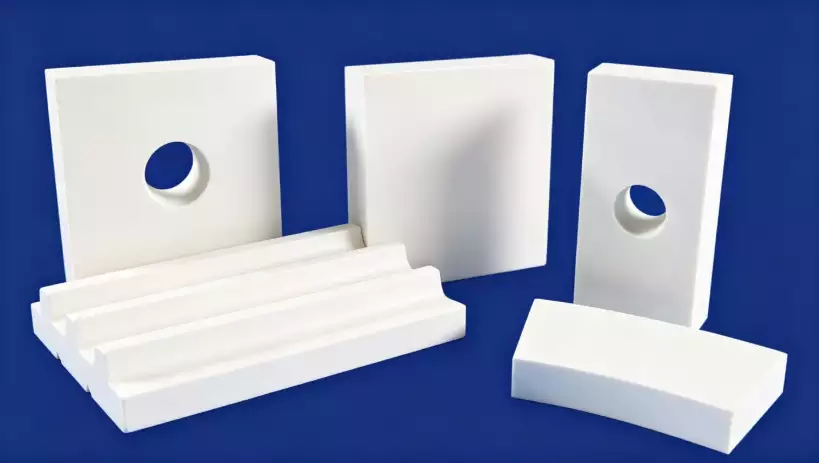
Adhesive-bonded ceramic tiles represent the most flexible, adaptable, and widely applicable anti-wear structural components in industrial wear protection systems. This product series is specially designed for special-shaped equipment, curved pipelines, irregular structural surfaces, and small-scale facilities where mechanical welding and bolt fixation are unavailable. The standardized tile structure supports flexible on-site cutting, adaptive layout adjustment, and personalized fitting construction, achieving extremely high equipment surface fitting accuracy and completely eliminating protective dead angles on complex equipment surfaces. It serves as the optimal and most economical solution for anti-wear renovation of outdated, irregular, and non-standard industrial equipment.
Bolt-fixed wear-resistant liner adopts a scientific dual fixation mechanism integrating mechanical bolting and high-strength adhesive bonding, professionally tailored for high-vibration and medium-impact industrial equipment scenarios. Typical applicable equipment includes large-scale storage silos, heavy-duty material hoppers, ball mill inner walls, and high-frequency vibration conveying equipment. Compared with pure adhesive-bonded ceramic tiles, bolted ceramic liner plates deliver significantly enhanced overall structural stability, superior anti-loosening and anti-peeling performance, and extended comprehensive service life under long-term high-frequency vibration operational environments.
Ceramic-lined composite steel pipes adopt a mature dual-layer composite structural design, utilizing carbon steel pipe as the outer load-bearing and welded structural layer and high-purity dense alumina ceramic lining as the inner anti-abrasive and anti-corrosive protective layer. This composite structure perfectly integrates the mechanical strength, structural rigidity, and weldability of carbon steel materials with the exceptional wear resistance, high-temperature stability, and chemical inertness of alumina ceramics. It is extensively applied in long-distance industrial material conveying pipelines, mining slurry transmission pipelines, thermal power high-temperature flue gas pipelines, and metallurgical powder delivery pipelines, effectively resolving common industrial pipeline failures such as wall thinning, perforation, and leakage caused by long-term continuous abrasion.
For non-standard special-shaped industrial equipment and personalized structural components that cannot be adapted by standardized ceramic products, customized special-shaped ceramic wear parts provide full-coverage zero-dead-angle protection solutions. Supported by professional equipment drawing analysis and precise on-site dimensional measurement, Sanxin New Materials Co., Ltd provides one-stop personalized customized production services, ensuring that each customized liner component perfectly fits the special structural characteristics of target equipment, achieving comprehensive and reliable industrial wear protection.
Scientific and reasonable industrial ceramic selection must be established on the basis of comprehensive systematic analysis of actual on-site working condition parameters. Ambient operational temperature, medium chemical composition, material particle hardness, conveying speed, and mechanical impact intensity directly determine the optimal alumina purity grade and structural type of industrial ceramic lining. Blind material selection without working condition evaluation will inevitably lead to performance mismatch, resource waste, or premature protective failure.
High-quality alumina ceramic materials possess excellent intrinsic high-temperature structural stability, capable of long-term stable continuous operation at ambient temperatures above 1000℃ without structural deformation or performance attenuation. For industrial equipment undertaking high-temperature flue gas transmission, hot powder conveying, and high-temperature material processing tasks, high-density 95% or higher-grade alumina wear-resistant liner is mandatory. Meanwhile, ceramic installation must be paired with dedicated high-temperature resistant adhesive and auxiliary accessories to prevent aging, failure, and peeling of auxiliary materials under prolonged high-temperature exposure, ensuring the long-term stability of the entire anti-wear protective system.
In chemical, metallurgical, and environmental protection production environments containing acid, alkali, and salt corrosive media, low-grade ceramic materials with high impurity content are prone to internal structural erosion, pore expansion, and comprehensive corrosion failure. High-purity alumina ceramic products feature stable chemical inertness and dense crystal structure, effectively resisting long-term erosion from weak acid and weak alkali media. For severe strong corrosive operational environments with high medium concentration and high temperature, 99% high-purity wear-protection liner provides the most reliable long-term anti-corrosion and anti-wear comprehensive protective performance.
For industrial working conditions characterized by large-size material particles, high drop height, and strong instantaneous mechanical impact, simply upgrading alumina material purity cannot completely eliminate ceramic cracking and fragmentation risks. It is essential to adopt thickened high-density ceramic plates or professional ceramic-steel composite structural liner. This optimized composite structural design effectively absorbs instantaneous impact kinetic energy while maintaining superior material wear resistance, efficiently preventing brittle fracture and structural damage of ceramic components under cyclic strong impact loads.
During the procurement and configuration process of industrial anti-wear renovation projects, many enterprise purchasers and engineering teams are susceptible to misleading low-cost products and single-dimensional performance evaluation indicators, resulting in improper material selection and ineffective project investment. Sanxin New Materials Co., Ltd systematically summarizes several typical industrial selection errors and standardized scientific principles for widespread industrial reference and application.Product unit price shall never be regarded as the sole selection benchmark for industrial anti-wear materials. Low-cost inferior ceramic lining products feature loose internal structures, abundant latent micro-cracks, and unstable performance consistency, inevitably leading to frequent equipment maintenance, repeated product replacement, prolonged production downtime, and significantly elevated long-term comprehensive operational costs for enterprises.Blind pursuit of ultra-high material purity is not recommended in industrial procurement practices. Mechanically applying high-grade 99% high-purity ceramic materials to conventional mild-abrasion and ordinary working conditions results in unnecessary excessive cost expenditure without generating incremental practical operational value, reducing project economic benefits.Mechanical replication of ceramic selection schemes from other projects is scientifically inadvisable. Industrial working conditions in different factories and production lines vary significantly in ambient temperature, environmental humidity, material hardness, particle size, conveying speed, and impact force. Only precise scenario-targeted material and structural matching can maximize the full-cycle service value of industrial wear-resistant liner products.
High-performance alumina wear-resistant ceramics have evolved into the most reliable and cost-effective mainstream anti-abrasive protective solution for modern heavy industrial equipment. Scientific purity grade selection, professional sintering process quality verification, and rational structural type matching constitute the three core guarantees for long-term stable operation and maximum service life of industrial ceramic lining systems. In industrial anti-wear renovation and new construction projects, enterprises should completely abandon traditional price-oriented single-dimensional procurement strategies and conduct comprehensive multi-dimensional evaluation of product purity standards, sintering process quality, structural rationality, and working condition adaptability.Sanxin New Materials Co., Ltd focuses on professional research and development, standardized production, and customized application of high-performance industrial wear-protection liner and ceramic anti-wear components. Supported by complete product specifications, stable batch quality control, advanced production technology, and abundant global on-site project experience, the company provides one-stop customized professional anti-wear solutions for industrial clients worldwide, effectively assisting enterprises in reducing comprehensive operational costs, minimizing equipment failure rates, and improving overall continuous production efficiency.

Submit your demand,
we will contact you ASAP.

Sanxin New Materials Co., Ltd. focus on producing and selling ceramic beads and parts such as grinding media, blasting beads, bearing ball, structure part, ceramic wear-resistant liners, Nanoparticles Nano Powder


 English
 English
 Russian
 French
 Spanish
 Portuguese
 Arabic