

Alumina wear-resistant ceramics are the most widely used anti-abrasion materials for industrial heavy-duty equipment, covering mining, cement, thermal power, metallurgy and chemical industries. With ultra-high hardness, excellent abrasion resistance and stable chemical inertness, wear-protection liner effectively solves equipment abrasion, corrosion and frequent maintenance problems for silos, chutes, cyclones, fans and slurry pipelines.Most industrial operators mistakenly believe that high-quality ceramic materials can ensure long-term stable operation. However, tens of thousands of on-site engineering cases from Sanxin New Materials Co., Ltd prove that more than 80% of premature ceramic liner failure is caused by non-standard installation and improper maintenance, rather than material quality defects. Unregulated bonding, irregular construction, unreasonable operation and missing daily inspections will lead to tile hollowing, falling off, cracking and edge chipping of wear-resistant liner.To maximize the full-cycle value of ceramic lining systems, reduce unplanned downtime and cut overall operation and maintenance costs, this article systematically sorts out standardized pre-construction inspection, professional installation processes, strict acceptance standards and scientific daily maintenance skills. This complete guide is tailored for equipment engineers, construction teams and industrial maintenance personnel to achieve long-lasting and stable wear protection for industrial equipment.
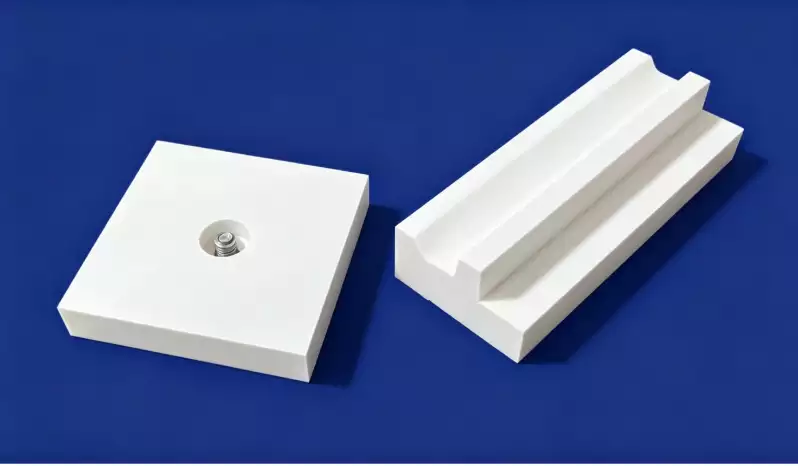
Qualified pre-installation preparation is the premise of zero-failure ceramic liner construction. Substrate defects and unqualified incoming materials are the core causes of later-stage lining peeling and damage. All inspection items must be completed before formal construction.
The steel substrate is the basic carrier of all wear-resistant liner installation. Unprocessed deformed, rusty and oily steel plates will directly cause bonding failure.First, check structural flatness. Severely bent, dented and distorted steel substrates must be corrected or replaced. Uneven surfaces will form uneven stress on ceramic tiles after pasting, resulting in cracking and peeling under continuous material scouring and impact. Second, complete thorough surface purification. Remove all rust layers, oxide scales, old paint, oil stains, dust and welding slags. It is recommended to adopt sandblasting treatment to reach Sa2.5 standard, forming a uniform rough surface to enhance adhesive adhesion and anchoring force. Third, polish protruding welding beads and welding spatters flat to avoid point extrusion stress onceramic lining, which prevents local tile fracture during equipment operation.
All batches of alumina ceramic tiles, fixing bolts, gaskets, special anti-wear adhesives and rubber buffer accessories must be inspected strictly in accordance with technical drawings. Check dimensional tolerance, thickness consistency, reserved hole accuracy and surface integrity of each wear-protection liner. Reject all products with visible cracks, edge chipping, large-area pores and deformation.Match adhesive models according to actual working conditions including operating temperature, medium corrosion and equipment vibration. High-temperature resistant special adhesive must be used for high-temperature production scenarios. For bolt-fixed liner products, inspect bolt firmness, anti-loosening gasket completeness and hole matching accuracy. Sanxin New Materials Co., Ltd recommends retaining all batch inspection records for subsequent on-site problem tracing and after-sales analysis.
The curing effect of special ceramic adhesive is highly dependent on ambient environment. The optimal construction temperature ranges from 10℃ to 35℃. Construction is prohibited in environments below 5℃ or above 40℃, which will lead to incomplete curing and reduced bonding strength.Stop construction in rainy, humid and heavy dust environments. Water film and dew on the steel substrate will completely destroy the bonding interface of ceramic lining. For confined space construction inside large silos and sealed equipment, complete gas detection, ventilation guarantee and safety work procedures to ensure standardized and safe construction.
Adhesive bonding is the most common installation method for square and hexagonal small-size ceramic tiles, widely used in low-to-medium impact and strong abrasion working conditions. Standardized glue mixing, tile pasting, gap sealing and curing protection are the key to long-term stable operation of wear-resistant liner.
Industrial ceramic anti-wear adhesive is a two-component structural glue. Strictly follow the official proportion of component A and component B for mixing, and do not arbitrarily adjust the ratio. Insufficient curing agent will cause permanent softening and incomplete curing; excessive curing agent will lead to brittle glue layer and reduced impact resistance.Stir clockwise uniformly until no color difference or streaks remain. Use the mixed adhesive within the valid operating time. Discard the thickened failed glue and prepare new adhesive in time. Do not dilute with any solvent, which will damage the structural strength and wear resistance of the cured glue layer.
Coat the mixed adhesive evenly on the steel substrate and the back of ceramic tiles, with a controlled glue thickness of 1-3mm. Excessively thin glue cannot compensate for substrate flatness errors, while excessively thick glue will shrink severely during curing and cause hollowing.After positioning the tiles, apply uniform moderate pressure to squeeze out redundant glue and internal air to ensure tight fitting between tiles and steel plate. Control the splicing gap reasonably to avoid excessive abrasive gap or thermal extrusion cracking caused by zero-gap dense splicing. For vertical and inclined equipment inner walls, use temporary fixing measures to prevent tile sliding before curing. Only use rubber hammers for fine adjustment; violent knocking with heavy hammers is prohibited to avoid invisible internal micro-cracks.
After tile layout is completed, fill all splicing gaps with special anti-wear caulking material to block particle scouring and moisture infiltration, protecting the internal steel substrate and improving the overall sealing performance of the ceramic lining system.Strictly abide by the curing cycle requirements. Normal temperature curing shall not be less than 24 hours, and the curing time shall be extended in low-temperature environments. Equipment commissioning and load operation before complete curing is the main cause of early peeling of liner. Keep the construction area dry, dust-free and vibration-free during the curing period.
For large-size liner, high-vibration equipment and medium-impact working conditions, bolt fastening combined with auxiliary bonding is adopted to enhance the overall firmness of wear-protection liner. Hole alignment, gasket assembly and anti-loosening treatment are the core construction points.Accurately align the reserved bolt holes of ceramic tiles with the steel substrate holes. Forced installation with misaligned holes is prohibited to avoid hidden internal stress and cracks. Install elastic buffer gaskets between bolt heads and ceramic surfaces to avoid rigid extrusion and absorb equipment vibration stress.Tighten bolts in cross and gradual sequence instead of one-time over-tightening to prevent ceramic cracking caused by excessive torque. Equip anti-loosening gaskets or thread glue according to vibration intensity. After fastening, cover the bolt positions with special ceramic cover tiles to prevent bolt abrasion and failure. It is worth noting that bolt-fixed wear-resistant liner must be matched with auxiliary bonding construction, and mechanical fixing alone cannot ensure long-term stability.
The three-in-one ceramic-rubber-steel compositewear-protection liner integrates ceramic wear resistance, rubber shock absorption and steel structural strength, which is suitable for medium-impact working conditions such as chutes and hoppers.High-temperature welding construction near composite liners is strictly prohibited. High welding temperature will burn and age the intermediate rubber layer, causing delamination, carbonization and peeling failure. If welding is unavoidable, complete heat insulation protection in advance, control welding energy and shorten high-temperature heating time.Reserve reasonable expansion gaps during multi-board splicing to adapt to thermal deformation of rubber materials. Avoid direct flame cutting of finished composite liners, and prioritize factory customized sizing to ensure installation accuracy and structural stability of the ceramic lining system.
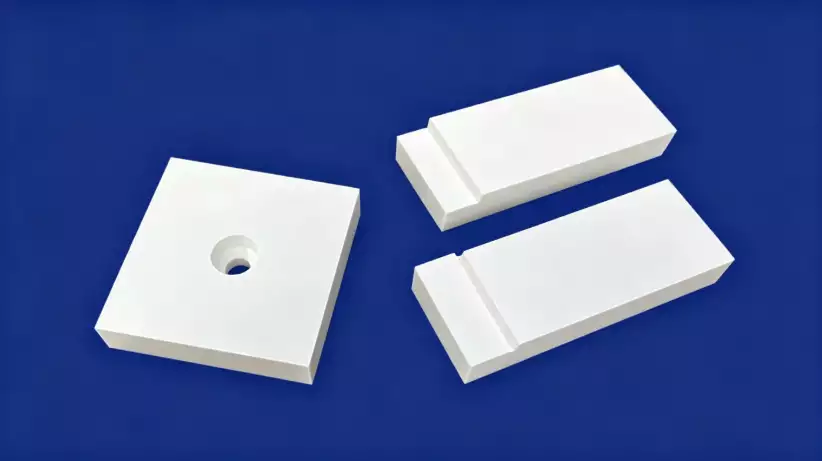
Complete comprehensive quality acceptance before equipment operation to eliminate hidden dangers of unqualified construction. The core acceptance indicators include appearance quality, bonding compactness, gap sealing and fixing reliability.Visually inspect the surface to ensure no missing tiles, cracks, edge chipping and uneven glue overflow. Tap each ceramic tile one by one with a special tapping hammer: a clear and crisp sound indicates qualified bonding, while a dull hollow sound means hollowing and rework is required.Check all bolt fastening positions to ensure no looseness and complete anti-loosening accessories. Verify that all splicing gaps are fully filled without voids and missing sealing. For key wear parts of large equipment, archive construction dates, liner batch numbers, adhesive parameters and construction photos to facilitate subsequent maintenance comparison and fault analysis of wear-resistant liner.
Standardized installation lays the foundation for equipment protection, while scientific daily maintenance is the key to long-term service life of ceramic lining. Reasonable operation and regular inspection can effectively avoid premature failure and reduce replacement costs.
Avoid over-limit impact operation of equipment. Prevent oversized bulk materials from directly impacting the ceramic surface at high speed, and install buffer baffles for high-drop working conditions to reduce impact load. Avoid sharp cold and heat alternation, and prohibit spraying cold water on high-temperature hot liners to prevent thermal stress cracking.Avoid long-term no-load idling operation. Empty equipment operation will cause severe mutual impact between liners, resulting in abnormal wear and edge damage of liner.
Formulate hierarchical inspection rules according to equipment wear intensity. Conduct monthly visual inspection for high-abrasion parts such as transfer chutes, fan casings and cyclones, and complete comprehensive detailed inspection during planned shutdown maintenance every quarter.Focus on key vulnerable positions: material direct impact zones, corner splicing seams, bolt fixing points and material turning parts of wear-resistant liner. Pay close attention to early warning signs such as tile looseness, hollow sound, local cracks, edge missing and gap filler falling off, and eliminate hidden dangers in advance to avoid large-area peeling accidents.
For individual damaged tiles, adopt partial repair instead of overall dismantling to save maintenance cost and time. Thoroughly remove residual old adhesive and clean the steel substrate again to ensure the same bonding condition as new construction.For damaged areas with substrate deformation, repair the steel plate first before re-laying ceramic lining. Strictly follow the curing cycle after repair, and do not rush to resume production to ensure repair firmness.
Tile falling off is mainly caused by unqualified substrate treatment, irregular adhesive mixing and insufficient curing time. Ceramic cracking mostly results from substrate deformation, excessive bolt torque, violent material impact and sharp temperature change. Gap peeling and water seepage are caused by incomplete gap sealing and long-term material scouring. Targeted maintenance can completely solve common failure problems of industrial wear-resistant liner.
Summarize common on-site construction errors to help construction teams standardize operations and avoid repeated failures:
Skipping rust removal and oil removal, pasting ceramic tiles directly on dirty steel substrates
Randomly adjusting adhesive proportion and using expired glue, leading to unqualified bonding strength
Violent hammering during installation, causing invisible internal micro-cracks of liner
Excessive bolt tightening torque, resulting in hidden cracking risks
Welding without heat insulation near ceramic-rubber composite liners, causing rubber aging and delamination
Ignoring tapping acceptance, leaving a large number of hollow-bonded tiles hidden in equipment
Delaying maintenance after local damage, leading to large-area peeling failure of ceramic lining
High-performance alumina wear-resistant ceramics are excellent industrial anti-abrasion materials, but material quality alone cannot guarantee long-term stable protection. Standardized pre-construction preparation, professional installation technology, strict quality acceptance and scientific daily maintenance constitute the complete closed-loop management system of wear-resistant liner engineering.Sanxin New Materials Co., Ltd insists on matching customized installation and maintenance schemes according to different working conditions such as temperature, impact intensity, medium corrosion and equipment vibration. Avoid rigid copying of construction experience. Standardized construction and refined maintenance can maximize the service life of ceramic lining, effectively reduce unplanned equipment downtime and comprehensive maintenance costs, and create long-term stable cost reduction benefits for industrial production.

Submit your demand,
we will contact you ASAP.

Sanxin New Materials Co., Ltd. focus on producing and selling ceramic beads and parts such as grinding media, blasting beads, bearing ball, structure part, ceramic wear-resistant liners, Nanoparticles Nano Powder


 English
 English
 Russian
 French
 Spanish
 Portuguese
 Arabic