

Heavy industries including mining processing, cement manufacturing, thermal power generation, metallurgy and chemical production rely heavily on continuous bulk material transportation, grinding and storage equipment. Core production facilities such as ore silos, raw material hoppers, transfer chutes, ball mills, coal conveying pipelines and ash handling systems operate under 24/7 high‑intensity working conditions, enduring three major destructive forces: high‑speed particle scouring, continuous sliding friction and cyclic material impact. Hard mineral particles, coal powder, cement clinker and metallurgical slag cause persistent abrasive damage to the inner wall of metal equipment, forming irreversible wear loss over time.Traditional equipment protection mostly adopts manganese steel, high‑chromium cast iron and ordinary alloy steel plates as wear‑resistant liner. Although metal liners have low initial procurement costs and convenient welding processing, their inherent material defects are completely exposed in long‑term heavy‑duty scenarios. Ordinary metal wear‑protection liner wears rapidly, with obvious wall thinning, pitting, grooving and local perforation within only 3 to 12 months of operation. Once the protective layer fails, material leakage, dust overflow and equipment blockage occur frequently, forcing production lines to stop for emergency maintenance and liner replacement.Frequent unplanned shutdowns bring huge hidden losses to industrial enterprises. On the one hand, repeated purchase of metal wearing parts and long‑term manual maintenance labor greatly increase operational costs; on the other hand, intermittent production seriously reduces equipment operation rate, breaks continuous production scheduling, and leads to substantial decline in enterprise output and profit margin. In addition, worn and uneven equipment inner walls cause material accumulation and hanging wall, further aggravating abrasion and blockage problems, forming a vicious cycle of “wear‑blockage‑maintenance‑re‑wear”.To solve the long‑term industry pain point of short service life and frequent maintenance of traditional metal protective structures, high‑performance alumina ceramic lining has become the most mainstream and reliable upgrading solution for modern heavy industrial equipment anti‑wear renovation. As a professional manufacturer of industrial anti‑wear products, Sanxin New Materials Co., Ltd provides a full range of standardized and customized wear‑resistant liner series products, covering multiple structural forms to adapt to different abrasion and impact working conditions. This article comprehensively analyzes the production technology, core performance, product classification, installation schemes, application scenarios and economic benefits of alumina ceramic liner, providing systematic and professional material selection guidance for industrial equipment managers and engineering procurement personnel.
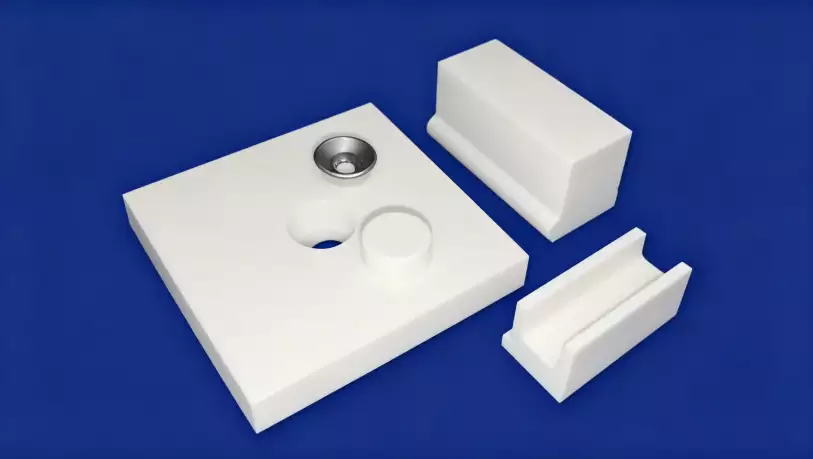
Based on years of in‑depth research on industrial wear conditions, Sanxin New Materials Co., Ltd has formed a complete industrial ceramic anti‑wear product matrix, covering single ceramic products, dual‑material composite structures and three‑material integrated liners, fully matching all kinds of light, medium and heavy abrasion and impact working conditions. Different from single‑product manufacturers in the market, our diversified ceramic lining series can achieve precise matching according to on‑site working condition differences, avoiding product mismatch and waste of cost.The product system includes multiple mature categories: adhesive ceramic lining pipe, sulfurized integrated ceramic pipe, integral wear‑resistant ceramic pipe, bolt‑welded fixed ceramic liner, steel‑ceramic 2‑in‑1 composite liner, ceramic‑rubber 2‑in‑1 liner and ceramic‑rubber‑steel 3‑in‑1 integrated wear‑protection liner. It also supports customized corundum ceramic parts, special industrial rubber accessories and matching ceramic adhesive supporting materials. Among all product lines, pure alumina ceramic liner is the most cost‑effective and widely used basic anti‑wear product, which is specially optimized for medium and high scouring working conditions without severe heavy impact, and is widely used in silos, chutes, pipelines and ball mill equipment in cement, mining and thermal power industries.All Sanxin ceramic wear‑resistant parts are produced with strictly screened high‑purity raw materials and standardized sintering process, with stable batch quality, consistent density and uniform hardness, completely avoiding the problems of uneven performance, easy cracking and fast wear of low‑quality miscellaneous ceramic products.
High‑performance alumina ceramic liner is made of high‑purity superfine alumina powder as the core raw material. After precise computer batching, multi‑stage fine grinding, vacuum granulation, static pressure dry pressing forming and ultra‑high temperature dense sintering process, the finished ceramic tile forms a dense and uniform microcrystalline structure. Every production link is precisely controlled to eliminate quality defects such as loose structure, uneven hardness and dimensional deviation.In the forming stage, dry pressing technology is adopted to ensure high flatness and accurate size of each ceramic tile, which lays a foundation for tight fitting and seamless assembly of on‑site wear‑resistant liner. In the high‑temperature sintering link, the kiln temperature curve is intelligently monitored in real time, with the sintering temperature stably controlled above 1700℃. Long‑term constant temperature sintering eliminates internal pores of ceramics, improves product density and mechanical strength, and fundamentally enhances anti‑abrasion and anti‑scouring performance.Sanxin’s conventional alumina ceramic lining adopts 92%‑95% high‑purity alumina formula, which balances performance and cost. For special working conditions such as ultra‑high temperature, strong corrosion and super heavy abrasion, we can customize higher‑purity alumina products. Qualified sintered ceramic products have low porosity, high compactness and stable chemical properties, which will not produce powder dropping, chipping and rapid wear during long‑term industrial operation, and effectively solve the durability problems of ordinary low‑grade ceramic liners.
Superior anti‑wear performance, 10 times higher than traditional metal materials: The wear resistance of standard alumina wear‑resistant liner is more than 10 times that of manganese steel and high‑chromium cast iron. Facing long‑term continuous scouring of mineral particles, coal powder, cement raw meal and granular slag, the material loss rate is extremely low. It can effectively solve common equipment failures such as inner wall thinning, local pitting, structural perforation and material leakage caused by rapid wear of metal liners. For ball mills, large‑capacity silos and long‑distance conveying chutes with huge material throughput, this ultra‑high wear resistance can greatly extend the equipment protection cycle and reduce replacement frequency.
Ultra‑high temperature resistance, adapting to extreme thermal working conditions: Alumina ceramic has excellent high‑temperature stability, with a maximum sustainable working temperature of 1600℃. It can operate stably in high‑temperature environments such as thermal power ash handling pipelines, metallurgical high‑temperature residue chutes and cement clinker conveying equipment, without softening, deformation, aging or failure. This performance advantage is incomparable to rubber, plastic and other polymer wear‑protection liner materials, and is very suitable for high‑temperature industrial production scenarios.
Super smooth surface, anti‑adhesion and anti‑blocking to improve conveying efficiency: The dense and flat surface of alumina ceramic lining has an extremely low friction coefficient. Wet fine powder, sticky mineral slurry and easy‑adhesive raw materials are not easy to adhere and accumulate on the surface. It thoroughly solves the problems of material hanging wall, arching and blockage common in metal lining equipment. It greatly reduces the frequency of manual shutdown cleaning and blockage troubleshooting, improves the continuous conveying efficiency of materials, and saves a lot of manual maintenance costs for enterprises.
Acid and alkali corrosion resistance, anti‑oxidation and anti‑aging for harsh environments: Sintered alumina ceramic has stable chemical inertness, does not react with most acid‑base corrosive media, and will not rust or corrode like metal plates. It can adapt to harsh working environments such as humid underground mines, mineral slurry splash, flue gas corrosion and alternating cold and hot climate. It has strong anti‑aging and anti‑oxidation capabilities, and can maintain stable protective performance for a long time in complex industrial environments, which is the ideal wear‑resistant liner for wear‑corrosion composite working conditions.
Lightweight structure, reducing equipment load and operating energy consumption: Under the same protective area and thickness, the weight of alumina ceramic liner is only half of that of traditional metal liner. After equipment renovation, the overall load of silos, chutes, ball mill barrels and other equipment is significantly reduced, the structural bearing pressure of mechanical equipment is relieved, the operation load of transmission components is reduced, and the overall energy consumption of equipment operation is effectively saved, realizing energy saving and consumption reduction while anti‑wear protection.
Industrial equipment in different industries has diverse structural shapes, including flat straight walls, circular curved surfaces, special‑shaped corners and variable‑diameter transition sections. Standard single‑size liners cannot meet the fitting requirements of all equipment. Sanxin New Materials supports full‑scale non‑standard customized production of alumina ceramic lining. According to customer equipment drawings or on‑site precise measurement data, we independently adjust the thickness, specification, shape and assembly gap of ceramic tiles to realize full coverage and high‑fit protection of all equipment inner walls without dead angles.Combined with different on‑site load characteristics, we provide two mature and reliable installation schemes for alumina wear‑resistant liner to meet the needs of different working conditions. The first is high‑strength special adhesive bonding installation, which is suitable for flat and curved equipment surfaces with medium and low impact load and mainly abrasive scouring. This installation method is fast in construction, low in cost and high in flatness, and is widely used in powder conveying pipelines, silo straight sections and low‑drop chutes.The second is bolt fastening composite installation. The ceramic tiles are pre‑fixed on the steel backing plate through hot‑fixing process to form an integrated module, and then the whole module is fixed on the equipment inner wall by bolts. This bolt‑fixed wear‑protection liner has extremely high firmness, completely avoids the risk of falling off caused by adhesive aging, failure and water immersion, and is very suitable for heavy‑impact parts such as ball mill feeding ends, high‑drop blanking ports and heavy‑load turning chutes.Sanxin’s professional construction team has summarized standardized construction specifications after long‑term engineering practice. Before installation, the steel substrate must be thoroughly derusted, degreased and polished to ensure a flat and clean bonding surface. During construction, the temperature and humidity are strictly controlled, and reasonable expansion gaps are reserved between tiles to adapt to thermal expansion and cold contraction. After installation, full‑coverage tapping inspection and no‑load trial operation are carried out to ensure no hollowing, no falling off and no displacement of the liner, maximizing the service life of the ceramic lining.
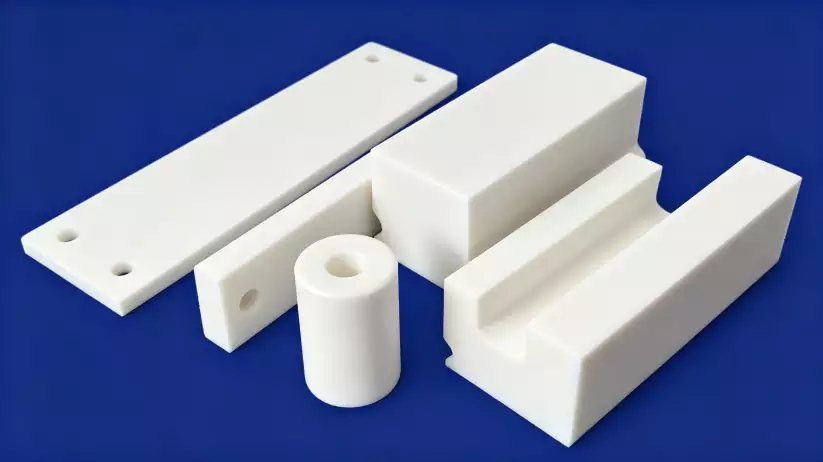
With its comprehensive performance advantages of high wear resistance, high temperature resistance, corrosion resistance and anti‑blocking, Sanxin alumina wear‑resistant liner has been widely used in five major heavy industries, solving the core wear problems of various bulk material processing equipment.Cement Industry: Applied to raw material ball mills, coal mills, clinker silos, raw meal storage bins and material transfer chutes. It resists the long‑term scouring and grinding of cement raw meal, clinker, coal powder and granular materials, effectively delays the wear and thinning of the mill barrel and silo wall, extends the equipment maintenance cycle, and avoids unplanned shutdown losses caused by equipment perforation and leakage.Mining & Mineral Processing Industry: Suitable for ore receiving hoppers, raw ore silos, mineral processing chutes, fine grinding ball mills and tailings conveying equipment. It copes with the high‑intensity scouring of hard ore particles and lump minerals, greatly reduces the wear failure rate of material handling equipment, and reduces the daily maintenance workload and spare parts replacement cost of the mine production system.Thermal Power Industry: Widely used in raw coal bunkers, coal feeding chutes, pulverized coal conveying pipelines, ash slag handling pipelines and desulfurization equipment. It solves the problems of fast wear, easy blockage and short service life of coal powder and ash slag conveying equipment, ensures the stable operation of the power plant fuel conveying and ash discharging system, and improves the overall operation efficiency of thermal power equipment.Metallurgical Industry: Applied to sintering plant material buffer hoppers, high‑temperature residue chutes and metal powder processing vessels. It adapts to the dual damage of high‑temperature scouring and weak corrosive medium erosion, maintains long‑term stable protection of equipment inner walls, and reduces the frequency of high‑temperature equipment maintenance.Chemical Industry: Used for corrosive powder storage tanks and granular material conveying chutes. Its excellent acid and alkali corrosion resistance avoids equipment wear and failure caused by chemical medium corrosion, and ensures the safe and stable operation of chemical production equipment.
In terms of initial procurement cost, alumina ceramicceramic lining is slightly higher than ordinary metal liner, but its long‑term life‑cycle comprehensive cost has absolute advantages. The service life of metal wear plates is only 3‑12 months, while the service life of qualified alumina wear‑resistant liner can reach 5‑8 years under conventional working conditions, and even longer under stable medium and light abrasion conditions.Long service life greatly reduces the frequency of spare parts procurement and equipment shutdown maintenance. For industrial production lines that operate continuously throughout the year, it can save more than 70% of annual maintenance labor costs and spare parts costs, and completely avoid huge economic losses caused by frequent production shutdowns. In addition, the anti‑blocking and high‑efficiency conveying characteristics of ceramic liners optimize the material conveying state, improve production line operation efficiency, and create additional economic benefits for enterprises.From the perspective of long‑term equipment operation and enterprise development, upgrading traditional metal protection to alumina ceramic wear‑protection liner is a cost‑effective and high‑return technical transformation measure, which is also the inevitable trend of modern heavy industrial equipment anti‑wear upgrading.
As a mature and reliable heavy‑duty anti‑wear protective material, alumina ceramic lining perfectly solves the multiple pain points of fast wear, easy corrosion, frequent blockage and short service life of traditional metal liners in industrial equipment. With ultra‑high wear resistance, high temperature resistance, corrosion resistance, anti‑adhesion and lightweight advantages, it provides stable and long‑term safety protection for bulk material processing equipment in cement, mining, thermal power, metallurgy and chemical industries.Sanxin New Materials Co., Ltd relies on complete product system, mature production technology and rich engineering practice experience to provide global industrial customers with one‑stop anti‑wear solutions including working condition evaluation, product customization, scheme design, on‑site construction guidance and after‑sales technical support. We can accurately match the most suitable wear‑resistant liner products according to different working condition parameters such as material hardness, particle size, drop height, temperature and corrosivity, helping enterprises reduce operation and maintenance costs, improve production efficiency and realize long‑term stable and efficient operation of production equipment.

Submit your demand,
we will contact you ASAP.

Sanxin New Materials Co., Ltd. focus on producing and selling ceramic beads and parts such as grinding media, blasting beads, bearing ball, structure part, ceramic wear-resistant liners, Nanoparticles Nano Powder


 English
 English
 Russian
 French
 Spanish
 Portuguese
 Arabic