

Ball mills serve as core grinding equipment across mining‑metallurgy, cement, power generation, chemical and fine‑processing industries. They operate continuously under combined mechanical loads: high‑velocity particle impact from grinding media, intensive friction and slurry scouring. Traditional manganese‑steel and alloy‑steel liners have long been the mainstream inner‑shell protection solution, yet they carry well‑documented drawbacks. Steel liners wear rapidly under abrasive ore and powder conditions, requiring frequent shutdown for patching and full replacement every 6‑12 months in typical operating environments. Beyond high spare‑part and labor expenses, worn metal liners shed iron‑manganese debris, introducing metallic contamination into ground finished powders. This impurity downgrades product quality and complicates downstream separation and purification workflows.Against this background, high‑purity alumina ceramic liners have emerged as a proven upgrade alternative to conventional metal mill liners. Manufactured by Sanxin New Materials, these specialized ceramic components deliver outstanding wear resistance, chemical inertness and low‑contamination performance. They fit both dry‑grinding and wet‑grinding ball mill working conditions, helping factories extend equipment lifespan, cut power consumption and improve final powder quality. Plant engineers seeking anti‑abrasion upgrades for grinding circuits can review complete product portfolios via wear-resistant ceramic parts. This article elaborates material characteristics, core application benefits, two mainstream installation processes, cross‑industry practical cases and critical operational guidelines for alumina ceramic ball‑mill liners, delivering actionable technical references for mineral and powder‑processing plant renovation projects.
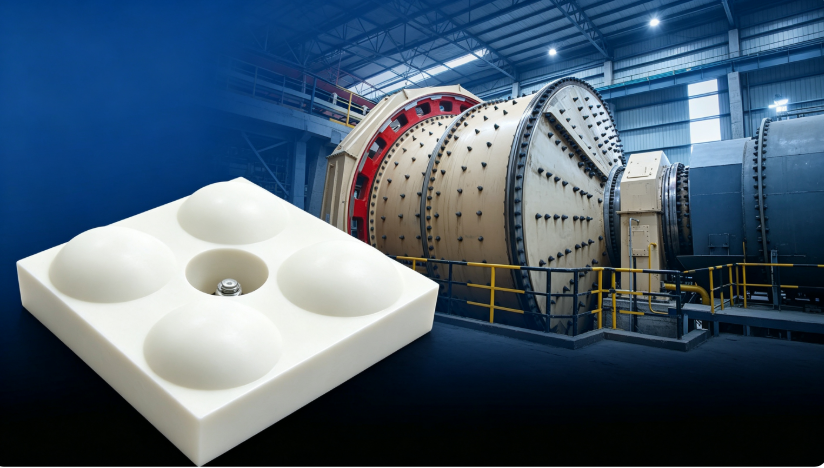
Sanxin New Materials ball‑mill‑purpose alumina ceramic liners adopt raw material of 92 % and higher high‑purity α‑alumina, mixed with trace modifying additives. Products go through high‑pressure forming and sintering above 1600 °C. Premium grades introduce zirconia‑toughened modification to balance hardness and anti‑cracking capacity, perfectly matching rigorous ball‑mill service conditions. Key physical‑chemical indicators are listed below.
Superior abrasion resistance: Rockwell hardness reaches HRA 90‑93, far exceeding manganese‑steel. Wear performance is 15‑20 times higher than ordinary manganese‑steel liners, and can reach multiples higher under stable mild‑abrasion conditions, greatly slowing liner material loss.
Balanced strength and impact tolerance: Compressive strength hits 2000‑2500 MPa; fracture toughness ranges 3.5‑4.5 MPa·m¹/². The material withstands continuous impact and cutting wear from grinding balls and mineral particles, resisting cracking and tile spalling.
Corrosion‑oxidation resistance: Stable chemical composition resists acid‑alkali erosion and high‑temperature oxidation. It performs reliably within wet‑grinding and corrosive‑slurry environments without chemical reaction with processed feedstock.
Light‑weight for energy saving: Material density sits at approximately 3.6 g/cm³, significantly lighter than metallic liners. Reduced overall mill dead load lowers driving torque and motor power draw.
Zero metallic contamination: No iron‑manganese metal precipitation during operation. It satisfies strict purity requirements for pharmaceutical, fine‑chemical and advanced‑building‑material powder manufacturing workflows.
It is worth noting that pure alumina ceramic retains inherent brittleness. It is not suitable for extreme heavy‑impact crushing scenarios with oversized ultra‑hard lump feedstock. For such demanding locations, zirconia‑toughened ceramic variants or partial metal protective zones must be adopted.
Replacing conventional steel liners with Sanxin New Materials alumina ceramic liners brings four major sets of measurable production‑oriented advantages for ball‑mill workshops.
Standard manganese‑steel liners normally only serve 6‑12 months before heavy wear forces repair work. Alumina ceramic liners achieve service life of 3‑5 years under qualified operating circumstances, representing 5‑10‑fold improvement versus traditional steel alternatives. Less frequent liner replacement and patching directly cut mill downtime and raise equipment availability factor and continuous production capacity. For mineral concentrators and cement plants running 24‑hour shifts, each avoided shutdown prevents considerable production‑output losses.
The light‑weight property of alumina ceramic decreases total rotating mass of ball‑mill shells, reducing running resistance. Practical field data demonstrate 5‑10 % drop of operating power consumption compared with steel‑liner configurations. In addition, dense, low‑friction ceramic surfaces decrease ineffective friction between grinding media and inner liners. Grinding homogeneity improves and overall grinding efficiency increases by over 10 %. Cumulative electricity‑saving and maintenance‑reduction effects create substantial long‑term operational‑cost benefits for production facilities.
Constant abrasion of metal liners generates fine metallic chips mixing into ground powder products. These impurities degrade powder purity and interfere with subsequent processing performance. Sanxin New Materials alumina ceramic liners release no metal debris throughout their lifecycle. They eliminate metallic contamination risks and optimize particle‑size uniformity of finished powder, which is especially critical for high‑end fine‑powder‑processing sectors.
Alumina ceramic liners support both dry‑grinding workflows for ore, cement clinker and coal powder, and wet‑grinding applications for mineral slurry and chemical slurry. The material resists high dust, high humidity and mild corrosive environments, keeping stable dimensions without rusting, deformation or penetration. It solves typical failure modes of metal liners such as corrosion perforation and material leakage.
According to ball‑mill dimensions, impact intensity and internal wear distribution, Sanxin New Materials recommends two mature installation technologies for alumina ceramic liners: adhesive‑bonded mounting and bolt‑fastened mechanical fixing. Each solution targets different wear zones inside ball‑mill shells.
High‑strength inorganic high‑temperature special adhesive bonds standard‑specification alumina ceramic tiles directly onto cleaned ball‑mill inner shells. This installation method features convenient on‑site operation, short construction periods and relatively moderate project costs. Properly‑applied tiles fit tightly with minimal gaps and seldom trap residual materials.Applicable positions: Inner shells of medium‑and‑small‑sized ball mills, feed‑end sections, side‑wall areas suffering low‑to‑moderate scouring. It adapts to general dry‑grinding and mild wet‑grinding working‑conditions. This scheme is not recommended for zones subjected to fierce concentrated lump‑and‑grinding‑ball impact.
Ceramic liner blanks are pre‑fabricated with reserved bolt holes. Metal bolts rigidly fasten liners onto mill shells, and sealant fills clearance gaps. This mechanical fixing approach delivers outstanding impact‑resistance and anti‑detachment performance.Applicable positions: Discharge ends, discharge zones, high‑impact shell sections and end plates inside large‑scale ball mills. These locations face high‑flow‑rate slurry, strong particle cutting force and violent pounding from grinding media. Bolt‑fixed structures effectively prevent liner shifting, cracking and falling‑off risks.
Important installation pre‑condition: Before liner fitting, mill inner surfaces must be thoroughly cleared of grease, rust and old worn residues to guarantee flat, dry bonding substrate. Adhesive construction strictly controls glue thickness, curing temperature and curing duration. Bolt installations require sealing and anti‑rust treatment for bolt gaps.
Sanxin New Materials alumina ceramic ball‑mill liners are widely deployed across cement, mining‑metallurgy, power‑chemical and fine‑material‑processing industries.
In cement plants, alumina ceramic liners retrofit raw‑meal and clinker ball mills. Cement clinker features high hardness and strong scouring capacity, accelerating wear of traditional steel liners. After adopting ceramic liners, service cycles extend greatly and maintenance shutdown frequency drops. Moreover, it avoids metal impurity mixing into cement powder, improving finished‑cement purity and product strength while lowering workshop maintenance expenses.
Ore‑grinding ball mills for iron ore, gold ore and non‑ferrous mineral processing work under extremely abrasive circumstances. Sanxin New Materials alumina ceramic liners slow shell wear rate and stabilize mill running status. Most importantly, it prevents metallic contamination that would downgrade concentrate grade, improving quality indexes of beneficiation final products.
Thermal‑power‑plant coal‑pulverizing ball mills and chemical‑plant powder‑grinding equipment adopt ceramic liners to cope with high‑temperature coal‑powder grinding and corrosive chemical‑slurry environments. The material eliminates risks of liner rusting, perforation and medium leakage, securing stable and safe production line performance.
For pharmaceutical production, food‑grade powder, ceramic raw material and advanced‑powder‑material grinding ball mills, the zero‑metal‑contamination advantage of alumina ceramic liners becomes decisive. It guarantees high‑purity finished‑powder output and fulfills strict quality standards that metal liners cannot satisfy.For customers evaluating ball‑mill anti‑wear renovation solutions, comprehensive product documentation and engineering suggestions are accessible via wear-resistant ceramic parts technical resources.
Even premium‑grade alumina ceramic liners will under‑perform without proper condition screening, standardized construction, correct specification matching and routine maintenance. Four core aspects deserve plant engineers’ full attention.
Working‑condition screening: Ordinary alumina ceramic liners are not fit for crushing‑stage positions with ultra‑heavy impact from oversized hard lumps. Under such circumstances, use zirconia‑toughened ceramic products or retain partial metal protective structures locally to avoid tile cracking.
Standardized installation construction: Remove oil stain, rust and worn debris completely from mill inner walls before installation, securing flat and dry contact surfaces. Adhesive projects must follow glue proportion, coating thickness and curing procedure strictly. Bolt‑mounted liners need sealing and anti‑rust handling for bolt clearances to stop loosening and debonding.
Match specifications with actual conditions: Select proper liner thickness, toughness grade and fixing mode based on ball‑mill dimensions, ore hardness, scouring severity and dry‑or‑wet grinding modes. Too‑thin liners wear quickly; excessively thick liners reduce mill valid inner volume and lower grinding throughput.
Daily operation and maintenance protection: Prevent iron blocks and oversized hard fragments from entering ball‑mill chambers during production to avoid local violent impact damage to ceramic liners. Conduct periodic inspections to check bonding status and bolt tightening torque. Timely resolve hidden risks such as tile loosening, cracking and spalling.
Ball mills constitute capital‑intensive, high‑energy‑consuming core equipment for heavy‑industry powder‑preparation workflows. Liner wear problems continuously trouble production‑site management teams. Sanxin New Materials alumina ceramic ball‑mill liners address multiple pain‑points of conventional manganese‑steel liners: short service life, frequent shutdown maintenance, high energy consumption and metallic product contamination.With carefully‑selected adhesive‑bonded or bolt‑fastened installation technologies, these ceramic liners deliver long service cycles, energy‑saving benefits and stable finished‑product purity for cement, mining‑metallurgy, power‑chemical and high‑end fine‑powder‑processing enterprises. It should be emphasized that alumina ceramic liners are not universal for every ball‑mill location. Engineering teams must analyze local impact intensity, medium‑corrosiveness and equipment geometry to choose appropriate material grade, liner thickness and fixing method.When correctly specified and professionally installed, Sanxin New Materials alumina ceramic liners effectively cut unplanned downtime, reduce maintenance labor and spare‑part expenditure, improve site safety level and stabilize grinding‑process indicators, bringing prominent full‑life‑cycle economic returns for grinding workshops. As a mature heavy‑duty anti‑abrasion solution, alumina ceramic liners will gain expanding adoption in global ball‑mill‑retrofit and new‑project‑specification markets. Enterprises seeking ball‑mill‑lining upgrade proposals can refer to wear-resistant ceramic parts for complete solution information.

Submit your demand,
we will contact you ASAP.

Sanxin New Materials Co., Ltd. focus on producing and selling ceramic beads and parts such as grinding media, blasting beads, bearing ball, structure part, ceramic wear-resistant liners, Nanoparticles Nano Powder


 English
 English
 Russian
 French
 Spanish
 Portuguese
 Arabic