

Mining, cement manufacturing, thermal‑power generation, metallurgy and chemical processing industries are constantly confronted with equipment degradation triggered by particle scouring, mechanical friction, particle impact, high‑temperature oxidation and chemical medium corrosion. Conventional protective materials including carbon steel, manganese‑steel alloy, high‑chromium cast iron, cast stone and rubber liner frequently struggle to achieve balanced performance across wear‑resistance, high‑temperature tolerance, chemical stability and service‑life expectancy under harsh continuous operating environments. Frequent component replacement, repetitive welding maintenance and unplanned production shutdowns substantially push up comprehensive operational expenditure for industrial facilities.As a mature advanced sintered engineering material, high‑purity alumina wear‑resistant ceramics have gradually become a mainstream anti‑abrasion solution for heavy‑duty industrial equipment. Manufactured with high‑purity alumina raw materials and sintered at ultra‑high temperature, wear‑resistant liner and modular ceramic lining demonstrate outstanding comprehensive mechanical and chemical performances. Sanxin New Materials Co., Ltd accumulates abundant manufacturing and field‑application data across thousands of industrial anti‑wear renovation projects. Many procurement and engineering practitioners only understand that alumina ceramics resist abrasion, yet lack systematic cognition of its core property indicators, performance boundaries and comparison advantages versus traditional wear‑resistant materials.This technical article systematically dissects key performance metrics of alumina wear‑resistant ceramics, including abrasion resistance, hardness, high‑temperature stability, chemical inertness, lightweight characteristics and surface non‑adhesion property. It also carries out comparative analysis against traditional metal and non‑metal wear‑resistant materials. This document serves as reliable technical reference for equipment engineers, procurement specialists and project contractors when selectingwear‑protection liner and designing industrial anti‑wear transformation schemes, helping enterprises conduct reasonable material evaluation and avoid performance‑mismatch risks caused by one‑sided material understanding.
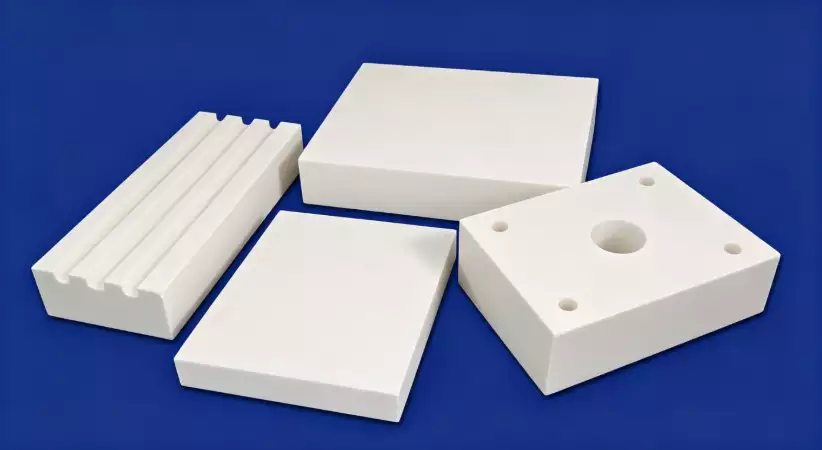
Alumina wear‑resistant ceramic is a typical oxide‑based sintered industrial ceramic, taking high‑purity aluminium‑oxide powder as primary raw material. After precise batching, isostatic pressing or roll forming processes, green bodies go through high‑temperature tunnel‑kiln sintering within temperature range from 1600 ℃ to 1800 ℃ to obtain dense polycrystalline finished components. The alumina content directly determines crystal‑phase composition, internal impurity‑phase proportion, compactness and overall performance of finishedliner.Three mainstream purity grades are widely adopted in modern industrial anti‑wear markets: 92 % alumina, 95 % alumina and 99 % high‑purity alumina. Each grade possesses distinct material characteristics and applicable‑scenario boundaries. Higher alumina content reduces glass‑phase impurities inside sintered bodies, promoting improvements in hardness, abrasion resistance, high‑temperature performance and corrosion‑resistant capacity. Meanwhile, raw‑material and production‑process costs rise correspondingly.
92 % Alumina Grade: Balanced cost‑performance for general‑purpose industrial anti‑wear scenarios. Suitable for normal‑temperature, medium‑abrasion environments without strong chemical corrosion. This grade of ceramic lining delivers stable comprehensive performance for most conventional powder‑scouring working‑conditions.
95 % Alumina Grade: The most‑widely‑adopted universal heavy‑duty grade for industrial anti‑wear projects. It achieves optimal balance between mechanical property and procurement‑cost, and is the preferred specification for most mining, thermal‑power and cement‑plant wear‑resistant liner applications.
99 % High‑Purity Alumina Grade: Targeted for high‑end working‑conditions with strict requirements on corrosion‑resistance and material‑purity, such as fine‑chemical and new‑energy‑material production. This wear‑protection liner effectively prevents impurity‑ion precipitation, yet it is economically unnecessary for ordinary abrasive‑wear‑only sites.
Sanxin New Materials Co., Ltd strictly controls raw‑powder incoming inspection, forming‑parameter stability and sintering‑temperature‑holding curves for every production batch. Consistent alumina‑content control guarantees stable batch‑to‑batch performance of finishedceramic lining.
Outstanding anti‑abrasion capability constitutes the most‑recognised advantage of alumina‑based wear‑resistant liner. Qualified high‑density alumina ceramic reaches Mohs hardness Grade 9, second only to diamond among common industrial materials, with Vickers‑hardness index stably maintained between 1500 HV‑1800 HV. Such extreme hardness endows the material with exceptional resistance against cutting‑type abrasive wear caused by hard mineral particles, quartz sand, clinker and fly‑ash.Comparative field‑test data indicates that the abrasion loss rate of dense alumina ceramic is merely 1/10‑1/20 of ordinary carbon‑steel plates. Under particle‑scouring working‑conditions, its service life can reach more than 170 times of high‑chromium cast iron and over 200 times of manganese‑steel alloy. For extreme wet‑grinding circulating‑slurry environments, service‑life multiple against manganese‑steel can even approach 500 times. When properly selected and installed, wear‑protection liner can continuously operate for 5‑8 years or longer in many heavy‑abrasion industrial circuits.It is worth emphasizing that high hardness brings excellent anti‑scouring performance, yet hardness cannot offset brittle‑fracture risks under concentrated heavy‑impact loads. Pure monolithic alumina ceramic lining is not recommended for working‑conditions dominated by large lump‑material violent impact; composite‑structure solutions combining rubber buffer layers shall be adopted for such scenarios.
The melting‑point of high‑purity alumina ceramic reaches 2072 ℃. Well‑sintered alumina‑based liner can sustain long‑term stable operation under continuous ambient‑temperature up to 1200 ℃, without obvious decline of mechanical strength, softening, creep or thermal‑deformation phenomena frequently observed for metal materials.Such high‑temperature‑resistance characteristic delivers prominent value for thermal‑power flue‑gas pipelines, high‑temperature clinker‑conveying equipment and high‑temperature powder‑processing facilities. Traditional metal alloy liners gradually lose mechanical rigidity under elevated‑temperature conditions, accelerating abrasive‑wear progress. By contrast, alumina wear‑resistant liner maintains stable hardness and wear‑resistance under sustained high‑temperature particle‑scouring environments.Nevertheless, users must differentiate material‑body temperature‑resistance from system‑level high‑temperature adaptability. Even though ceramic itself tolerates high heat, supporting adhesive, gaskets and auxiliary fasteners also have respective temperature‑limits. When deploying ceramic lining for high‑temperature equipment, matching high‑temperature‑grade auxiliary accessories must be selected, otherwise early‑stage peeling failure may still occur.
Dense sintered alumina ceramic possesses remarkable chemical inertness. It resists erosion from most weak‑acid, weak‑alkali, salt‑solution and oxidizing‑atmosphere environments. This property makes wear‑protection liner simultaneously cope with dual damage mechanisms of particle abrasion plus medium corrosion inside many metallurgical, chemical and desulfurization‑system equipment.Ordinary carbon‑steel and alloy liners suffer coupling deterioration of abrasive wear plus electrochemical corrosion inside slurry pipelines containing acid‑alkali ions, accelerating thinning‑through failure. Rubber‑type liners easily age and degrade under elevated‑temperature corrosive‑medium conditions. Proper‑grade alumina ceramic lining effectively suppresses such combined‑mode material degradation.Corrosion‑resistance performance is closely correlated with alumina purity and internal glass‑phase impurity content. 99 % high‑purity wear‑resistant liner shows far better anti‑corrosion performance compared with 92 %‑grade products. Users should note that alumina ceramics cannot withstand long‑term erosion from hydrofluoric acid and concentrated strong‑alkali media; for such special‑medium environments, additional material‑compatibility assessment is indispensable.
Alumina ceramic bulk‑density falls within range 3.6‑3.9 g/cm³, substantially lower than manganese‑steel and high‑chromium cast‑iron density (approx. 7.8 g/cm³). For identical‑thickness protective‑layer requirements, the weight of alumina‑based liner is merely around one‑half of alloy‑material liner weight.Adopting lightweight wear‑resistant liner reduces static load borne by silos, hoppers, pipelines and rotating‑type processing equipment. It mitigates fatigue‑stress accumulation for steel‑structure supports, bearing assemblies and driving‑components, indirectly extending service‑life of host equipment and lowering extra energy‑consumption caused by heavy protective‑component dead‑weight. This lightweight merit brings prominent engineering‑value for reconstruction‑projects of aged‑equipment with limited structural‑load‑bearing capacity.
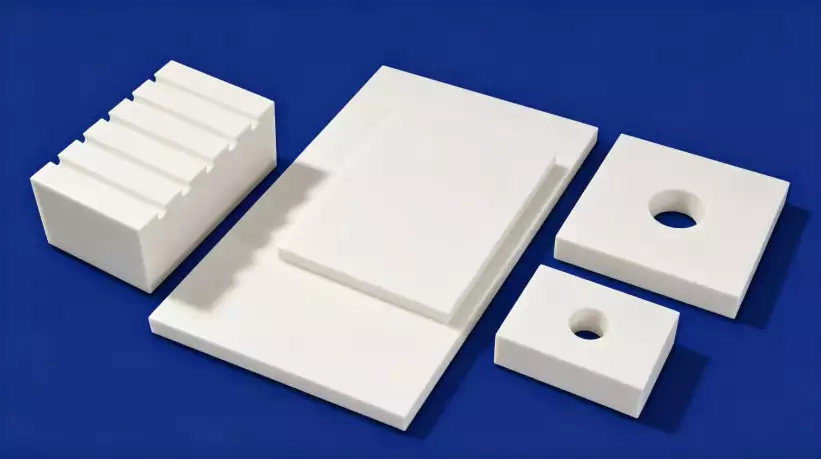
Well‑sintered alumina‑based ceramic lining forms extremely compact, low‑surface‑energy smooth inner‑wall after fine finishing. Material particles hardly adhere and accumulate on its surface. In comparison, rough metal liner surfaces tend to capture viscous powders, wet mineral‑slurry and fine‑grained materials, giving rise to material caking, silo bridging and pipeline‑blocking malfunctions, disturbing continuous material‑transport efficiency.In cement raw‑material silos, ash‑storage bins and powder‑conveying pipelines deployed with wear‑protection liner, material‑accumulation and block‑incident frequency drop significantly. It cuts down manual‑cleaning workload and production‑interruption risks triggered by material‑jamming, stabilizes throughput capacity for bulk‑material‑handling systems, and delivers indirect economic‑benefits besides pure anti‑abrasion performance.
Each traditional anti‑wear material possesses its own merits and inherent limitations. Understanding comparative‑performance differences helps industrial‑project teams select liner rationally according to real‑site working‑conditions:
Carbon‑steel / Stainless‑Steel Plate: Advantage: low initial procurement‑cost, convenient welding‑construction. Drawback: poor abrasion‑resistance, prone to rust and electrochemical‑corrosion, frequent replacement‑cycles. Suitable for light‑wear non‑critical structures, not fit for heavy‑abrasion core‑equipment inner‑wall protection. Alumina ceramic lining greatly outperforms steel‑plate under particle‑scouring and corrosive‑medium environments.
Manganese‑Steel & High‑Chromium Cast‑Iron: Advantage: high toughness, capable of sustaining heavy lump‑material impact load. Drawback: heavy weight, high material‑cost, limited anti‑abrasion performance under fine‑particle continuous‑scouring. It remains preferred for ultra‑heavy‑impact positions, while alumina‑based wear‑resistant liner exhibits far longer service‑life for scouring‑dominated working‑conditions.
Cast‑Stone Liner: Advantage: high surface‑hardness, low raw‑material‑cost. Drawback: extreme brittleness, easily fragment under slight impact; difficult partial‑repair after local damage. Alumina wear‑protection liner possesses superior toughness, modular‑tile partial‑replace‑maintain capability and wider working‑condition adaptability.
Rubber Liner: Advantage: excellent shock‑absorbing performance, noise‑reduction effect. Drawback: poor high‑temperature‑resistance, vulnerable to cutting‑wear from sharp hard‑particles, prone to aging failure. Ceramic‑rubber composite ceramic lining combines rubber buffer‑capacity and ceramic anti‑abrasion merits for medium‑impact complex‑working‑conditions.
Although alumina‑based wear‑resistant liner delivers multiple outstanding comprehensive‑properties, it is not universal omnipotent anti‑wear material. Engineering practitioners need to fully acknowledge its application‑boundaries to avoid over‑expectation and improper‑selection failures.First, monolithic pure alumina ceramic belongs to brittle material. It lacks plastic‑deformation capacity; concentrated heavy point‑impact load may induce crack‑initiation and fragment‑fall‑off. For working‑conditions with frequent large‑size lump‑material high‑drop‑height impact, composite‑structure wear‑protection liner integrating rubber buffer layer must be adopted instead of simple single‑body ceramic‑tile schemes.Second, special‑chemical‑medium restriction exists. It cannot sustain long‑term contact with hydrofluoric acid and high‑concentration hot strong‑alkali medium. For such special‑corrosion‑scenarios, alternative anti‑abrasion material‑solutions should be evaluated. Third, performance of whole protection‑system depends not merely on ceramic‑body itself. Adhesive, gasket and bolt‑accessory performance will directly influence long‑term operational reliability ofceramic lining. High‑quality ceramic‑tiles still may peel‑off if supporting‑accessories mismatch working‑condition parameters.Fourth, attention shall be paid to thermal‑stress control during installation. Reserving reasonable splicing‑gap is required to accommodate thermal‑expansion difference between metal‑substrate and ceramic‑material, preventing thermal‑stress‑triggered cracking risk for liner.
As a high‑performance heavy‑industry anti‑abrasion material, alumina wear‑resistant ceramic represented by wear‑resistant liner and ceramic lining integrates ultra‑high abrasion‑resistance, excellent high‑temperature‑stability, chemical‑inertness, lightweight‑merit and anti‑material‑adhesion advantages. It supplies reliable anti‑wear protection solutions for mining, cement, thermal‑power, metallurgy, chemical‑industry and new‑energy‑material‑manufacturing sectors.Nevertheless, every material has its inherent performance‑boundaries. Engineering decision‑makers should avoid two extreme‑cognitive tendencies: blindly deeming alumina‑ceramic solves all wear‑related‑problems, or simply negating its value due to brittle‑material characteristics. Rational material‑selection requires comprehensive weighing of alumina‑purity‑grade, material‑brittleness‑limitation, medium‑corrosiveness, impact‑intensity and matching‑accessory‑conditions, rather than judging merely from single‑index such as hardness.Sanxin New Materials Co., Ltd focuses on R&D, batch‑stable production and application‑technical‑service for industrial alumina‑ceramic anti‑wear‑components. We provide standard and customized‑size wear‑protection liner and complete anti‑wear‑system‑solutions for global industrial‑clients. Customers can provide detailed on‑site working‑condition‑parameters; our technical‑team will deliver targeted material‑grade and structural‑form recommendations, assisting enterprises in achieving long‑term stable equipment‑protection and comprehensive‑operational‑cost reduction.

Submit your demand,
we will contact you ASAP.

Sanxin New Materials Co., Ltd. focus on producing and selling ceramic beads and parts such as grinding media, blasting beads, bearing ball, structure part, ceramic wear-resistant liners, Nanoparticles Nano Powder


 English
 English
 Russian
 French
 Spanish
 Portuguese
 Arabic