

In large‑scale open‑pit mining and underground mineral processing operations, transfer chutes serve as the core connecting equipment for bulk material transportation, undertaking continuous feeding, diversion, buffering and transfer tasks for various raw ores, gangue particles, crushed gravel and mineral slag. Throughout the long‑term continuous production process, mining chutes are exposed to extremely harsh working conditions, including high‑speed particle scouring generated by high‑volume material flow, strong gravitational impact caused by vertical drop of bulk ores, and persistent sliding friction between mineral particles and equipment inner walls. Under the superposition of multiple destructive forces, traditional all‑metal welded chutes and ordinary lined chutes inevitably suffer from progressive structural damage and performance degradation.Common on‑site failures include continuous thinning of the metal inner wall, dense pitting corrosion and abrasive grooves on the contact surface, local structural perforation, rust expansion and deformation of the base material, as well as peeling and failure of ordinary metal liner plates. Once the protective structure fails, material leakage, dust overflow and frequent chute blockage will occur frequently, which not only pollutes the on‑site production environment, but also brings hidden dangers to the safe and stable operation of the entire mineral processing production line. To repair damaged chutes, mining enterprises need to arrange regular shutdown inspections, manual welding repairs and frequent replacement of wearing parts, resulting in massive labor cost, spare parts consumption and invisible production shutdown losses. Most mining sites fall into a vicious cycle of “wear, shutdown, maintenance, and re‑wear”, which seriously restricts the improvement of overall production efficiency and increases long‑term operational and maintenance costs.With the continuous upgrading of modern mining intelligent and efficient production modes, traditional metal wear‑resistant solutions can no longer adapt to high‑intensity and long‑cycle mining operation requirements. Against this industry background, high‑purity sintered alumina ceramic materials have become the most effective and reliable anti‑wear solution for mining chute renovation. High‑performance alumina‑based wear‑resistant liner and modular integrated ceramic lining can perfectly adapt to heavy scouring, medium and heavy impact, and humid corrosive mining working conditions. Sanxin New Materials Co., Ltd has accumulated a large number of successful on‑site renovation cases in domestic and foreign mining projects, with stable product performance and mature construction technology.This professional technical article systematically analyzes the internal wear mechanism of mining transfer chutes, summarizes the inherent defects of traditional metal lining protection schemes, deeply interprets the core physical and chemical advantages of alumina ceramic anti‑wear materials, introduces targeted customized product solutions and standardized construction key points, and displays practical application effects of engineering projects. It provides systematic and actionable technical reference and selection basis for mine equipment management engineers, procurement personnel, engineering contractors and technical transformation decision‑makers who are engaged in chute anti‑wear renovation and new mining equipment supporting design with high‑quality wear‑protection liner.
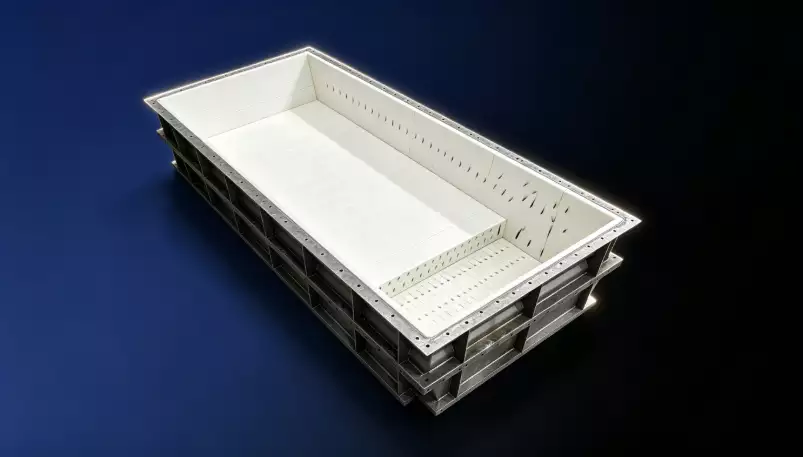
Mining transfer chutes belong to typical heavy‑abrasion and multi‑load bearing equipment. The mineral materials transported on site have the characteristics of high hardness, wide particle size distribution, large single‑batch transportation volume and continuous cyclic operation. At present, the mainstream protective materials for mining chutes on the market are still manganese steel plates, high‑chromium alloy steel plates and ordinary cast iron lining plates. These metal materials have the advantages of low initial procurement cost and convenient welding and processing, but their comprehensive wear resistance and environmental adaptability have obvious bottlenecks in long‑term heavy‑duty mining scenarios.Under conventional medium and heavy abrasive mining working conditions, the effective service life of ordinary metalliner is only 3 to 8 months. In the actual production process, the inner wall of the chute will form irregular abrasive grooves and impact pits under the continuous scouring and impact of mineral particles. With the extension of operation time, the surface damage gradually expands and deepens, resulting in local thinning and perforation of the equipment wall. After the perforation of the chute, mineral materials will leak in large quantities, causing site accumulation and environmental pollution, and even triggering equipment jamming and shutdown accidents in severe cases. In addition, the uneven inner wall formed by long‑term wear will increase the friction resistance of material transportation, lead to frequent material accumulation and blockage, further intensify local impact pressure and abrasive wear, and accelerate the overall failure speed of the protective lining structure.The maintenance and repair of traditional metal chutes are extremely cumbersome. Each failure requires manual cutting of the old lining plate, welding and fixing of the new plate, and overall polishing and shaping. The whole maintenance process consumes a lot of manpower, material resources and time costs. More critically, all maintenance operations must be carried out under shutdown conditions, resulting in frequent interruption of the mining production line, greatly reducing the effective operating rate of the equipment, and bringing huge invisible economic losses to mining enterprises. In order to solve the long‑term pain point of short service life and frequent maintenance of traditional metal protective structures, more and more modern mining enterprises begin to abandon single metal protection schemes and choose high‑durability alumina ceramic ceramic lining for comprehensive anti‑wear upgrading and transformation.
Alumina wear‑resistant ceramic is a professional high‑hardness anti‑abrasion engineering material specially developed for heavy‑duty industrial wear scenarios such as mining, metallurgy and building materials. It is made of high‑purity alumina ultrafine powder through precise batching, isostatic pressing integral forming and ultra‑high temperature sintering above 1700℃. The finished ceramic product has a dense and uniform internal crystal structure, extremely low porosity and stable physical and chemical properties. Compared with traditional metal liner materials, alumina‑based wear‑resistant liner has comprehensive and decisive performance advantages in anti‑scouring ability, impact resistance, corrosion resistance and service life, which can fully meet the long‑term stable protection needs of mining chutes.
The high‑quality sintered alumina ceramic produced by Sanxin New Materials Co., Ltd reaches Mohs hardness grade 9, which is second only to diamond among common industrial wear‑resistant materials. Its Rockwell hardness HRA is stably higher than 85, and the Vickers hardness is maintained between 1500HV and 1800HV. Professional industrial test data verifies that the abrasive wear resistance of alumina ceramic is more than 20 times that of ordinary manganese steel and 30 to 50 times that of high‑chromium cast iron, and the material abrasion loss per unit time is only 1/20 to 1/50 of that of traditional metal lining plates.In the working scenario where hard ore, gangue and mineral slag flow rapidly along the chute, the dense and smooth surface of alumina‑based wear‑protection liner can effectively resist cutting abrasive wear and sliding friction of hard particles. There will be no obvious scratches, indentations and material spalling on the ceramic surface after long‑term operation, which fundamentally suppresses the continuous wear and thinning of the inner wall of the chute, greatly delays the overall equipment aging speed, and realizes long‑term stable anti‑scouring protection of the chute equipment.
Aiming at the problem that ordinary ceramic materials are brittle and easy to crack under impact, Sanxin New Materials Co., Ltd optimizes the raw material ratio and high‑temperature sintering curve, improves the internal micro‑structure toughness of alumina ceramics, and enhances the mechanical impact resistance of finished products. The optimized ceramic lining can fully bear the cyclic gravitational impact generated by lump mineral particles in the conventional operation of mining chutes, avoiding brittle cracking and local peeling failure caused by material impact.At the same time, high‑purity sintered alumina has excellent chemical inertness and can adapt to complex mining environments with pH values ranging from 1 to 14. It can effectively resist the erosion of humid underground air, mineral‑containing wastewater and acidic and alkaline slurry media, completely avoid the electrochemical corrosion and rust expansion failure common in steel liner materials, and solve the comprehensive damage problem of chute equipment caused by the coupling of wear and corrosion.
The effective service life of traditional metal chute lining plates is generally less than 1 year, and frequent replacement and maintenance are required in the later stage of operation. After the chute is retrofitted with high‑quality alumina‑based wear‑resistant liner, the continuous stable service cycle can be extended to 5‑8 years, and even longer in medium and light abrasion and stable working conditions. The ultra‑long service life greatly reduces the frequency of equipment shutdown maintenance and spare parts replacement.A large number of mine field application data show that after adopting Sanxin New Materials Co., Ltd’s ceramic anti‑wear protection scheme, the annual maintenance labor cost and spare parts consumption cost of chute equipment can be reduced by more than 70%. The one‑time construction and multi‑year stable operation mode completely breaks the vicious maintenance cycle of traditional equipment, effectively guarantees the continuous and stable operation of mining production lines, and creates significant long‑term economic benefits for mining enterprises.
Mining chutes have diverse structural forms and uneven on‑site wear conditions, including straight conveying chutes, curved turning chutes, vertical drop hoppers, material diversion transition chutes and buffer silo chutes. Different structural positions bear completely different wear loads: the straight section is mainly affected by uniform particle scouring, the curved corner and material impact drop point bear superposed damage of strong impact and high‑speed scouring, and the transition section is prone to material accumulation and local accelerated wear. The single standard ceramic tile cannot meet the all‑round high‑precision protection needs of complex chute structures, so targeted customized production of ceramic lining is essential for high‑quality chute anti‑wear transformation.Sanxin New Materials Co., Ltd implements full‑process strict quality control from raw material proportioning, precision die forming, high‑temperature tunnel kiln sintering to finished product screening and inspection. According to the equipment drawings provided by customers or on‑site precise measurement data, we customize ceramic tiles, bolt‑fixed lining plates and multi‑specification structural wear‑resistant parts matching different chute wear areas. For conventional straight‑section scouring areas, high‑cost‑performance adhesive ceramic tiles are adopted; for curved surfaces and transition areas, special‑shaped customized ceramic parts are used to ensure a perfect fit without dead angles.For the key heavy‑impact drop points inside the chute, we recommend the mature ceramic‑rubber‑steel three‑in‑one composite wear‑resistant liner. The structural design perfectly complements the performance advantages of different materials: the outer steel substrate provides overall structural stability and bearing capacity, the middle rubber buffer layer effectively absorbs instantaneous impact kinetic energy generated by lump ore falling, and the surface alumina ceramic layer undertakes efficient anti‑scouring and anti‑abrasion tasks. This composite structure thoroughly solves the industry pain point that single ceramic is brittle and easy to crack under heavy impact, and realizes the organic unity of impact resistance and wear resistance.All customized ceramic wear‑resistant components will pass strict professional tests such as high‑speed scouring abrasion test, cyclic impact load test and medium corrosion resistance test before leaving the factory. The products have high flatness, accurate size and good fitting performance, which is convenient for rapid on‑site installation, effectively shortens the construction cycle, and minimizes the impact on the normal production schedule of the mine site.
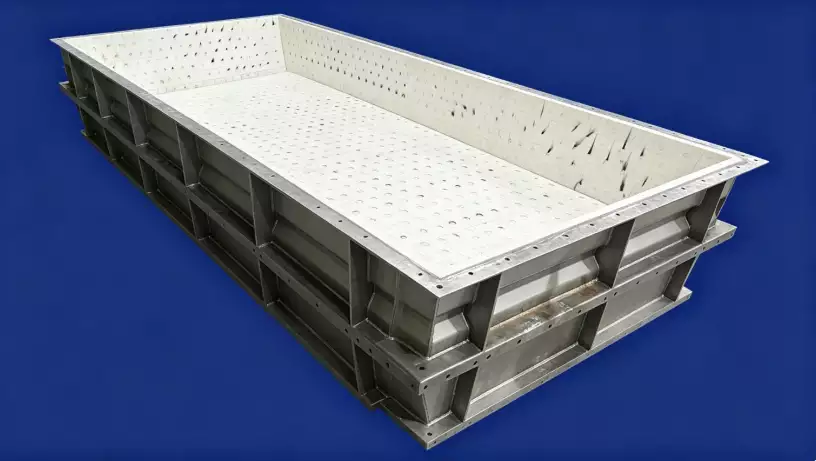
High‑quality product performance is the foundation of anti‑wear protection, but scientific material selection and standardized construction technology are the core guarantees to ensure the long‑term service life of liner. Improper material matching or non‑standard installation process will lead to hidden dangers such as ceramic tile hollowing, peeling and cracking, which affect the overall protection effect. Combined with years of on‑site construction experience, Sanxin New Materials Co., Ltd summarizes the key technical points of chute ceramic anti‑wear construction for standardized reference.
Scientific grade matching: For chute areas dominated by fine particle scouring and low‑amplitude friction with no obvious heavy impact, 92%‑95% alumina adhesive‑bonded ceramic lining can achieve excellent cost performance, which meets the long‑term anti‑wear demand and avoids excessive investment caused by over‑grade matching.
Anti‑impact structure optimization: For vertical drop points and material impact zones with large lump ore and high fall height, composite‑structure wear‑protection liner must be selected instead of single pure ceramic tiles, so as to buffer concentrated impact load and prevent brittle cracking and peeling of ceramics.
Strict substrate pretreatment: Before ceramic installation, the steel substrate surface must be thoroughly derusted, degreased and sandblasted to remove surface rust, oil stains and oxide layers, ensuring that the bonding surface is clean and flat, and improving the bonding firmness of ceramic components.
Standardized adhesive and gap treatment: Select special high‑strength mine‑grade adhesive matching the on‑site operating temperature environment. Reserve reasonable splicing gaps between ceramic tiles to adapt to the thermal expansion and contraction difference between steel substrate and alumina wear‑resistant liner, and avoid ceramic cracking caused by thermal stress.
Post‑installation inspection and acceptance: After the completion of installation, full‑coverage tapping inspection shall be carried out. All hollow and poorly bonded ceramic tiles shall be reworked and repaired in time to ensure that the overall lining structure is firm and free of hidden dangers before the equipment is put into operation.
After long‑term tracking and verification of a large number of mine on‑site renovation projects, the alumina ceramic anti‑wear protection scheme has achieved extremely significant application results in solving mining chute wear problems. After deploying high‑performance alumina‑based wear‑resistant liner, the common equipment failures such as severe inner wall wear, structural perforation, material leakage and frequent blockage of mining chutes are completely and effectively solved.The equipment failure rate of renovated chutes is reduced by more than 80%, the effective operation time of the production line is greatly increased, and the repeated maintenance and replacement work of wearing parts is basically eliminated. Mining enterprises have achieved obvious cost reduction and efficiency improvement effects in terms of labor input, spare parts procurement and production downtime loss control. In addition, the smooth and non‑adhesive surface of ceramic lining effectively reduces material accumulation and chute blockage, optimizes the material conveying efficiency of the production line, and further improves the overall mineral processing capacity.It is necessary to clarify the application boundaries of alumina ceramic materials. As a typical brittle engineering material, pure alumina ceramics still have limitations in extreme working conditions with oversized ore lumps and ultra‑high drop impact. For such special heavy‑impact scenarios, Sanxin New Materials Co., Ltd’s professional technical team will conduct comprehensive parameter evaluation combined with on‑site ore hardness, particle size distribution, drop height, medium corrosivity and equipment vibration amplitude, and formulate a customized composite protection scheme combining buffer structure and high‑wear‑resistant wear‑protection liner to balance structural safety, service life and economic benefits.
Long‑term severe wear of mining transfer chutes has always been a key bottleneck restricting the safe, stable and efficient operation of mineral processing production lines. Traditional metal liner protection schemes are limited by inherent material defects such as low hardness, poor corrosion resistance and short service life, which cannot adapt to the long‑term high‑intensity operation requirements of modern mining equipment. In contrast, alumina ceramic anti‑wear materials represented by high‑quality wear‑resistant liner and modular ceramic lining have outstanding advantages of ultra‑high wear resistance, excellent corrosion resistance, moderate impact resistance and ultra‑long service life, which provide a mature and reliable efficient solution for mining chute anti‑wear transformation.Sanxin New Materials Co., Ltd focuses on R&D, standardized mass production and customized engineering supporting services of industrial alumina ceramic anti‑wear components. Relying on complete product specifications, stable batch quality control and rich global mine engineering practice experience, we provide targeted one‑stop anti‑wear overall solutions for mining industry customers. According to different on‑site working condition parameters, our technical team scientifically matches material grades and structural forms of wear‑protection liner, helps mining enterprises completely solve equipment wear pain points, reduce comprehensive operation and maintenance costs, and realize long‑term stable and efficient operation of mineral processing equipment.

Submit your demand,
we will contact you ASAP.

Sanxin New Materials Co., Ltd. focus on producing and selling ceramic beads and parts such as grinding media, blasting beads, bearing ball, structure part, ceramic wear-resistant liners, Nanoparticles Nano Powder


 English
 English
 Russian
 French
 Spanish
 Portuguese
 Arabic