

Cement and building‑material manufacturing is a typical high‑abrasion, high‑continuous‑operation industrial scenario, relying on large‑scale pneumatic conveying and gravity discharging systems to transport raw meal, limestone powder, clinker, slag powder, fly ash and other granular and powdery materials throughout the production line. In daily production, these materials feature high hardness, sharp particle edges and large conveying volume, resulting in long‑term high‑speed scouring, grinding and impact wear on the inner wall of traditional carbon steel pipelines. In addition, cement raw materials and flue gas dust contain trace alkaline substances and partial corrosive components, which will gradually oxidize, corrode and age ordinary metal pipes under long‑term high‑temperature and high‑humidity workshop environments.Traditional steel pipelines used in cement powder conveying systems usually face severe failure problems within 1 to 2 years of operation, including continuous wall thinning, local pitting corrosion, pipeline perforation and frequent powder leakage. These failures not only cause massive waste of raw cement materials and reduce material conveying efficiency, but also lead to serious on‑site dust flying, exceeding environmental protection dust indicators, increasing enterprise environmental rectification pressure. At the same time, frequent pipeline damage requires repeated shutdown maintenance and replacement, seriously affecting the continuous operation of cement production lines, reducing equipment operation rate, and bringing huge hidden dangers to production safety and stable output efficiency.To solve the above‑mentioned industry pain points of easy wear, easy corrosion, frequent blockage and short service life of cement conveying pipelines, high‑performance alumina ceramic‑lined composite steel pipes have become the most effective upgrading solution for cement powder conveying and discharging systems. Manufactured by Sanxin New Materials (叁鑫新材), this new type of wear‑resistant composite pipe perfectly combines the high mechanical strength of steel structure and the ultra‑high wear resistance and corrosion resistance of alumina ceramics, completely solving the common problems of traditional metal pipelines in cement working conditions. For cement plant engineering procurement and technical renovation teams looking for long‑life and low‑maintenance pipeline supporting equipment, high‑quality and high‑stability wear‑resistant ceramic parts can provide systematic anti‑wear solutions for the entire cement production line. This article comprehensively expands on the structural advantages, core material performance, diversified manufacturing processes, full‑line application scenarios, on‑site operation benefits, professional selection standards and daily maintenance specifications of alumina ceramic‑lined steel pipes in the cement building materials industry, providing comprehensive and authoritative technical guidance for new cement project pipeline design and old production line pipeline system renovation.
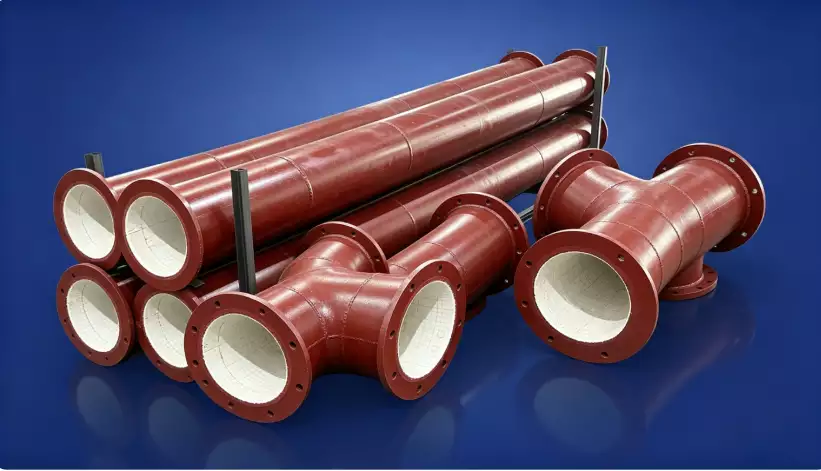
Sanxin New Materials alumina ceramic‑lined steel pipe adopts a mature dual‑layer composite structure of “outer steel pipe + inner alumina ceramic wear‑resistant layer”, which perfectly balances mechanical installation performance and ultra‑strong anti‑wear and anti‑corrosion capabilities. The outer layer is made of national standard high‑quality carbon steel pipe, which has excellent compressive resistance, bending resistance and structural stability. It can adapt to complex and changeable pipeline layout environments in cement plants, including high‑altitude overhead laying, ground hidden laying, elbow turning conveying, equipment butt joint and other complex working conditions. The steel pipe support flexible on‑site cutting, welding, flange connection and hoop fixing, with strong construction adaptability and high installation compatibility, which can meet the diversified construction needs of cement production lines.The inner anti‑wear layer is sintered with high‑purity 92%‑99% alumina ceramic raw materials at ultra‑high temperature above 1600°C. After fine grinding and pressing molding, the ceramic layer has a dense crystal structure, smooth and flat inner wall, no pores, no sand holes, and extremely low surface roughness. The Mohs hardness is as high as grade 9, which is far higher than various cement raw materials and traditional wear‑resistant metal materials. The ceramic layer has excellent wear resistance, acid and alkali corrosion resistance, high temperature aging resistance and anti‑scouring performance, which can resist long‑term impact and grinding of high‑hardness powder and particles in cement workshops.Compared with traditional wear‑resistant pipeline products on the market, Sanxin New Materials alumina ceramic composite pipes have comprehensive performance advantages. Compared with cast stone pipes, it has higher toughness, stronger impact resistance, and is not easy to crack and break during transportation, installation and use. Compared with wear‑resistant cast iron pipes and alloy steel pipes, its wear resistance is more than 10 times higher, with lighter weight and lower long‑term maintenance cost. Compared with rubber lining and organic coating pipelines, the alumina ceramic layer will not age, peel or fall off under high‑temperature and high‑speed scouring conditions, avoiding the failure risk of pipeline anti‑wear performance attenuation.Sanxin New Materials supports a variety of mature customized molding processes for ceramic‑lined steel pipes, including adhesive ceramic tile lining, integral ceramic sleeve lining and SHS self‑propagating high‑temperature synthesis molding. According to different material abrasion degree, conveying speed and temperature parameters of cement production lines, targeted process schemes can be matched. All ceramic layers are tightly combined with the steel pipe matrix through high‑temperature inorganic strong adhesive or metallurgical fusion technology, with firm bonding force, no hollowing, no peeling, and can adapt to 24‑hour uninterrupted cyclic operation of cement production lines, resisting thermal shock and mechanical vibration damage.In addition to single alumina ceramic lining structures, Sanxin New Materials independently develops and manufactures multi‑functional composite liner series including 2 in 1 ceramic steel liners and 3 in 1 ceramic rubber steel liners, which are extended and upgraded products tailored for complex and harsh working conditions of cement powder conveying and discharging systems. These multi‑layer composite wear‑resistant structures integrate the high wear resistance of alumina ceramics, the shock absorption and buffer performance of special rubber, and the structural strength of special steel parts, solving the structural defects of single ceramic lining that is brittle and insufficient in impact resistance, as well as the shortcomings of single metal lining with fast wear and short service life.The 2 in 1 ceramic steel composite structure adopts a dual composite design of steel substrate + alumina ceramic wear‑resistant layer, which strengthens the bonding firmness of the ceramic layer on the basis of traditional single lining. It is suitable for conventional high‑abrasion and medium‑impact powder conveying sections in cement plants, achieving a perfect balance between wear resistance and structural stability. The 3 in 1 ceramic rubber steel three‑in‑one structure adds a high‑elastic special rubber buffer layer between the steel pipe and the ceramic layer. The rubber layer can effectively absorb strong instantaneous impact force generated by high‑speed falling of clinker and large‑particle materials, avoid ceramic cracking and peeling caused by rigid impact, and greatly improve the adaptability of wear‑resistant pipelines in high‑impact and high‑abrasion composite working conditions.
The production and conveying process of modern new dry‑process cement plants has the characteristics of large material throughput, fast conveying speed, continuous operation throughout the day and high material hardness. Raw meal, clinker, slag powder and other materials have sharp particle edges and strong grinding performance, which cause extremely severe cyclic scouring and abrasive wear on the inner wall of the conveying pipeline. A large number of on‑site production data of cement plants show that ordinary carbon steel pipelines are severely worn after 6‑12 months of operation, and wall thickness is significantly reduced. Most metal pipelines need to be replaced in 1‑2 years, and local leakage and pipe blockage failures often occur in the later service period, which seriously restrict the stable operation of the production line. Relying on excellent composite structure and ultra‑high wear resistance, Sanxin New Materials alumina ceramic‑lined steel pipes are widely used in all core wear‑prone pipeline links of cement building material production lines, covering the whole process of raw material feeding, powder classification, high‑temperature blanking, finished product conveying and dust removal.
Inlet and outlet pipelines of powder separators and classifiers: Bear high‑speed scouring of raw‑meal powder under circulating classification conditions;
Cyclone separator discharge pipelines: Handle gravity falling of high‑temperature raw‑meal and calcined intermediate materials;
Raw‑meal powder conveying pipelines: Long‑distance pneumatic conveying of mixed raw mineral powder;
Clinker particle conveying pipelines: Transport hard‑fired cement clinker granular material;
Slag micro‑powder conveying pipelines: Convey abrasive industrial slag fine powder for cement blending;
Dust‑removal system dust‑transport pipelines: Process large‑volume dust‑containing airflow inside workshop dedusting loops.
The above‑listed pipeline links are typical high‑wear and high‑failure hot spots in cement powder conveying and discharging systems. These positions bear high‑speed pneumatic scouring, gravity impact and long‑term cyclic grinding of hard materials, and are the key parts that restrict the service life of the entire cement pipeline system. The large‑scale application of Sanxin New Materials alumina ceramic‑lined composite pipes completely solves the common failure problems of traditional metal pipelines such as fast wear, easy corrosion, easy blockage and easy powder leakage, and realizes long‑term stable and efficient operation of cement conveying pipelines. Enterprises that need to upgrade cement plant wear‑resistant pipelines can obtain more professional matching schemes and product parameters through wear‑resistant ceramic parts technical resources.
The inner wall of the alumina ceramic‑lined steel pipe is made of high‑purity dense ceramic material with Mohs hardness up to grade 9, which far exceeds the hardness of cement raw meal, clinker, slag powder and other conveying materials. It can completely resist continuous grinding, high‑speed scouring and particle impact of various abrasive powders and particles in cement production. Compared with ordinary carbon steel pipes, the service life is increased by more than 10 times, and the service life in medium and mild abrasion working conditions can reach more than 8 years. The ultra‑long service cycle greatly reduces the frequency of pipeline inspection, maintenance and replacement, effectively avoids production shutdown losses caused by pipeline damage, and greatly reduces the consumption of spare parts and labor maintenance costs for cement enterprises.
The high‑temperature sintered alumina ceramic inner wall has a dense and smooth microstructure, ultra‑low surface roughness, no adsorption and no fouling. In the long‑term powder conveying process, cement powder, fine slag powder and fly ash will not adhere to the pipe wall to form material accumulation and scaling. Traditional metal pipelines are prone to powder sticking and wall hanging after long‑term use, resulting in reduced pipe diameter, increased material conveying resistance, decreased conveying efficiency, and even frequent pipe blockage and shutdown cleaning. The ceramic lining completely avoids this problem, always maintains the original pipeline caliber and stable conveying resistance, ensures continuous and efficient material transportation of the cement production line, and greatly reduces the hidden danger of production shutdown caused by pipe blockage.
High‑purity alumina ceramic is an inert inorganic material with excellent chemical stability, which can resist the erosion of trace alkaline components, acidic substances and humid corrosive media contained in cement raw materials and flue gas dust. Different from metal pipes which are easy to rust, corrode and perforate, the ceramic lining will not undergo chemical reaction, aging, peeling or powder dropping in complex cement working environments. It can operate stably for a long time under high temperature, high humidity and high dust conditions, perfectly adapting to the 24‑hour uninterrupted continuous production mode of modern cement plants, and effectively improving the overall operational stability and safety of the pipeline system.
The steel‑ceramic composite structure retains the excellent welding performance and flange sealing performance of the steel pipe. The overall pipeline has good rigidity and tightness, which can effectively avoid gap leakage and flying dust on the pipe wall and interface. In the cement production workshop with serious dust pollution, the application of ceramic‑lined steel pipes thoroughly solves the problem of material leakage and dust overflow in traditional pipelines, optimizes the on‑site production environment, reduces workshop dust concentration, helps cement enterprises meet national environmental protection emission standards, and reduces environmental supervision and rectification risks.
Although the one‑time procurement cost of alumina ceramic‑lined steel pipes is slightly higher than that of ordinary carbon steel pipes, its ultra‑long maintenance‑free cycle and extremely low failure rate bring extremely high full‑life‑cycle economic benefits. It greatly reduces the comprehensive costs of enterprise equipment maintenance, spare part replacement, material loss, environmental protection rectification and shutdown production loss. At the same time, the stable and efficient material conveying performance ensures the continuous output and product quality stability of the cement production line, helping enterprises realize energy saving, consumption reduction and green production. At present, Sanxin New Materials alumina ceramic‑lined steel pipes have become standardized and preferred wear‑resistant supporting equipment for new dry‑process cement production lines, and are widely recognized and promoted by large and medium‑sized cement building material enterprises.
In the process of cement production line design, pipeline renovation and equipment upgrading, the scientific selection of alumina ceramic‑lined steel pipes directly determines the long‑term operation effect and service life of the conveying system. Engineers need to comprehensively select pipeline specifications, ceramic purity, lining thickness and manufacturing process according to actual working condition parameters such as material abrasion, operating temperature, conveying speed and pipe diameter, to ensure the best matching between product performance and on‑site working conditions.
Material abrasiveness matching: For high‑hardness and strong‑abrasion working conditions such as clinker conveying, slag powder transportation and high‑hardness raw meal circulating classification, it is recommended to adopt high‑purity alumina ceramic lining with Al₂O₃ content ≥92% and appropriately increase the thickness of the ceramic layer to enhance anti‑scouring and anti‑wear capability. For working conditions with both strong abrasion and frequent material impact, prioritize Sanxin New Materials’ professional 2 in 1 ceramic steel liners and 3 in 1 ceramic rubber steel liners to resist dual damage of scouring and impact. For conventional raw meal and ordinary powder conveying with mild abrasion, medium‑grade alumina ceramic lining can be selected to balance performance and cost.
Operating temperature range matching: For high‑temperature pipeline sections such as cyclone separator discharge pipes and high‑temperature dust removal pipes, high‑temperature resistant integrated ceramic sleeve lining process is adopted to avoid adhesive aging and failure under high‑temperature environment. For normal‑temperature powder conveying pipelines, conventional adhesive ceramic lining process can meet the long‑term stable operation requirements.
Conveying speed and impact strength matching: For high‑speed pneumatic conveying pipelines and elbow turning pipelines with strong particle impact, priority should be given to thickened ceramic lining and bolt‑fixed reinforced structure to prevent ceramic layer cracking and peeling caused by long‑term strong impact. For straight pipe sections with stable and low‑impact conveying, standard ceramic lining specifications can be used.
Pipeline installation environment matching: For outdoor exposed pipelines and high‑altitude laying pipelines with large temperature difference between cold and heat, composite pipes with strong thermal shock resistance are selected to adapt to seasonal temperature changes and avoid structural damage caused by thermal expansion and cold contraction. For indoor conventional buried pipelines, standard specifications can be used for stable matching.
Sanxin New Materials alumina ceramic‑lined steel pipes have strong construction adaptability, which can fully adapt to the diversified installation methods of cement production lines. Before installation, the pipe fittings need to be inspected in full scale to check whether the ceramic lining is intact, whether there is cracking, hollowing and damage, and whether the steel pipe matrix is deformed. After confirming that the product is qualified, formal construction and installation can be carried out.During the installation process, cutting and welding operations can be carried out according to the on‑site pipeline layout. After cutting, the cut surface shall be polished smoothly, and the damaged local ceramic layer shall be repaired with special ceramic adhesive to ensure the integrity and continuity of the overall anti‑wear layer. Flange connection and butt welding are the main connection methods, which can ensure the tightness and firmness of the pipeline interface. After the installation of the pipeline system, pressure test and air tightness test shall be carried out to eliminate hidden dangers of interface leakage, ensuring that the whole conveying system operates without leakage and blockage.
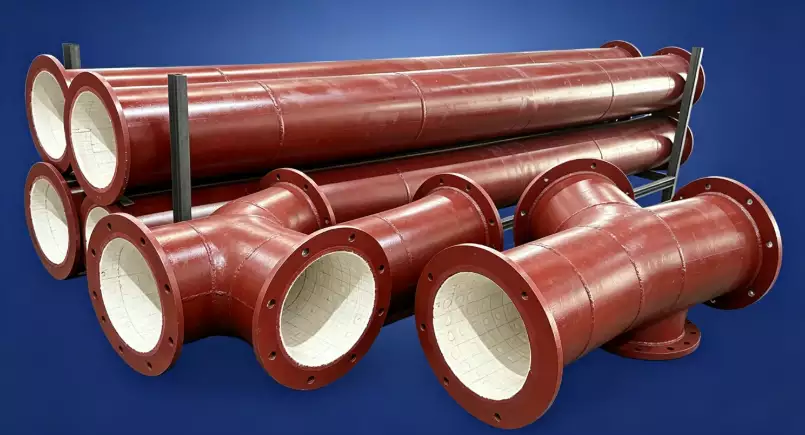
Compared with traditional wear‑resistant pipelines, alumina ceramic‑lined steel pipes have extremely low maintenance frequency, but standardized daily management can further extend the service life of the pipeline system. In daily production operation, it is necessary to avoid foreign hard sundries such as iron blocks entering the conveying pipeline, so as to prevent local strong impact from causing ceramic layer damage. Regularly inspect the pipeline operation status, check whether there is local powder accumulation, abnormal vibration and interface leakage.For long‑term continuous operation pipelines, regular comprehensive inspection and maintenance shall be carried out every six months to one year. For individual loose and damaged ceramic parts, targeted repair and replacement shall be carried out in time to avoid the expansion of local damage affecting the overall service life of the pipeline. Scientific daily maintenance can maximize the full‑life‑cycle value of ceramic‑lined steel pipes and reduce long‑term operating costs for cement enterprises.
As the core supporting equipment of cement building material powder conveying and discharging system, alumina ceramic‑lined steel pipes and multi‑spec composite wear‑resistant pipelines including 2 in 1 and 3 in 1 composite liners perfectly solve the industry pain points of fast wear, easy corrosion, frequent blockage and serious dust leakage of traditional metal pipelines. Relying on the dual advantages of steel mechanical strength and ceramic anti‑wear and anti‑corrosion performance, as well as the buffer and anti‑impact advantages of multi‑layer composite structures, Sanxin New Materials composite ceramic pipelines are highly adapted to the high‑intensity and continuous operation working conditions of modern cement production lines, helping enterprises reduce maintenance costs, stabilize production efficiency, improve on‑site environmental protection standards and realize green and efficient production upgrading.With the continuous upgrading of the cement building materials industry towards energy saving, consumption reduction and environmental protection, high‑performance wear‑resistant ceramic composite pipelines will become the mainstream upgrading trend of cement plant conveying systems. More and more cement enterprises choose to replace traditional metal pipelines with ceramic‑lined steel pipes to realize long‑term stable and low‑cost operation of production lines. For cement industry engineering teams and procurement personnel who need wear‑resistant pipeline solutions, please visit wear‑resistant ceramic parts to obtain full‑set product parameters, engineering cases and customized technical solutions.

Submit your demand,
we will contact you ASAP.

Sanxin New Materials Co., Ltd. focus on producing and selling ceramic beads and parts such as grinding media, blasting beads, bearing ball, structure part, ceramic wear-resistant liners, Nanoparticles Nano Powder


 English
 English
 Russian
 French
 Spanish
 Portuguese
 Arabic