

Mineral processing operations generate massive volumes of tailings and high‑concentration mineral slurry that require long‑distance pipeline transportation across concentrator sites, tailings ponds and backfill stations. In modern mining circuits, slurry usually contains hard mineral particles such as quartz, feldspar, pyrite and gangue fragments, with solid‑phase mass fraction ranging from 40 % to 70 %, flow velocity generally maintained between 2 m/s and 4.5 m/s for stable hydraulic conveying. Continuous high‑speed particle scouring, sliding abrasion, particle impact at elbows, tees and reducers, plus chemical corrosion from acidic or alkaline process water, create extremely destructive working conditions for conventional metal pipelines.Traditional carbon steel pipes, alloy steel pipes, manganese steel pipes and rubber‑lined pipes have long been adopted for mine slurry delivery, yet obvious practical defects remain. Ordinary carbon steel suffers fast wall‑thinning; many straight pipe segments need partial replacement within six months, while elbows and bends, which bear centrifugal impact from slurry flow, often fail within two to three months, triggering pipeline leakage, unexpected production shutdown, safety risks and environmental pollution hazards. High‑chromium alloy steel improves wear performance to some extent, but high material cost, heavy weight and limited anti‑corrosion capacity restrict large‑scale deployment. Rubber‑lined pipelines perform well under moderate abrasion, yet they cannot sustain high‑temperature slurry, sharp‑particle heavy impact or strong chemical media, and rubber ageing leads to liner peeling and frequent maintenance work.Against this background, wear‑protection liner represented by alumina ceramic‑lined composite steel pipes has gradually become a mainstream technical upgrade for global mining concentrators. Sanxin New Materials focuses on developing industrial ceramic wear‑resistant solutions for mineral processing scenarios, supplying high‑quality alumina ceramic‑lined steel pipes and supporting components for tailings discharge, concentrate transportation and mine backfill projects. The composite structure combines high‑toughness outer steel pipe and high‑hardness internal alumina ceramic layer, balancing mechanical strength, impact resistance and exceptional anti‑abrasion performance. Compared with traditional pipeline materials, this type of composite pipe effectively solves the dual damage of abrasive wear and chemical corrosion in tailings and slurry conveying, reduces pipeline replacement frequency, cuts down unplanned downtime and brings considerable long‑term economic benefits for mining enterprises.
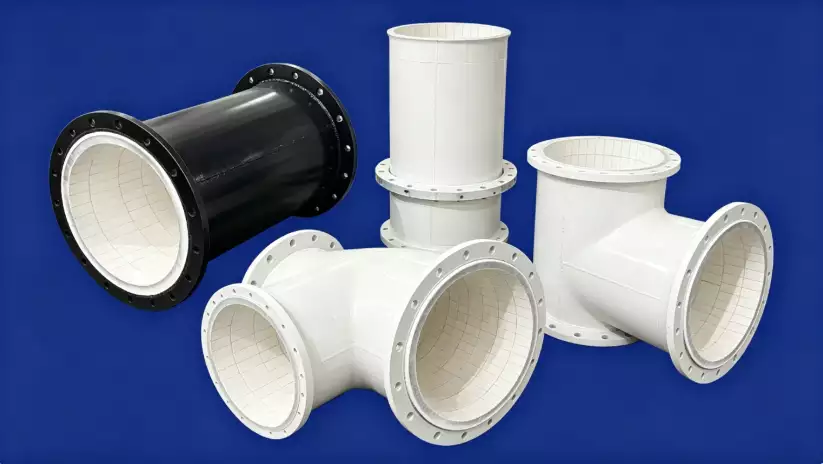
Alumina ceramic‑lined steel pipe is a typical bimetallic composite wear‑resistant pipeline product. Its overall structure is divided into three core layers: outer carbon steel matrix layer, middle bonding transition layer and inner high‑alumina ceramic working layer. The outer steel pipe provides excellent mechanical strength, bearing capacity, welding performance and external impact resistance, which can bear external pressure, soil load and construction mechanical collision during field laying. The intermediate bonding adhesive adopts high‑strength high‑temperature‑resistant inorganic polymer binder, which tightly bonds the ceramic sheet and the inner wall of steel pipe as a whole, avoiding the risk of ceramic sheet falling off under long‑term slurry scouring. The inner layer adopts 92%‑95% high‑purity alumina ceramic tiles, which are the core functional part of wear‑resistant liner.High‑alumina ceramic material obtains extremely high hardness after high‑temperature sintering. Its Rockwell hardness reaches HRA85‑90, far exceeding manganese steel, high‑chromium alloy and rubber materials. Hard mineral particles in tailings and ore slurry are difficult to produce cutting scratches on the ceramic surface. From the perspective of wear mechanism, the wear forms of mine slurry pipeline mainly include micro‑cutting wear, impact fatigue wear and corrosion‑accelerated wear. For metal pipelines, hard particles continuously cut the metal surface, and corrosive ions in slurry expand micro‑cracks on the metal surface, accelerating material loss. For alumina ceramic lining, its dense sintered structure is chemically inert, and it will not react with most acidic and alkaline ore‑slurry media. The smooth surface greatly reduces the cutting effect of mineral particles, and the material loss rate is reduced by more than 85% compared with ordinary alloy steel.It is worth noting that alumina ceramic belongs to brittle material, so structural optimization is very critical for complex pipe fittings such as elbows and tees. Sanxin New Materials adopts special‑shaped arc ceramic tiles for bending sections, so that the ceramic lining can fit the inner curved surface completely, avoiding gaps and step structures. The spliced gap between ceramic tiles is strictly controlled, preventing slurry from penetrating into the bonding layer. Many early failure cases of ceramic‑lined pipes in mining sites are not caused by ceramic wear itself, but by slurry seepage from excessive splicing gaps, which erodes the adhesive layer and leads to large‑area peeling of ceramic tiles. Reasonable tile design, precise cutting and mature bonding process determine the actual service life of wear‑protection liner under complex mine working conditions.
When mining companies select alumina ceramic‑lined steel pipes for tailings and slurry transportation, they cannot only refer to laboratory wear data. It is necessary to combine actual working‑condition parameters to evaluate key performance indicators, including wear resistance, impact resistance, corrosion resistance, fluid resistance, temperature adaptability and structural stability.First of all, wear resistance is the core index. Under the scouring condition of quartz‑containing hard tailings, the volume wear rate of qualified 95‑alumina ceramic lining is extremely low. Under the same slurry velocity and particle size conditions, its service life is 10‑20 times that of ordinary carbon steel pipe and 3‑5 times that of high‑chromium alloy pipe. However, when the slurry contains large‑size sharp ore fragments exceeding the allowable particle size range, the local impact force will increase sharply. At this time, it is necessary to adjust the thickness of ceramic lining according to the maximum particle size, flow velocity and impact angle. For elbows where the slurry impacts vertically, thicker ceramic tiles should be configured to enhance anti‑impact performance.Second, corrosion resistance. Mine tailings slurry often contains residual flotation reagents, sulfate ions and a small amount of acid‑base components. High‑density alumina ceramics have stable chemical properties and can resist most weak acid and weak‑alkali slurry erosion. But it should be noted that alumina materials cannot resist long‑term erosion of strong hydrofluoric acid and concentrated strong alkali. When encountering special corrosive slurry, material adjustment or process pre‑treatment shall be carried out. Different from rubber‑lined pipes, alumina ceramic lining can work stably in the temperature range of ‑20 ℃ to 180 ℃, and will not age, soften or embrittle due to temperature change, which is very suitable for high‑temperature slurry discharge in some concentrators.Third, hydraulic performance. The inner surface of alumina ceramic lining is extremely smooth, and its absolute roughness is far lower than that of steel pipe and rubber‑lined pipe. Low surface roughness reduces the friction resistance of slurry transportation, lowers pipeline pressure loss, and helps to reduce the energy consumption of slurry pump operation. In long‑distance tailings conveying projects, the energy‑saving effect brought by low flow resistance can not be ignored. On the contrary, if the ceramic tiles are poorly constructed with obvious steps and gaps, the local turbulence will be intensified, which will increase both energy consumption and partial wear. Therefore, the construction quality of wear‑resistant liner directly affects hydraulic conveying efficiency.Fourth, structural safety and construction adaptability. The outer steel pipe completely retains the welding performance of carbon steel. On‑site construction workers can adopt conventional welding processes to connect pipe segments, which is consistent with the laying mode of traditional steel pipelines, without special transformation of construction equipment. After welding, local high‑temperature heat‑affected zones shall be treated to avoid damaging the bonding layer of nearby ceramic tiles. Sanxin New Materials provides standardized construction operation guidelines for mining customers to guide on‑site welding, cutting and hoisting operations and reduce construction‑caused product damage.
Alumina ceramic‑lined steel pipes are widely used in the whole‑process pipeline network of mineral processing plants, covering concentrate slurry transportation, tailings pressure conveying, underground filling slurry delivery, overflow slurry circulation and other links. Different pipeline positions bear different wear mechanisms, and the application effects also show differences.Straight‑section tailings conveying pipeline accounts for the largest proportion of the whole pipeline network. In straight pipe sections, slurry mainly produces sliding abrasive wear. Alumina ceramic lining can give full play to its wear‑resistant advantages. For long‑distance tailings discharge pipelines with a length of several kilometers, adopting ceramic‑lined steel pipes can greatly reduce the frequency of pipeline patrol and replacement. In many large‑scale metal mines, the service life of original carbon‑steel straight pipes is only 6‑10 months, while after transformation to ceramic‑lined composite pipes, the continuous service cycle can reach more than 5‑8 years.Pipe fittings such as elbows, tees and reducers are the most severely worn parts in the slurry conveying system. When the slurry flows through the elbow, the flow direction changes sharply, and solid particles produce high‑speed impact on the inner wall of the outer arc of the elbow. The wear rate of elbow is 3‑10 times higher than that of straight pipe. In the past, mining sites often needed to prepare a large number of spare elbows for frequent replacement. After using alumina ceramic‑lined elbows matched with wear‑protection liner, the service life of vulnerable pipe fittings is greatly improved, and the spare‑parts inventory pressure of the concentrator is significantly reduced. In practical engineering, many customers adopt a collocation scheme: ceramic‑lined elbows and tees for all vulnerable pipe fittings, and reasonably select pipeline types for straight sections according to economic calculation, so as to balance investment cost and operation benefit.Tailings backfill pipeline is another important application scenario. In metal mines, tailings after mineral processing are mixed with cementing materials to make filling slurry and transported underground for goaf backfill. The filling slurry has high solid content and contains aggregate particles. The pipeline bears both abrasive wear and scouring of cement‑containing medium. The alumina ceramic‑lined steel pipe avoids the wear‑through leakage of the backfill pipeline, prevents the blockage risk caused by pipeline inner‑wall corrosion and scaling, and ensures the safety and continuity of underground filling operation.In addition, it is also applied to the overflow pipeline of hydrocyclone, underflow slurry pipeline, return‑slurry pipeline of flotation system and other auxiliary slurry circuits. These branch pipelines are often ignored in the early stage of mine design. However, long‑term scouring will also cause frequent leakage. The adoption of ceramic‑lined composite pipes can reduce the maintenance workload of auxiliary systems and avoid production interference caused by auxiliary pipeline failure.
Even high‑quality alumina ceramic‑lined steel pipes may have premature failure if installation and field protection are not in place. Summarizing a large number of mine engineering cases, the main failure modes include ceramic tile falling off, local impact cracking, partial accelerated wear caused by wrong layout, and adhesive layer failure caused by welding overheating.In the production and factory quality‑control stage, Sanxin New Materials implements multi‑inspection procedures for ceramic‑lined pipes. First, check the appearance of alumina ceramic tiles to eliminate cracks, missing corners and surface defects. Control the splicing gap between ceramic tiles within the specified range. Carry out bonding‑strength sampling test to ensure that the adhesive layer can resist long‑term slurry scouring and temperature change. For special‑shaped pipe fittings such as elbows, conduct 100% visual inspection on the inner lining to ensure that the curved surface is fully covered without exposed steel substrate. Each batch of products is accompanied by inspection reports of ceramic hardness, thickness and bonding performance.During transportation and hoisting, violent collision shall be strictly prohibited. Although protected by outer steel pipe, heavy impact at local position may cause internal ceramic tiles to crack. The pipe fittings shall be hoisted with soft slings, and hard steel cables shall not directly contact the pipe body. Stacking height shall be controlled to avoid extrusion damage of bottom pipe fittings.On‑site welding is the key link. When welding two sections of ceramic‑lined steel pipes, reserve enough welding groove. Control welding heat input to prevent excessive heat from being transmitted inward to burn the adhesive layer of ceramic lining. Do not perform welding operation too close to the ceramic‑tile boundary. After welding, cool down naturally, do not use water for rapid quenching, to prevent ceramic tiles from cracking due to thermal shock. Cutting operation on site should be minimized. If cutting is necessary, adopt mechanical cutting instead of flame cutting, because high‑temperature flame will destroy the bonding system of wear‑resistant liner.In the layout design of pipeline system, try to reduce the number of sharp‑turn elbows. Where conditions permit, adopt large‑radius elbows to reduce the impact angle of slurry particles. Avoid dead‑angle structures in the pipeline, prevent solid particles from depositing in local positions and forming concentrated wear. The inlet and outlet positions of slurry pump are high‑vibration areas. Reinforce the fixing support to reduce long‑term vibration, because continuous vibration will gradually weaken the bonding performance between ceramic tiles and steel matrix and induce tile‑falling risk.Daily operation management also needs standardization. Avoid empty‑pipe operation without material for a long time. When there is no slurry medium for buffering, the mutual collision of residual hard particles will aggravate ceramic wear. Control the particle size of incoming materials, and prevent ultra‑large ore blocks from entering the pipeline system, so as to avoid sharp heavy impact on the inner ceramic lining. Regularly carry out pipeline thickness detection and internal condition inspection for key vulnerable pipe fittings, grasp the operation status of the lining in advance, and arrange maintenance during planned shutdown, so as to avoid sudden leakage accidents.
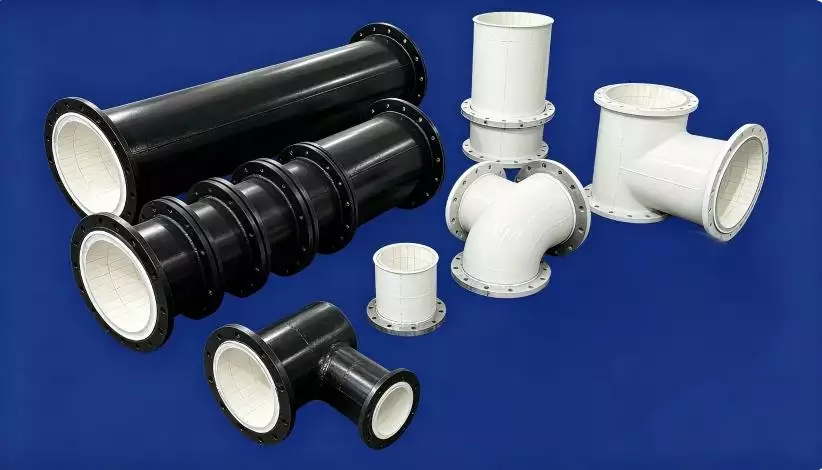
Many mining decision‑makers will pay attention to the initial procurement cost when selecting slurry pipelines. The unit price of alumina ceramic‑lined steel pipe is higher than ordinary carbon steel pipe and rubber‑lined pipe, which makes some projects hesitate in technical selection. However, it is necessary to evaluate the comprehensive benefit from the perspective of full‑life‑cycle cost rather than one‑time purchase expense.The comprehensive cost of mine slurry pipeline includes procurement cost, transportation and installation cost, maintenance and spare‑parts cost, loss cost caused by production shutdown, and environmental risk cost caused by slurry leakage. Although the initial investment of ceramic‑lined composite pipe is high, its service life is greatly prolonged. The replacement times of pipe fittings are sharply reduced, and the consumption of spare parts, labor for maintenance and pipeline patrol workload drop significantly. More importantly, unexpected shutdown loss is extremely expensive for concentrators. Once the slurry pipeline is worn‑through and leaks, it will force the grinding and flotation circuit to stop production. The direct and indirect economic losses caused by shutdown in a few hours often far exceed the procurement cost of a batch of wear‑resistant pipe fittings.Take a medium‑sized non‑ferrous metal concentrator as a practical reference case. The tailings conveying system originally adopted high‑chromium alloy pipes, and a large number of elbows and partial straight pipes need to be replaced every year, with high maintenance labor and spare‑parts expenditure. After transforming key sections to alumina ceramic‑lined steel pipes equipped with wear‑protection liner, the annual pipeline maintenance workload is reduced by more than 75%. Unplanned shutdown events caused by pipeline wear‑through are basically eliminated. Calculated according to the 6‑year full‑life cycle, the comprehensive operating cost is reduced by nearly 40% compared with the original alloy‑steel scheme. In addition, the smooth inner wall reduces slurry‑transport resistance, decreases the operating load of the slurry pump, and brings additional power‑saving benefits.For long‑distance tailings discharge and large‑scale filling projects, the economic advantage of ceramic‑lined pipeline is more prominent. Sanxin New Materials will carry out targeted life‑cycle cost calculation for customers according to parameters such as slurry characteristics, pipeline length, flow velocity and existing pipeline failure data, assist mining customers to make objective technical and economic comparison, and formulate reasonable pipeline matching schemes, instead of simply recommending full‑line ceramic‑lined pipes. For some low‑wear auxiliary short pipelines, traditional materials can still be retained to optimize overall project investment.
Alumina ceramic‑lined steel pipe is an excellent solution for mine tailings and slurry transportation, but it is not applicable to all extreme working conditions. Objective understanding of its material limitations helps to avoid wrong selection.First of all, due to the brittleness of alumina ceramics, it is not suitable for working conditions with frequent huge‑size ore particle impact. When the slurry contains a large number of ore blocks with particle size exceeding 25 mm and the impact angle is close to 90 degrees, pure alumina ceramic lining may face cracking risk. Under such working conditions, it is suggested to optimize the pre‑screening process to control the maximum particle size entering the pipeline, or select composite‑strengthened wear‑resistant liner products, or adopt the combined scheme of alloy steel and ceramic‑lined pipes.Second, it cannot resist long‑term erosion of hydrofluoric acid and high‑concentration strong alkali slurry. If the mine process produces special corrosive media, material test verification is required before large‑scale application, and silicon‑carbide‑series wear‑resistant composite pipes can be considered as an alternative.Third, on‑site construction has certain constraints. Flame cutting and high‑temperature welding too close to the lining are forbidden. For projects with complex construction conditions and lack of standardized construction teams, it is necessary to strengthen technical disclosure, or try to adopt prefabricated pipe segments in the factory to minimize secondary processing on site.Combined with the practical experience of many mining projects, Sanxin New Materials puts forward the following matching suggestions. When the solid‑phase mass fraction of slurry is 40‑70%, the flow velocity is 2‑4.5 m/s, the main abrasive components are quartz, gangue and conventional sulfide ore, and the particle size is controlled below 20 mm, alumina ceramic‑lined steel pipe is the preferred technical option. For elbows, tees, cyclone‑underflow pipelines and other severely‑worn positions, priority shall be given to deploying ceramic‑lined composite pipes. For straight‑way sections with mild wear, carry out economic comparison to select appropriate pipeline materials. For working conditions with special corrosion or super‑strong impact, communicate technical parameters in depth, and select ZTA composite ceramic or silicon‑carbide‑series wear‑resistant solutions.
Tailings and mineral slurry transportation is an indispensable link in mineral processing production. Pipeline wear and leakage have long been common pain points restricting safe, stable and low‑cost operation of mining enterprises. As a mature composite wear‑resistant product, alumina ceramic‑lined steel pipe relies on the composite advantage of outer steel pipe and inner high‑alumina ceramic layer, effectively coping with double damage of abrasive scouring and medium corrosion in mine slurry. Reasonably selected wear‑protection liner can greatly extend pipeline service life, cut maintenance workload, reduce unplanned production shutdown, and bring remarkable full‑life‑cycle economic benefits to concentrators.Nevertheless, product performance is closely related to raw‑material quality, composite manufacturing process, on‑site construction and working‑condition matching. Mining enterprises should not only focus on index parameters of materials, but also combine their own slurry properties, particle‑size distribution, flow velocity and pipeline layout to carry out comprehensive evaluation. Sanxin New Materials, as a professional supplier of industrial ceramic wear‑resistant products, can provide customers with product supply, technical parameter consultation, working‑condition matching suggestion and construction guidance services, helping global mining customers solve various wear‑protection problems in tailings and slurry conveying systems. With the continuous development of mineral‑processing technology, alumina ceramic‑lined composite pipelines will gain broader application space in the field of mine solid‑liquid conveying.

Submit your demand,
we will contact you ASAP.

Sanxin New Materials Co., Ltd. focus on producing and selling ceramic beads and parts such as grinding media, blasting beads, bearing ball, structure part, ceramic wear-resistant liners, Nanoparticles Nano Powder


 English
 English
 Russian
 French
 Spanish
 Portuguese
 Arabic