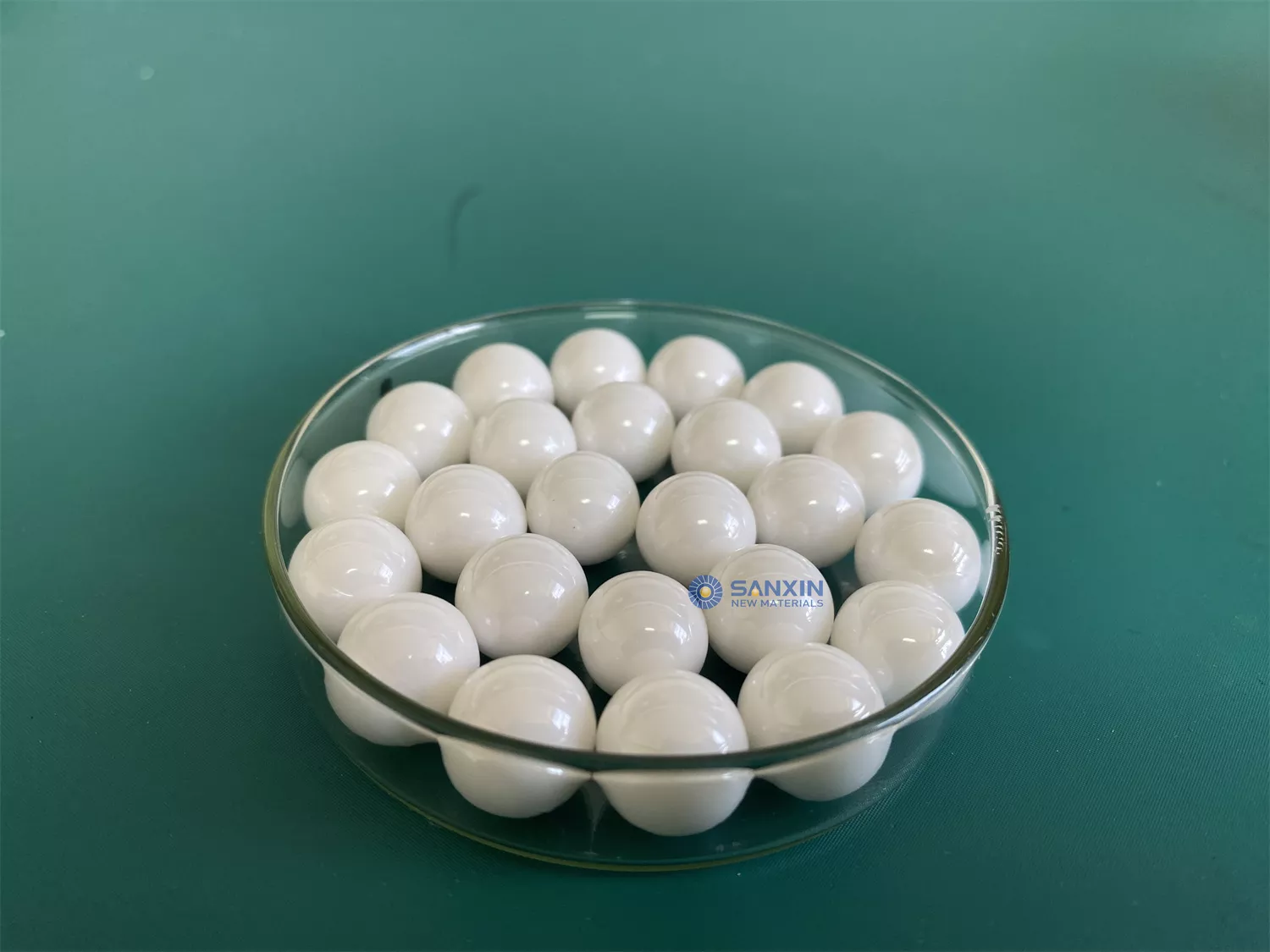

yttria zirconia beads for lithium iron phosphate grinding help battery and ink producers achieve efficient fine grinding while controlling media wear and unwanted contamination. A useful specification connects the ceramic composition and bead diameter to the mill, formulation, separator, target particle size, and quality limits.
yttria-stabilized zirconia beads combine high density, hardness, fracture resistance, and a polished surface. Higher density can improve impact and shear in a bead mill, while a controlled microstructure helps limit abnormal breakage. The commercial comparison should include processing time, energy, media consumption, cleaning, contamination risk, and repeatability instead of purchase price alone.
Lithium iron phosphate processing requires close control of iron pickup, zirconium contamination, particle-size distribution, slurry temperature, and batch repeatability. YSZ media provides high density and a smooth, wear-resistant surface, but the final bead diameter must match the feed size, separator gap, mill energy, solids loading, and target fineness.
Share the mill model, chamber volume, rotor type, separator gap, current media, feed particle size, target fineness, slurry viscosity, solids loading, temperature limit, and expected throughput. These details allow the supplier to recommend a realistic bead diameter and trial quantity.
Zirconia composition and stabilizer type
Available bead diameters and size-distribution tolerance
True density, bulk density, hardness, and roundness
Wear-rate test method and representative result
Crushing strength, surface finish, and fragment control
Cleaning, magnetic separation, inspection, and traceability
Net package weight, liner, pallet method, MOQ, and lead time
The bead diameter must be compatible with the separator. Media that is too large can reduce contact frequency; media that is too small can increase hydraulic resistance or escape through an unsuitable screen. The practical selection balances energy transfer, circulation, separator safety, and the desired final particle size.
Run the comparison with the same LFP formulation, dispersant, solids content, mill speed, loading ratio, temperature limit, and sampling intervals. Record milling time, particle-size distribution, viscosity, temperature, energy use, media loss, and elemental contamination before selecting the production specification.
Inspect the beads after the test for chipping, flattening, fragments, discoloration, or unusual surface damage. Compare product samples using the same analytical method. If contamination is critical, define which elements will be measured, the sampling method, and the acceptance limit before the trial begins.
Incoming inspection can include package condition, label and lot number, bead-size sampling, visual roundness, density checks, and a short process trial. Ask whether raw-material purity, forming, sintering, polishing, washing, and final inspection are controlled by documented procedures. Keep an approved reference sample when the media supports a tightly controlled product.
Consistent supply also depends on packaging and logistics. Heavy ceramic media needs strong inner liners, suitable pails or bags, pallet weight control, moisture protection, and clear lot labels. For ongoing consumption, discuss forecast volume, safety stock, production lead time, and the supplier's change-control process.
Which composition and stabilizer are used for this grade?
Which bead size fits the mill separator and target particle size?
How is wear measured, and can a sample certificate be supplied?
How are cleaning, contamination control, and lot traceability managed?
What sample quantity, MOQ, packaging, and delivery time are available?
For LFP grinding, prioritize verified wear data, clean production and packaging, a stable size distribution, and batch traceability. Confirm the analytical method used for contamination testing and retain an approved sample for repeat-order comparison.
Send the formulation type, mill model, separator gap, current media, feed and target particle size, viscosity, solids content, contamination limit, trial quantity, annual demand, and delivery destination. The supplier can then recommend a bead size and prepare a technically useful quotation.

Submit your demand,
we will contact you ASAP.

Sanxin New Materials Co., Ltd. focus on producing and selling ceramic beads and parts such as grinding media, blasting beads, bearing ball, structure part, ceramic wear-resistant liners, Nanoparticles Nano Powder


 English
 English
 Russian
 French
 Spanish
 Portuguese
 Arabic