
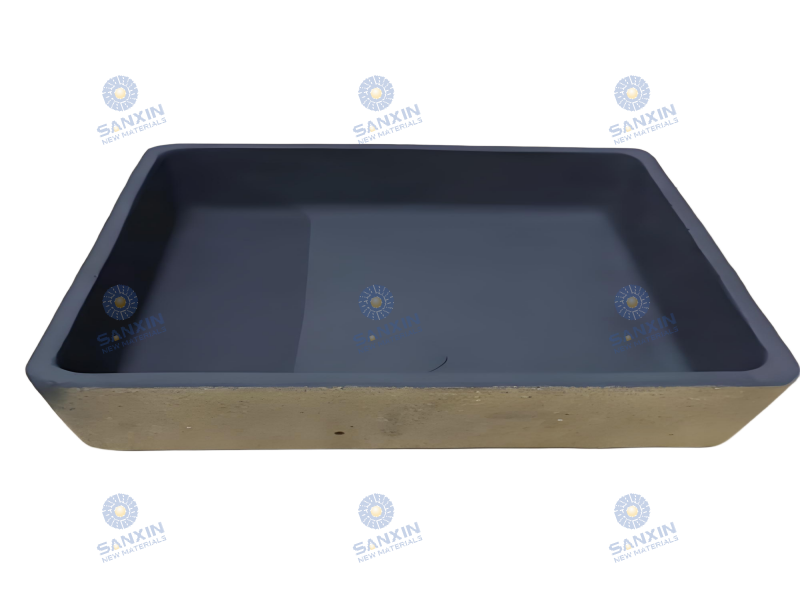
In the realm of high-temperature industrial thermal processing—encompassing lithium battery manufacturing, daily-use and technical ceramics, and semiconductor fabrication—the demand for contamination-free, thermally stable, and durable processing components is paramount. Silicon Carbide (SiC) Saggers (also referred to as SiC trays, SiC crucibles, or high-temperature refractory trays) have emerged as the industry’s premier solution, outperforming traditional alumina (Al₂O₃) and cordierite components by leaps and bounds.Our SiC saggers are engineered to provide a pristine, heat-resistant environment for delicate materials during sintering, annealing, and firing processes. Manufactured from two premium grades of silicon carbide—Recrystallized Silicon Carbide (RSiC) and Reaction-Bonded Silicon Carbide (SiSiC)—these components deliver unmatched thermal stability, chemical inertness, and cost-efficiency. Whether you are processing cathode/anode materials for lithium-ion batteries, advanced ceramic powders, or semiconductor wafers, our SiC saggers ensure process integrity, reduce waste, and drive significant improvements in production yield.This comprehensive 3000-word product listing details every aspect of our SiC sagger line, from material science and technical specifications to real-world applications, cost-benefit analysis, and customization options. It is optimized for search engines (SEO) to target high-intent buyers in the lithium battery, ceramic, and semiconductor industries.

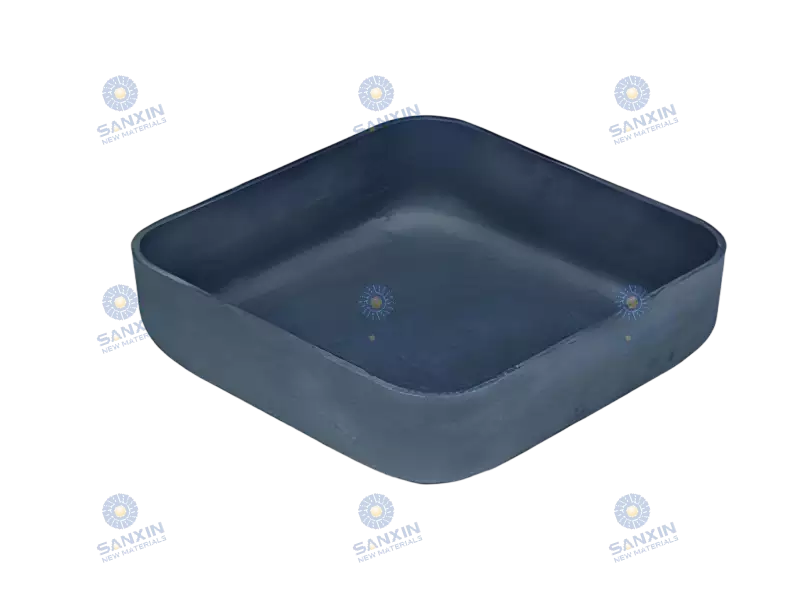
SiC saggers are refractory ceramic containers or trays designed to hold, support, and transport workpieces (such as powder materials, ceramic green bodies, or semiconductor substrates) during high-temperature thermal processing in kilns, furnaces, and retorts. Their core function is to:
Isolate Workpieces: Protect sensitive materials from direct contact with furnace atmosphere, dust, or flame impingement.
Ensure Uniform Heating: Leverage SiC’s high thermal conductivity to distribute heat evenly across the workpiece.
Prevent Contamination: Maintain ultra-low metal impurity levels to ensure the purity of the final product.
We offer two specialized material grades to suit different temperature, load, and purity requirements:
Temperature Rating: Continuous use up to 1600°C
Key Features: Ultra-high purity (≥3.02g/cm³ density), excellent thermal shock resistance, and superior thermal conductivity.
Ideal For: High-precision applications requiring maximum cleanliness and temperature resistance, such as semiconductor processing and advanced battery cathode sintering.
Temperature Rating: Continuous use up to ≤1350°C
Key Features: High density (≥2.65g/cm³), exceptional mechanical strength, and cost-effectiveness.
Ideal For: High-load applications in general ceramics, daily-use ceramic firing, and standard industrial thermal processes.
Parameter
Recrystallized SiC (RSiC) | Reaction-Bonded SiC (SiSiC) | Industry Standard (Alumina) | |
Max Operating Temp | 1600°C | 1350°C | 1200°C (limited) |
Density | ≥3.02 g/cm³ | ≥2.65 g/cm³ | 3.6-3.9 g/cm³ |
Flexural Strength | ≥120 MPa | ≥300 MPa | 280 MPa (lower at high temp) |
Thermal Conductivity | Excellent (>100 W/m·K) | Good (45-60 W/m·K) | Moderate |
Thermal Expansion | ~4.5×10⁻⁶/°C | ~4.2×10⁻⁶/°C | 7.2×10⁻⁶/°C (higher mismatch) |
Purity | Ultra-high (SiC ≥99%) | High (SiC ≥87%, Free Si ≤12%) | Medium (prone to contamination) |
Service Life | 5-8 years | 3-5 years | 6 months - 2 years |
Our standard SiC saggers are manufactured to meet strict dimensional tolerances, with full customization available:
Standard Sizes: Custom rectangular, square, and circular trays to fit standard kiln car sizes (up to 4000mm in length).
Wall Thickness: Optimized for heat transfer and load-bearing (typically 10-30mm).
Volume/Capacity: Customizable from small lab-scale crucibles to large production-scale trays.
Tolerance: ±0.5mm for critical dimensions, ensuring compatibility with automated handling systems.
Surface Finish: Smooth, machined finish to prevent particle adhesion and facilitate easy cleaning.
Every SiC sagger undergoes rigorous testing before shipment:
Dimensional Inspection: 100% laser measurement for size and flatness.
Density & Porosity Testing: Archimedes method to verify density and quality.
High-Temperature Sintering Test: Batch testing at maximum operating temperature to ensure no deformation.
Impact & Crack Detection: Visual inspection and ultrasonic testing for microcracks.
Impurity Analysis: ICP-MS testing for metal ion content (<1ppm for RSiC), ensuring compliance with SEMI and battery industry standards.
Unlike traditional alumina saggers, which soften and warp at temperatures exceeding 1200°C, SiC saggers maintain their structural integrity and mechanical strength at extreme temperatures.
No Deformation: RSiC saggers remain dimensionally stable at 1600°C, ensuring consistent workpiece positioning.
No Warpage: The low thermal expansion coefficient (4.5×10⁻⁶/°C) minimizes thermal stress, preventing warping during rapid temperature cycles.
SiC saggers deliver significant energy benefits that directly reduce operational costs:
Rapid Heat Transfer: The high thermal conductivity of SiC (especially RSiC) ensures heat penetrates the workpiece faster, reducing overall firing time by up to 40%.
Energy Utilization Rate: Achieves an impressive 95% energy utilization rate, compared to just 65-70% for alumina. This translates to a 20-30% reduction in energy consumption for your kiln.
Higher Conversion Rates: Faster, more uniform heating leads to higher material conversion rates (up to 90%), minimizing waste and scrap.
SiC is chemically inert, meaning it does not react with the materials being processed. This is critical for industries where purity is non-negotiable:
Zero Metal Ion Leaching: Unlike alumina, which can release trace metals that contaminate lithium battery cathodes, SiC saggers release no harmful ions.
Acid/Alkali Resistance: Resistant to all common acids, alkalis, and process gases (O₂, N₂, H₂, Ar), making them ideal for aggressive sintering atmospheres.
Non-Wetting Properties: The dense surface of SiSiC saggers prevents material adhesion, making cleanup easier and reducing the risk of cross-contamination between batches.
The most impactful economic benefit of SiC saggers is their longevity:
Alumina Lifespan: 6 months to 2 years in high-temp environments.
SiSiC Lifespan: 3 to 5 years (5x longer than alumina).
RSiC Lifespan: 5 to 8 years (10x longer than alumina).
This drastic reduction in replacement frequency translates to an 80-90% reduction in annual replacement costs, with a full return on investment (ROI) typically achieved within 6–12 months.
SiC saggers excel in environments with frequent temperature fluctuations (thermal shock):
Withstand Rapid Cycles: They can withstand heating and cooling rates of up to 20°C/min without cracking or spalling.
Durability in Batch Processes: Ideal for shuttle kilns and roller kilns where the sagger is repeatedly heated and cooled.
The lithium battery industry relies on SiC saggers for the highest standards of material purity and thermal consistency.
Process: Sintering of NCM (Nickel Cobalt Manganese), LFP (Lithium Iron Phosphate), and graphite anode materials at 1000-1200°C.
Benefit: RSiC saggers provide a contamination-free environment, ensuring the battery material’s electrochemical performance remains uncompromised.
Process: Annealing of battery electrode sheets to relieve internal stress.
Benefit: The uniform heat distribution of SiC ensures consistent density and adhesion of the electrode coating, improving cell capacity and cycle life.
SiC saggers are the workhorse of ceramic firing, offering superior performance over traditional materials.
Applications: Firing of ceramic tiles, sanitary ware, tableware, and porcelain.
Benefit: SiSiC saggers handle heavy loads with ease and provide a clean finish, eliminating black marks or defects on the ceramic surface.
Applications: Firing of alumina, zirconia, and silicon nitride components.
Benefit: High-purity RSiC saggers prevent contamination of precision ceramic parts, ensuring dimensional accuracy and mechanical performance.
In these ultra-high-tech sectors, SiC saggers are indispensable for processing delicate substrates.
Applications: Annealing and diffusion of silicon wafers in CVD/PVD chambers.
Benefit: Ultra-low metal impurity RSiC saggers protect wafers from contamination, a critical factor for yield in 3nm/2nm chip fabrication.
Applications: Sintering of silicon wafers for PV panels.
Benefit: High thermal conductivity ensures uniform doping and firing of the wafer, improving solar cell efficiency.
Glass Tempering: Providing a stable platform for glass during high-temperature forming.
Powder Metallurgy: Sintering of metal powders in protective atmospheres.
Refractory Firing: Serving as a high-temperature reaction vessel for chemical synthesis.
Your Requirement
Choose Recrystallized SiC (RSiC) | Choose Reaction-Bonded SiC (SiSiC) | |
Operating Temperature >1350°C | ✅ Ideal | ❌ Not Recommended |
Maximum Purity & Cleanliness | ✅ Ideal | ⭐ Good (for general use) |
High Load-Bearing Capacity | ⭐ Good | ✅ Ideal |
Cost-Sensitive High-Volume Production | ❌ Higher Cost | ✅ Excellent Value |
Lithium Battery Cathode Sintering | ✅ Premium Choice | ❌ Not Recommended |
Ceramic Tile/Sanitary Ware Firing | ⭐ Good | ✅ Standard Choice |
While the initial purchase price of SiC saggers is higher, the long-term savings are transformative. Let’s break down the TCO (Total Cost of Ownership):
Replacement Cost Reduction: Save 50-90% on sagger replacement labor and materials.
Energy Cost Reduction: Save 20-30% on gas/electricity bills for your kiln.
Yield Improvement: Higher conversion rates (90% vs. 80%) mean more sellable product from the same raw material.
Conclusion: For a medium-sized ceramic factory processing 100 tons of material monthly, switching to SiC saggers can save over $200,000 annually in direct costs.
We understand that every kiln and process is unique. We offer full customization of our SiC saggers to meet your exact specifications:
Shape & Size: Custom rectangular, square, circular, or irregular crucible/tray shapes. Maximum size up to 4000mm in length.
Reinforcements: Adding reinforcing ribs or flanges for extra load-bearing strength.
Special Coatings: Applying a thin, high-purity coating for extreme adhesion resistance or ultra-high purity requirements.
Handles & Lugs: Integrated lifting lugs or handles for easy automated or manual handling.
Our SiC saggers are designed to be drop-in replacements for existing alumina saggers in most kiln systems. We ensure compatibility with all major brands of roller kilns, shuttle kilns, and batch furnaces.
To maximize the lifespan of your SiC saggers, follow these guidelines:
Uniform Support: Ensure the sagger is fully supported on the kiln car or furnace hearth to prevent bending.
Proper Seating: Align the sagger correctly to avoid uneven pressure on the walls.
Load Distribution: Distribute the workpiece weight evenly across the sagger to avoid hot spots.
Regular Inspection: Check for cracks, chips, or surface wear after each cycle.
Cleaning: Remove debris and dust using compressed air or soft brushes. Avoid harsh abrasives that can damage the surface.
Temperature Ramp-Up: Preheat the kiln slowly (5-10°C/min) initially to minimize thermal shock when loading cold saggers.
A: SiC saggers offer significantly higher temperature resistance (up to 1600°C vs. 1200°C), 3-10x longer service life, 20-30% higher energy efficiency, and zero contamination. While the initial cost is higher, the total cost of ownership is far lower.
A: For standard industrial battery processes, SiSiC is suitable. However, for high-precision NCM/LFP cathode manufacturing requiring the strictest purity (metal ions <1ppm), Recrystallized SiC (RSiC) is the recommended choice.
A: We can produce custom SiC saggers up to 4000mm (4 meters) in length, with custom widths and heights to fit your production line.
A: For routine maintenance, use compressed air to blow out dust, or wipe with a clean, dry cloth. For stubborn residue, soak in warm water with a neutral detergent and gently scrub with a soft sponge. Do not use metal scrapers as they will scratch the surface.
A: Yes. Every batch of SiC saggers comes with a comprehensive quality inspection report, including density, dimensional accuracy, straightness, and impurity analysis data.
A: Absolutely. We offer standard sample sizes for testing purposes. Please contact our sales team for sample requests and pricing.
Silicon Carbide (SiC) Saggers represent the future of high-temperature thermal processing. With their exceptional temperature resistance, energy efficiency, contamination control, and longevity, they are the ultimate upgrade from traditional alumina components.
We will contact you as soon as possible!
Silicon Carbide (SiC) Saggers

Submit your demand,
we will contact you ASAP.

Sanxin New Materials Co., Ltd. focus on producing and selling ceramic beads and parts such as grinding media, blasting beads, bearing ball, structure part, ceramic wear-resistant liners, Nanoparticles Nano Powder


 English
 English
 Russian
 French
 Spanish
 Portuguese
 Arabic