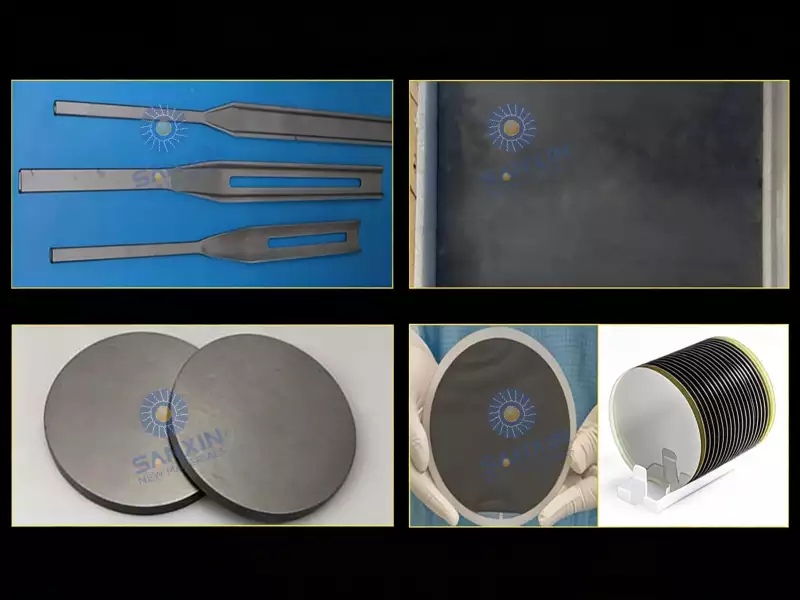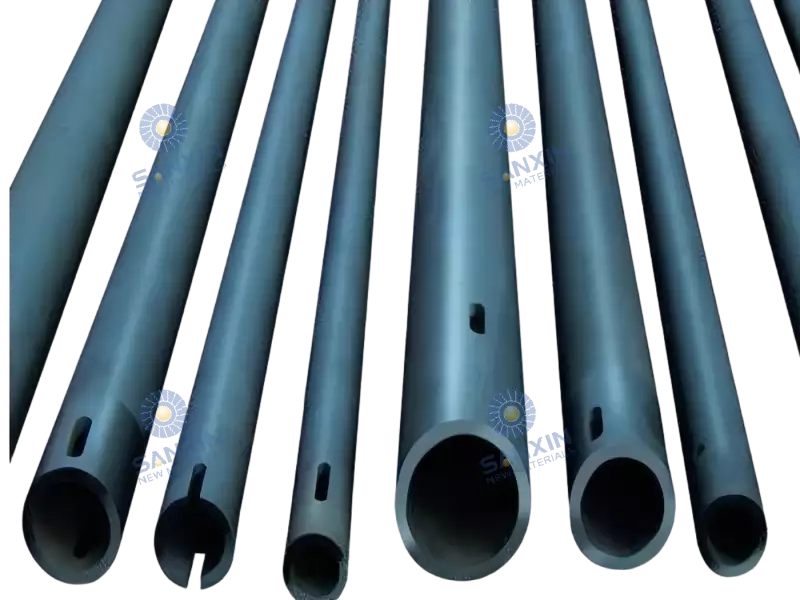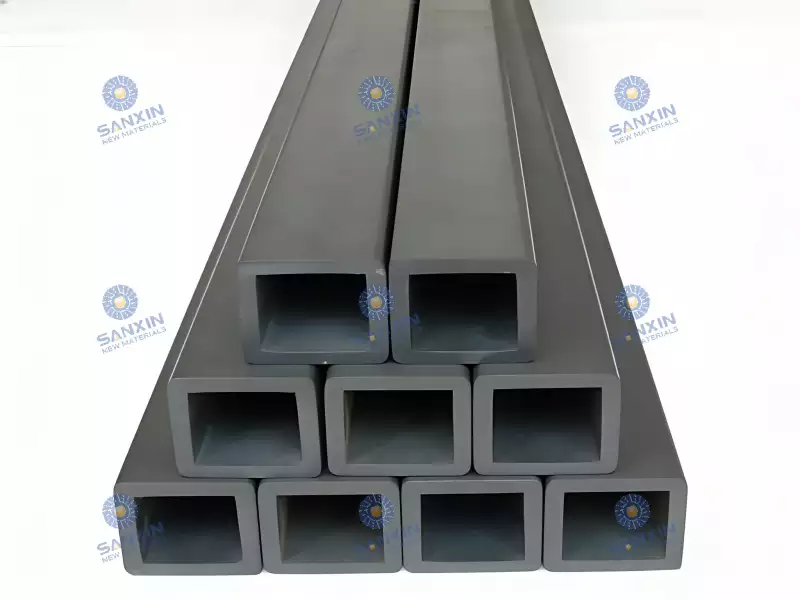

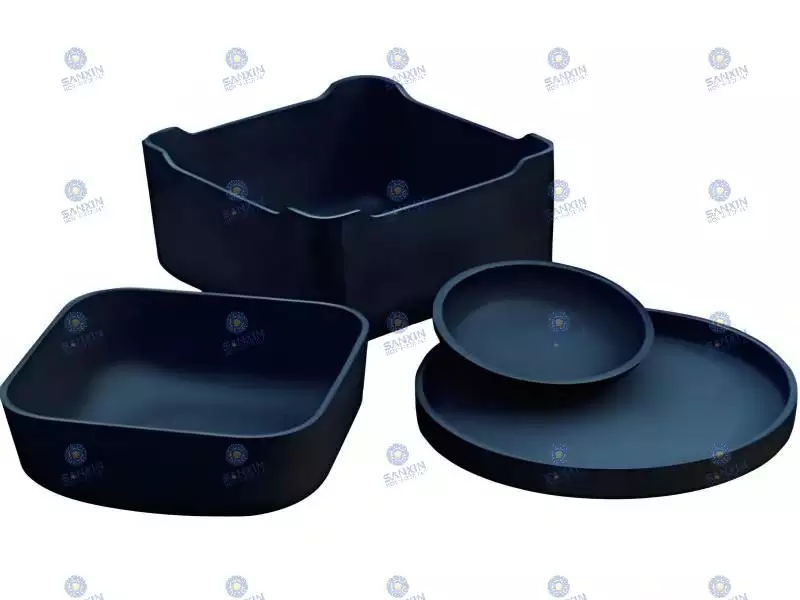
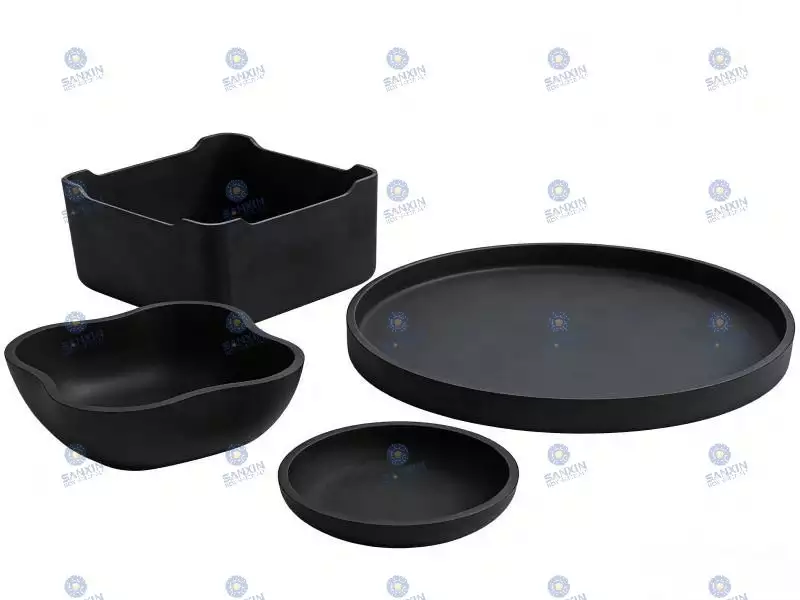
In high-temperature industrial processing—where material purity, structural stability, and production efficiency are critical—high-performance refractory vessels are essential. Silicon Carbide (SiC) Crucibles (SiSiC/RSiC) have become the industry standard, outperforming traditional alumina, graphite, and quartz crucibles in thermal stability, chemical inertness, and contamination control. Manufactured via advanced Pressureless Reaction-Bonded Silicon Carbide (SiSiC) and Recrystallized Silicon Carbide (RSiC) technologies, our SiC crucibles deliver the ultra-purity and dimensional stability required for high-temperature melting, sintering, crystal growth, and chemical reactions—directly boosting yield and reducing total cost of ownership (TCO).This SEO-optimized product listing is tailored for procurement managers, process engineers, and plant operators across industries, covering material science, industrial applications, technical specs, performance advantages, customization, and cost-benefit analysis—all aligned with industrial search intent and keywords.

SiC crucibles are precision-engineered refractory vessels designed for the high-temperature thermal processing steps critical to various industrial applications. Their core roles include:
High-Temperature Melting & Smelting: Contamination-free melting of non-ferrous metals, alloys, and corrosive materials without reaction or impurity leaching.
Sintering & Calcination: Supporting high-temperature processing of advanced materials, ceramics, and battery components to ensure phase formation and purity preservation.
Crystal Growth: Providing an inert environment for growing high-quality single crystals for semiconductor, aerospace, and electronic applications.
Chemical Synthesis: Isolating aggressive chemical reactions (acid/alkaline fusion, high-temp catalysis) in a stable, non-reactive environment.
High-Purity Processing: Ensuring ultra-clean processing for pharmaceutical, food, and electronic-grade materials where contamination is non-negotiable.
Our SiC crucibles use two high-performance materials, tailored to specific industrial process requirements:
Reaction-Bonded Silicon Carbide (SiSiC): Manufactured via molten silicon infiltration, delivering density ≥3.02 g/cm³, thermal stability up to 1700°C (air), and excellent wear/corrosion resistance. Cost-effective for standard high-temperature industrial processes like sintering and general melting.
Recrystallized Silicon Carbide (RSiC): Ultra-high-purity grade (SiC ≥99.9%, metal ions <0.5ppm), stable up to 1950°C (protective atmosphere), and particle-free. Ideal for advanced high-purity applications like semiconductor crystal growth, pharmaceutical processing, and R&D.
Both materials offer zero metal ion leaching, chemical inertness to industrial process gases (Ar/N₂/H₂), and superior thermal shock resistance—critical for high-throughput, batch-processing workflows.
Parameter | SiSiC (Standard) | RSiC (High-Purity) | Industrial Significance |
Max Operating Temp (Air) | ≤1700°C (continuous) | ≤1700°C (continuous) | Covers all industrial high-temp processes (1000–1600°C) |
Max Temp (Protective Atmosphere) | ≤1900°C | ≤1950°C | Enables high-purity processing in controlled environments |
Purity (SiC Content) | ≥99% | ≥99.9% | Prevents material contamination in critical applications |
Metal Ion Content | <1ppm | <0.5ppm | Meets high-purity standards for electronics, pharmaceuticals |
Density | ≥3.02 g/cm³ | ≥3.05 g/cm³ | Ensures structural rigidity for heavy material loads |
Thermal Shock Resistance | 1100°C water cooling ≥60 times | 1100°C water cooling ≥80 times | Withstands rapid industrial batch processing cycles |
Surface Roughness | Ra ≤0.4μm | Ra ≤0.2μm | Prevents material adhesion and particle contamination |
Dimensional Tolerance | ±0.5mm | ±0.3mm | Fits automated industrial furnace systems |
Our SiC crucibles are designed to fit standard industrial furnace configurations, with full customization for unique setups:
Standard Shapes: Cylindrical (for melting/sintering), rectangular (for batch processing), and small lab-scale (for R&D).
Size Range: Outer diameters 50mm–500mm, heights up to 2000mm; custom sizes for large-scale industrial processing (up to thousands of kg).
Industrial-Specific Features: Flat/spherical bottoms (for stable placement/melting), ultra-smooth inner surfaces (for contamination control), and flanged tops (for furnace sealing).
Every industrial-grade SiC crucible undergoes rigorous testing to ensure compliance with strict industry standards:
100% laser dimensional inspection and ultrasonic testing for internal defects.
Purity testing (ICP-MS) to verify metal ion content <1ppm (SiSiC) / <0.5ppm (RSiC).
High-temperature performance testing at 1600°C to ensure no deformation.
Cleanroom packaging (Class 100 for RSiC) to prevent particle contamination during shipping.
Critical for industries like electronics, pharmaceuticals, and battery manufacturing, where even trace impurities degrade product quality: SiC crucibles have zero metal ion leaching, no particle shedding, and SiC content ≥99% (RSiC ≥99.9%). This eliminates contamination of molten materials and processed products, improving yield by up to 15% compared to alumina/graphite crucibles.
SiC crucibles maintain structural integrity at 1700°C (air) and 1950°C (protective atmosphere), with zero warping during high-temperature processing. Their thermal shock resistance (1100°C water cooling ≥60 times) withstands rapid industrial batch cycles, reducing breakage rates by 20% and minimizing downtime.
Alumina/graphite crucibles last 1–2 years in industrial lines; SiSiC/RSiC crucibles offer 5–8 years of service. This reduces annual replacement costs by 80–90%, with ROI achieved in 6–12 months—critical for high-volume industrial production.
SiC’s high thermal conductivity (≥100 W/m·K for RSiC) ensures even heating across the crucible, eliminating hot spots that cause material warpage or uneven processing. This improves product quality and reduces scrap rates.
SiC is inert to common industrial process gases (Ar, N₂, H₂) and corrosive chemicals, unlike graphite (which oxidizes) or quartz (which reacts with many materials). This maintains a clean processing environment and extends crucible life.
RSiC crucibles are ideal for high-temperature melting of non-ferrous metals, alloys, and corrosive materials at 1400–1600°C. Their ultra-purity prevents contamination, while thermal stability ensures uniform material density—critical for high-quality end products.
SiSiC/RSiC crucibles support sintering and calcination of advanced ceramics, battery materials, and industrial powders at 800–1200°C. Their smooth surfaces prevent material adhesion, and uniform heating ensures consistent product properties, reducing scrap rates by up to 25%.
SiC crucibles provide an inert environment for crystal growth and semiconductor processing (850–1100°C). Low porosity (<0.5%) prevents gas infiltration, ensuring uniform crystal formation and high-quality semiconductor components.
RSiC crucibles (Class 100 cleanroom-manufactured) are tailored for pharmaceutical and high-purity processing, with metal ion content <0.3ppm. They support low-temperature to high-temperature processing (400–800°C), protecting sensitive materials and ensuring compliance with industry standards.
SiSiC crucibles ensure uniform heating (700–900°C) for aggressive chemical synthesis and acid/alkaline fusion. They do not react with corrosive chemicals, preventing contamination and ensuring consistent reaction results.
Industrial Application | Recommended Material | Why |
High-Temp Melting/Smelting | RSiC | Ultra-purity, 1600°C stability, zero contamination |
Pharmaceutical/High-Purity Processing | RSiC | Ultra-low impurities, cleanroom-compatible, sensitive material support |
Standard Sintering/Calcination | SiSiC | Cost-effective, high stability, uniform heating |
Chemical Synthesis | SiSiC | High thermal conductivity, easy cleaning, non-reactive |
Industrial R&D | RSiC | Custom purity, extreme performance for new technologies |
While SiC crucibles have a higher initial cost than traditional options, their TCO is far lower for industrial producers. Below is a comparison for a medium-sized industrial factory:
Cost Factor | Alumina/Graphite Crucibles | SiC Crucibles (SiSiC/RSiC) | Annual Savings |
Initial Purchase | $30,000 | $75,000 | -$45,000 |
Annual Replacement | $120,000 | $15,000 | $105,000 |
Maintenance Labor | $30,000 | $3,000 | $27,000 |
Yield Improvement (5–10%) | Base | +$50,000+ | $50,000+ |
Total Annual Cost | $150,000 | $93,000 | $137,000+ |
We ensure seamless integration with your industrial production line:
Custom Designs: Tailored shapes/sizes to fit all major industrial furnace brands.
Industrial-Specific Modifications: Ultra-smooth inner surfaces, flanged tops for atmosphere sealing, and reinforced walls for heavy material loads.
Drop-In Replacement: Matches standard alumina/graphite crucible dimensions for easy retrofitting without furnace modifications.
Engineering Support: Custom size calculations based on furnace capacity, material weight, and processing temperature.
Ensure uniform support on furnace hearths to prevent uneven heating (critical for high-temperature melting).
Use high-temperature ceramic fiber gaskets to seal crucible lids, preventing atmosphere leakage during controlled processing.
Avoid overfilling (max 80% capacity) to prevent molten material overflow during high-temperature processing.
Inspect for cracks/chips after each batch; clean with compressed air or mild detergents (avoid harsh abrasives).
Preheat furnaces slowly (5–10°C/min) to minimize thermal shock for cold crucibles.
Store RSiC crucibles in clean, dry environments (Class 100 cleanrooms for high-purity applications) to prevent particle contamination.
Q1: Can SiC crucibles be used for high-temperature material melting?A: Yes—RSiC crucibles are ideal for high-temperature material melting, offering ultra-purity and thermal stability to prevent material contamination and crystal defects.
Q2: Are SiC crucibles compatible with cleanroom environments?A: Yes—our RSiC crucibles are manufactured in Class 100 cleanrooms, with zero particle shedding and metal ion content <0.3ppm, suitable for high-purity processing.
Q3: What is the service life of SiC crucibles in high-temperature processing lines?A: SiSiC crucibles last 5–7 years in high-temperature processing lines, compared to 1–2 years for traditional alumina crucibles.
Q4: Do you provide quality reports for SiC crucibles?A: Yes—every batch includes ICP-MS purity reports, dimensional inspection data, and thermal shock test results, compliant with industry high-purity standards.
Q5: Can you supply samples for process validation?A: Absolutely—we offer standard lab-scale samples for trial runs in your furnace to verify performance and compatibility.
Silicon Carbide (SiC) Crucibles are the ultimate solution for high-temperature industrial processing, delivering the ultra-purity, thermal stability, and long service life required to optimize processing efficiency and product quality. Whether you need RSiC for high-purity applications or cost-effective SiSiC for standard high-temperature processes, our optimized crucibles reduce TCO, minimize downtime, and support scalable, high-quality production.
We will contact you as soon as possible!
Silicon Carbide (SiC) Crucibles

Submit your demand,
we will contact you ASAP.

Sanxin New Materials Co., Ltd. focus on producing and selling ceramic beads and parts such as grinding media, blasting beads, bearing ball, structure part, ceramic wear-resistant liners, Nanoparticles Nano Powder


 English
 English
 Russian
 French
 Spanish
 Portuguese
 Arabic