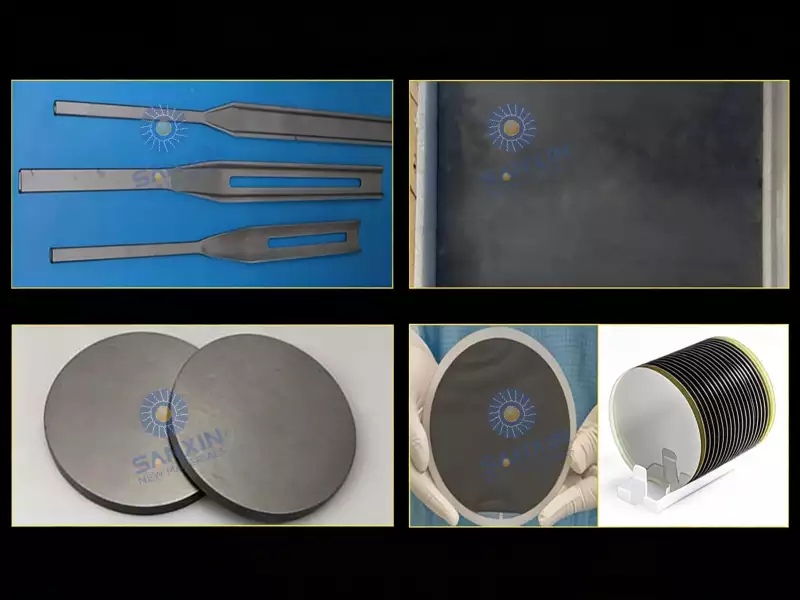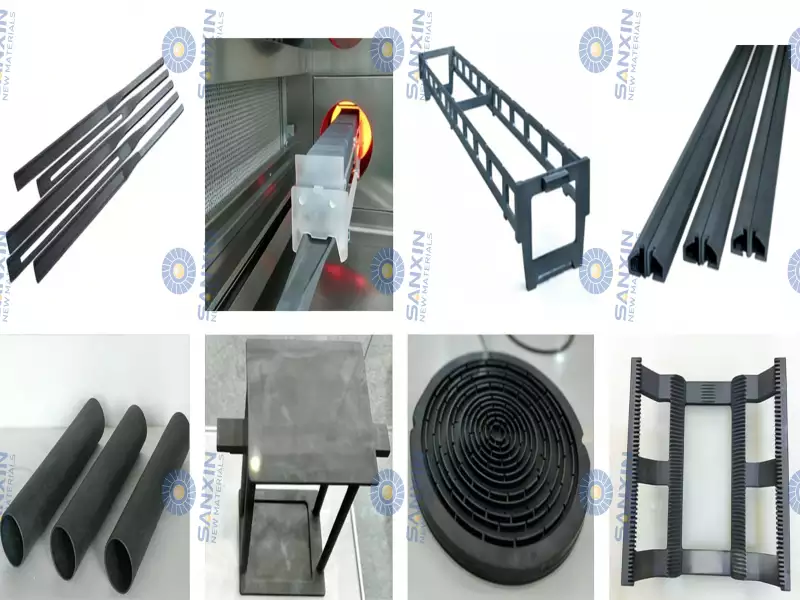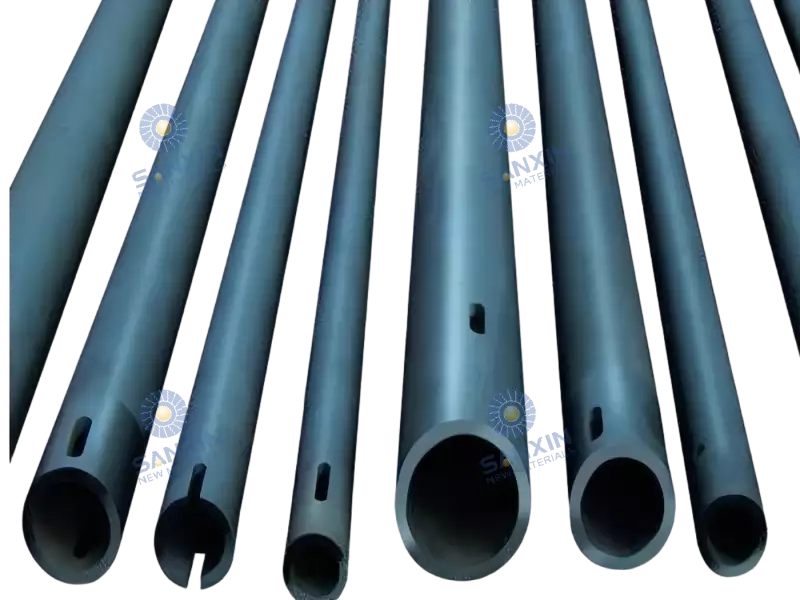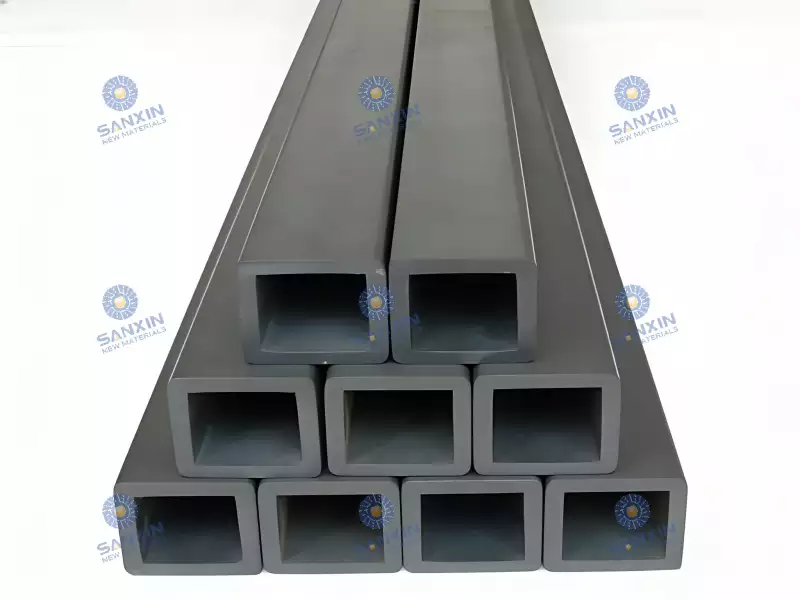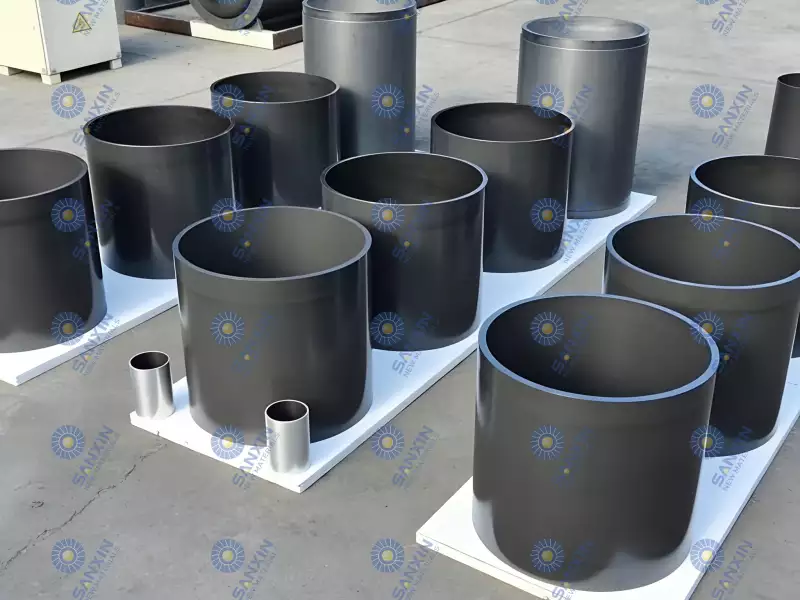

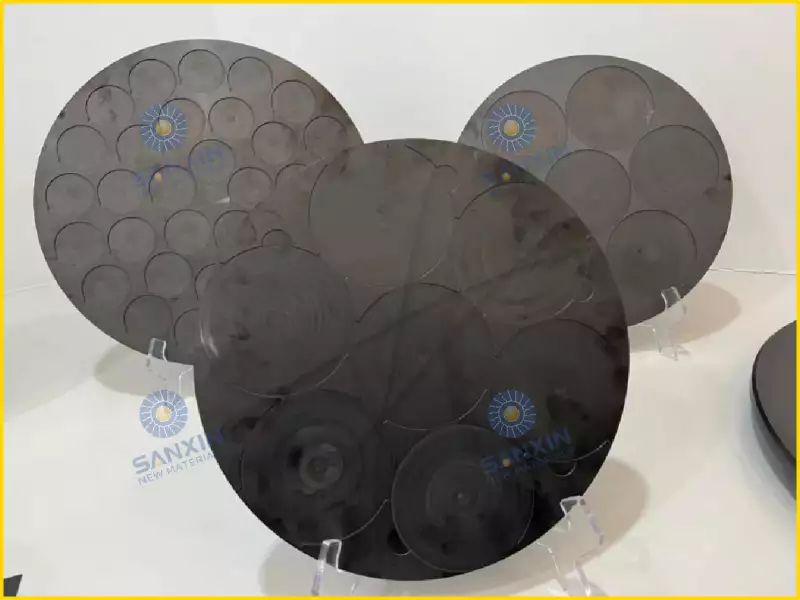
The global semiconductor industry is the backbone of modern technology, powering everything from consumer electronics to AI computing, 5G infrastructure, and electric vehicles. As chip manufacturing processes shrink to 3nm, 2nm, and beyond, the demand for ultra-high-purity, high-performance materials that can withstand extreme manufacturing conditions has never been greater. Silicon Carbide (SiC) ceramics have emerged as irreplaceable core components in semiconductor wafer fabrication, offering unmatched high-temperature resistance, thermal shock stability, chemical inertness, and dimensional precision that traditional materials (alumina, quartz, metals) cannot match.This comprehensive product listing details our full line of SiC core components for semiconductor manufacturing, including cantilevers, shelter plates, single-crystal substrates, and epitaxial wafers. Each product is engineered to meet the strictest requirements of advanced semiconductor processes, ensuring wafer yield, production efficiency, and long-term equipment reliability.
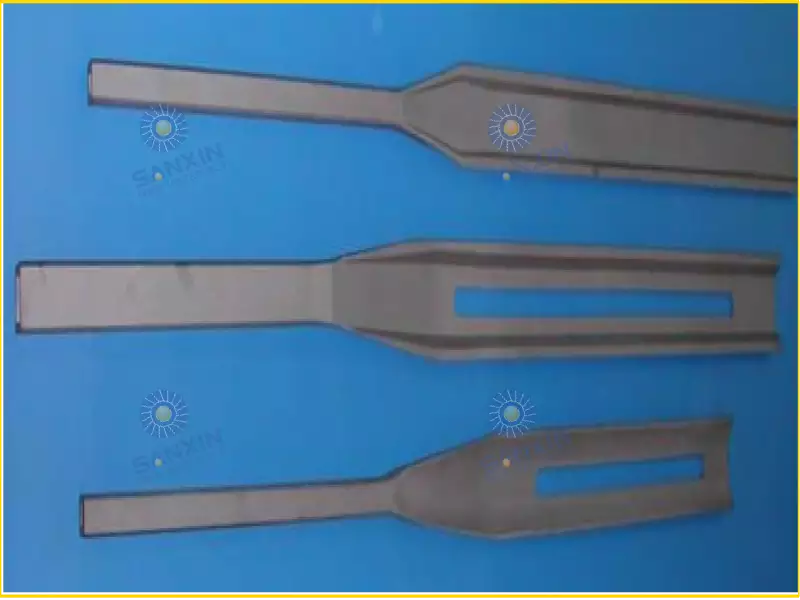
Our SiC cantilevers are precision-engineered load-bearing and conveying components, specifically designed for semiconductor wafer diffusion furnaces, oxidation furnaces, and annealing furnaces. Manufactured from high-purity recrystallized silicon carbide (RSiC) or reaction-bonded silicon carbide (SiSiC), these cantilevers ensure stable, uniform wafer transport in high-temperature processes, directly improving wafer yield and production consistency.
| Parameter | Specification |
|---|---|
| Material | High-purity Recrystallized SiC (RSiC) / Reaction-Bonded SiC (SiSiC) |
| Purity | ≥99.9% (RSiC, ultra-low metal impurities <1ppm) / 90-95% SiC (SiSiC) |
| Temperature Resistance | RSiC: Continuous use up to 1600°C; SiSiC: Continuous use up to 1350°C |
| Thermal Shock Resistance | No cracking under rapid temperature change (≥50°C/min) |
| Flexural Strength | RSiC: 100-200 MPa; SiSiC: 250-500 MPa |
| Dimensional Tolerance | ±0.05mm (length), ±0.02mm (flatness) |
| Surface Roughness | Ra ≤0.4μm (polished finish) |
| Customization | Length (500mm-2000mm), cross-section, slot design fully customizable |
Ultra-High Purity: Our RSiC cantilevers feature ≥99.9% purity with ultra-low metal impurity content, eliminating contamination risks for sensitive semiconductor wafers, a critical requirement for advanced logic and memory chip manufacturing.
Extreme High-Temperature Stability: Withstands continuous operation at 1300-1600°C, maintaining structural integrity and dimensional accuracy without warpage or deformation during long-term furnace use.
Superior Thermal Shock Resistance: The optimized porous structure of RSiC absorbs thermal stress during rapid heating/cooling cycles, preventing cracking and extending service life to 3-5 years (3x longer than quartz cantilevers).
Precision Machining: Each cantilever is precision-ground and polished to ensure a smooth, burr-free surface, eliminating wafer scratching and breakage during transport.
Chemical Inertness: Resistant to all process gases (oxygen, nitrogen, hydrogen, dopant gases) and corrosive media, with no reaction or ion precipitation that could contaminate wafers.
Semiconductor wafer diffusion furnaces (phosphorus/boron diffusion for PN junction formation)
Oxidation and annealing furnaces for wafer thermal processing
Automated wafer handling systems in 8-inch and 12-inch wafer production lines
Advanced packaging and testing processes for high-performance chips
SiC shelter plates (also known as SiC liners, furnace liners, or process plates) are high-performance structural components manufactured via advanced reaction-bonded SiC (SiSiC) technology. Designed as load-bearing platforms for high-temperature semiconductor processes, these plates provide a stable, contamination-free environment for wafer sintering, annealing, and thermal treatment.
| Parameter | Specification |
|---|---|
| Material | High-density Reaction-Bonded SiC (SiSiC) |
| Purity | 92-95% SiC, <5% free silicon, ultra-low metal impurities |
| Temperature Resistance | Continuous use up to 1350°C |
| Hardness (Mohs) | 9.2 (second only to diamond) |
| Flexural Strength | 300-400 MPa |
| Open Porosity | <0.5% (fully dense, non-porous structure) |
| Thermal Conductivity | ~45 W/m·K |
| Customization | Size, thickness, and shape fully customizable to furnace dimensions |
Exceptional Mechanical Strength: The dense SiSiC structure delivers high hardness, wear resistance, and load-bearing capacity, making it ideal for supporting heavy wafer carriers and furnace components.
Outstanding Oxidation and Thermal Shock Resistance: Forms a dense SiO₂ protective layer at high temperatures, preventing oxidation and degradation, while withstanding frequent thermal cycles without cracking.
Uniform Heat Distribution: High thermal conductivity ensures consistent temperature distribution across the plate, eliminating local overheating and ensuring uniform wafer processing.
Long Service Life: 3-5 times longer service life than traditional alumina or metal liners, reducing equipment maintenance costs and production downtime.
Contamination-Free Operation: Chemically inert to all semiconductor process gases, with no impurity release, ensuring wafer purity and chip performance.
High-temperature sintering and annealing processes for semiconductor wafers
Furnace liners and process platforms for diffusion, oxidation, and LPCVD processes
Load-bearing components for vertical and horizontal semiconductor furnaces
Thermal processing platforms for advanced packaging (3D IC, Fan-Out)
SiC single-crystal substrates are the foundational materials for next-generation wide-bandgap semiconductor devices, including power electronics, RF devices, and high-temperature sensors. Our 4H-SiC and 6H-SiC single-crystal substrates are manufactured via the Physical Vapor Transport (PVT) method, with ultra-high purity and precise crystal orientation, serving as the base for epitaxial growth of SiC epitaxial layers.
| Parameter | Specification |
|---|---|
| Crystal Type | 4H-SiC (primary for power devices) / 6H-SiC (for RF devices) |
| Purity | Ultra-high purity, <0.1ppm metal impurities, n-type or semi-insulating |
| Wafer Size | 4-inch, 6-inch, 8-inch (customizable) |
| Crystal Orientation | Off-axis (4° or 8°) for epitaxial growth, on-axis for special applications |
| Thickness | 350μm, 500μm, 650μm (customizable) |
| Surface Roughness | Ra ≤0.1nm (CMP polished, epi-ready finish) |
| TTV (Total Thickness Variation) | <5μm |
| Defect Density | EPD (Etch Pit Density) <100 cm⁻² |
Wide Bandgap Superiority: SiC has a 3.26eV bandgap (3x that of silicon), enabling high-temperature operation (up to 600°C), high breakdown voltage, and low switching loss, making it ideal for next-generation power electronics.
Ultra-High Purity and Crystal Quality: Strict quality control ensures ultra-low defect density and impurity content, critical for high-performance SiC power devices (MOSFETs, diodes) and RF components.
Epi-Ready Surface: Precision CMP polishing delivers an atomically smooth, damage-free surface, ensuring high-quality epitaxial layer growth with uniform thickness and doping.
Thermal Management Excellence: High thermal conductivity (490 W/m·K) enables efficient heat dissipation, critical for high-power density devices in EVs, renewable energy, and data centers.
Scalability: Available in 4-inch to 8-inch sizes, compatible with modern semiconductor manufacturing equipment for mass production.
Substrates for SiC power devices (MOSFETs, IGBTs, Schottky diodes)
RF devices for 5G/6G communication and radar systems
High-temperature sensors and aerospace electronics
Epitaxial growth substrates for SiC-based optoelectronic devices
SiC epitaxial wafers are produced by growing a high-purity SiC epitaxial layer on a SiC single-crystal substrate via Chemical Vapor Deposition (CVD). These wafers are the core materials for manufacturing SiC power semiconductors, offering precise doping control, uniform layer thickness, and defect-free crystal structure.
| Parameter | Specification |
|---|---|
| Substrate | 4H-SiC / 6H-SiC single-crystal substrate (4-inch, 6-inch, 8-inch) |
| Epitaxial Layer Material | n-type 4H-SiC (nitrogen-doped) |
| Layer Thickness | 5μm-100μm (customizable, thickness uniformity <5%) |
| Doping Concentration | 1×10¹⁵ cm⁻³ to 1×10¹⁸ cm⁻³ (customizable, uniformity <5%) |
| Surface Roughness | Ra ≤0.1nm |
| Defect Density | EPD <50 cm⁻², no micropipe defects |
| Carrier Mobility | >1000 cm²/V·s (room temperature) |
Precise Process Control: Advanced CVD technology ensures ultra-uniform epitaxial layer thickness and doping concentration, critical for consistent performance of SiC power devices.
Defect-Free Epitaxial Layer: Strict defect control eliminates micropipes and stacking faults, ensuring high device yield and long-term reliability.
High Carrier Mobility: Optimized epitaxial growth delivers high electron mobility, enabling low on-resistance and high switching speed in SiC power devices.
Compatibility with Silicon Processes: Compatible with modern semiconductor manufacturing equipment, enabling seamless integration into existing production lines.
Tailored Solutions: Customizable layer thickness, doping concentration, and wafer size to meet specific device requirements (e.g., 1200V, 1700V, 3300V power devices).
SiC power MOSFETs and diodes for electric vehicles (EVs), fast chargers, and solar inverters
High-frequency RF devices for 5G base stations and radar
High-temperature power electronics for aerospace and industrial applications
Next-generation power conversion systems for renewable energy and data centers
All our SiC core components share the following industry-leading advantages, making them the optimal choice for advanced semiconductor manufacturing:
Manufactured from high-purity SiC raw materials with strict impurity control, ensuring no metal ion contamination of sensitive semiconductor wafers.
Compliant with SEMI standards for semiconductor manufacturing materials, meeting the requirements of 3nm and below advanced process nodes.
RSiC components withstand continuous operation up to 1600°C, SiSiC up to 1350°C, far exceeding the performance of traditional materials.
Low thermal expansion coefficient (4.0-4.5×10⁻⁶/K), matching the thermal properties of silicon wafers to minimize thermal stress and wafer warpage.
High hardness (Mohs 9.2) and wear resistance ensure long-term dimensional accuracy and minimal wear, even in high-load, high-frequency production environments.
Service life of 3-5 years, 3-5 times longer than traditional alumina, quartz, and metal components, reducing total cost of ownership (TCO).
Inert to all semiconductor process gases, acids, alkalis, and corrosive media, with no chemical reaction or impurity release.
Ideal for harsh process environments, including diffusion, etching, and cleaning processes.
All components are fully customizable in size, shape, and material to match specific furnace models, wafer sizes (8-inch, 12-inch), and process requirements.
Compatible with all major semiconductor equipment brands and automated production lines.
| Material | Recrystallized SiC (RSiC) | Reaction-Bonded SiC (SiSiC) |
|---|---|---|
| Key Properties | High purity, high temperature resistance, thermal shock stability | High strength, low porosity, wear resistance |
| Max Operating Temperature | 1600°C | 1350°C |
| Purity | ≥99.9% (ultra-high purity) | 90-95% SiC (with free silicon) |
| Porosity | 15-25% (controlled open porosity) | <0.5% (fully dense) |
| Flexural Strength | 100-200 MPa | 250-500 MPa |
| Ideal Applications | High-temperature diffusion furnaces, wafer carriers, cantilevers (direct wafer contact) | Shelter plates, furnace liners, structural components (load-bearing, non-direct wafer contact) |
All our SiC components are manufactured under strict ISO 9001 quality management systems, with full traceability from raw material to finished product. We provide comprehensive quality testing, including:
Purity analysis (ICP-MS) for ultra-low metal impurities
Dimensional inspection and surface roughness testing
High-temperature performance and thermal shock testing
Defect density inspection for single-crystal substrates and epitaxial wafers
Compliance with SEMI international standards for semiconductor materials
Silicon Carbide (SiC) ceramics are the foundational materials enabling the next generation of semiconductor manufacturing. From wafer transport in diffusion furnaces to the core substrates for wide-bandgap power devices, our SiC components deliver unmatched performance, purity, and reliability, directly driving improvements in wafer yield, production efficiency, and chip performance.Whether you require high-purity RSiC cantilevers for 12-inch wafer processing, high-strength SiSiC shelter plates for furnace liners, or advanced SiC single-crystal substrates and epitaxial wafers for power semiconductors, we provide customized solutions tailored to your specific manufacturing requirements.
A: RSiC is optimized for ultra-high purity and high-temperature resistance (up to 1600°C), ideal for components in direct contact with wafers (cantilevers, boat racks). SiSiC offers higher mechanical strength and density, perfect for load-bearing structural components (shelter plates, liners) at moderate temperatures (up to 1350°C).
A: SiC’s high purity eliminates contamination, while its thermal stability and low thermal expansion reduce wafer warpage and breakage. The uniform heat distribution ensures consistent process results, directly improving wafer yield by 1-3% in high-volume production.
A: Under normal operating conditions, SiC components have a service life of 3-5 years, 3-5 times longer than traditional quartz or alumina components, significantly reducing maintenance and replacement costs.
A: Yes, we offer 4-inch, 6-inch, 8-inch, and custom-sized SiC substrates and epitaxial wafers, fully compatible with modern 8-inch and 12-inch semiconductor manufacturing equipment.
A: Absolutely. We offer full customization of size, shape, material, and surface finish for all SiC components, tailored to your specific furnace models, wafer sizes, and process requirements.
We will contact you as soon as possible!
Silicon Carbide (SiC) Semiconductor Manufacturing 1/2

Submit your demand,
we will contact you ASAP.

Sanxin New Materials Co., Ltd. focus on producing and selling ceramic beads and parts such as grinding media, blasting beads, bearing ball, structure part, ceramic wear-resistant liners, Nanoparticles Nano Powder


 English
 English
 Russian
 French
 Spanish
 Portuguese
 Arabic