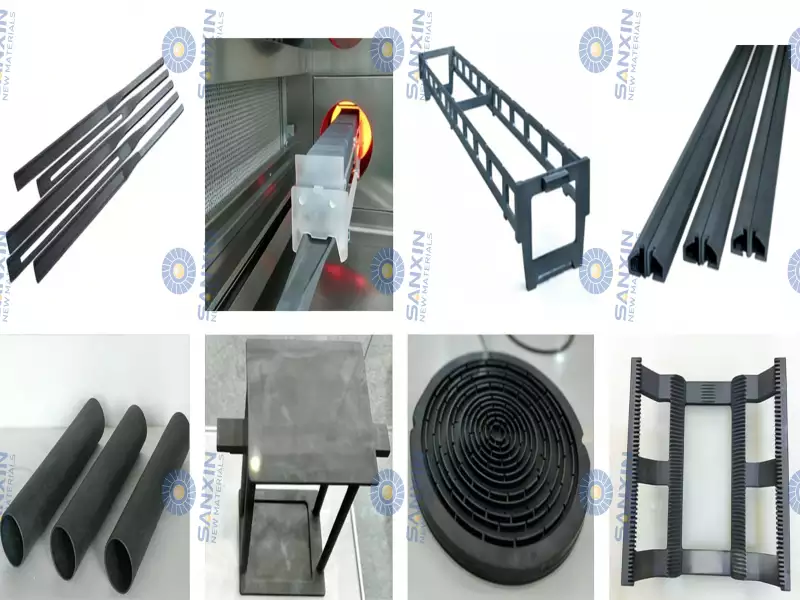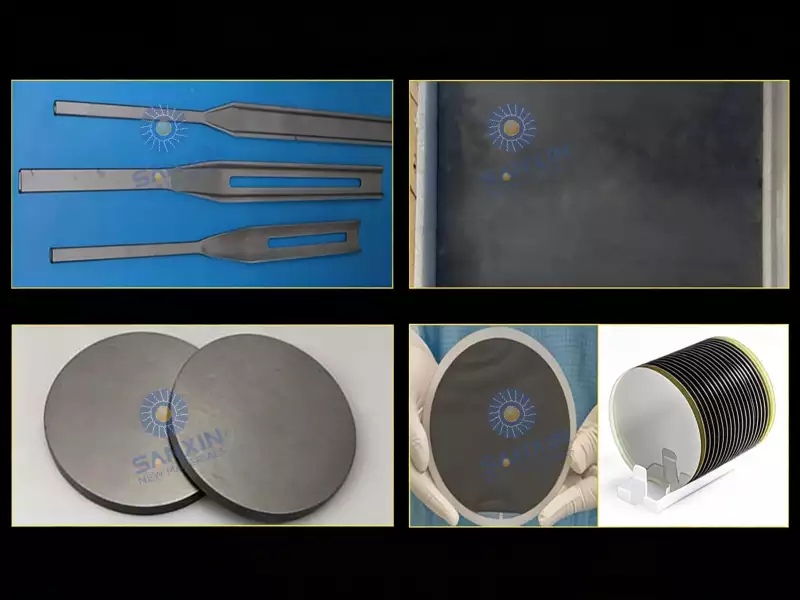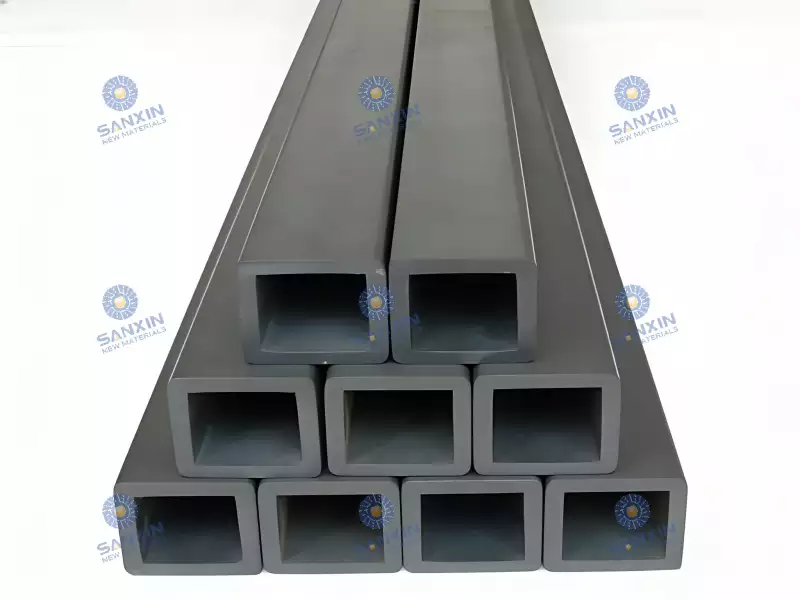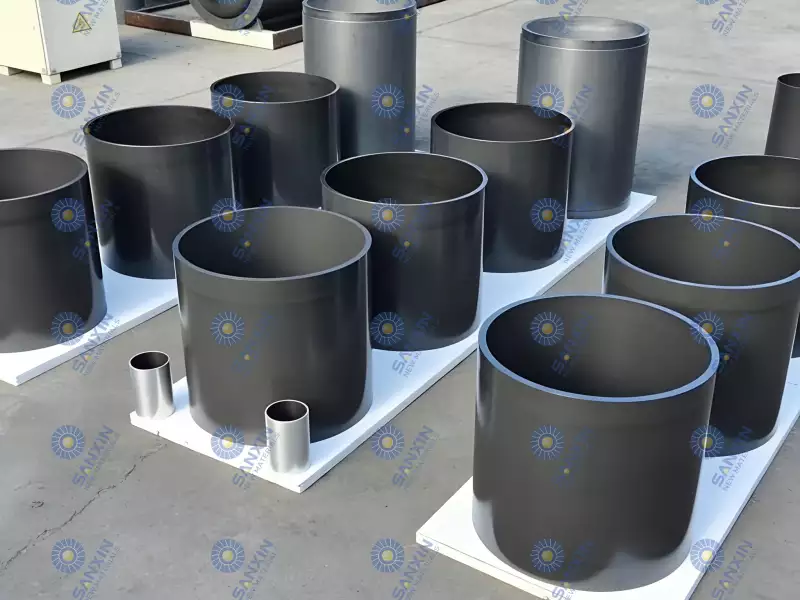

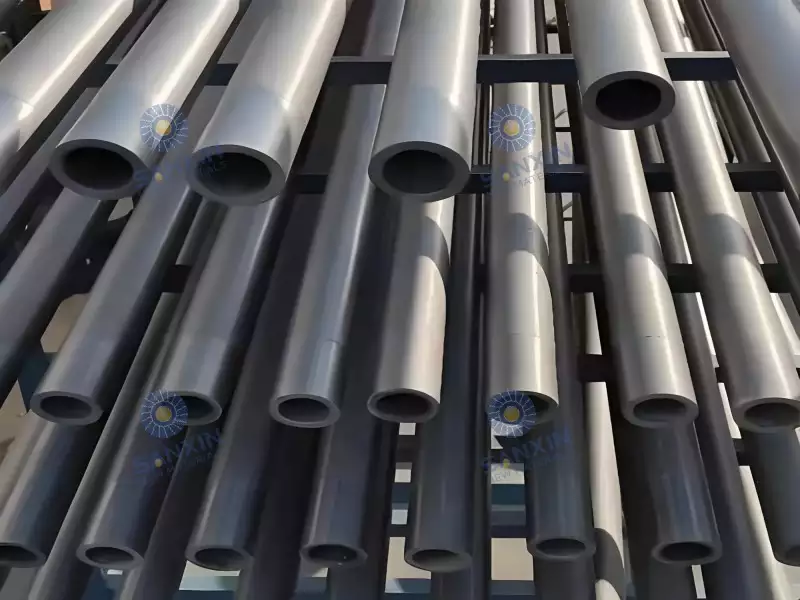
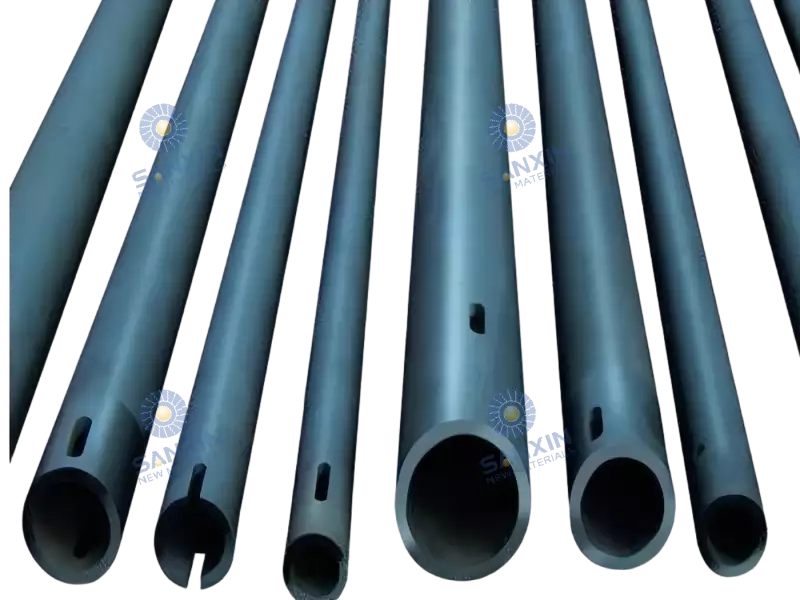
In today’s high-temperature industrial processes, the demand for durable, high-precision, and corrosion-resistant components has never been higher. Silicon Carbide (SiC) Roller Rods (also known as SiC Kiln Rollers, SiC Conveyor Rollers, or SiC Support Rods) have emerged as the gold-standard replacement for traditional alumina ceramic rollers, offering exceptional high-temperature strength, thermal stability, and longevity that far outperform conventional materials.This comprehensive product listing details our full line of SiC roller rods, engineered for extreme industrial environments across lithium battery, ceramic, electrical porcelain, photovoltaic, and semiconductor manufacturing. Each roller is manufactured from premium recrystallized silicon carbide (RSiC) or reaction-bonded silicon carbide (SiSiC), delivering unmatched performance, reliability, and total cost of ownership (TCO) reduction for high-volume production lines.

SiC roller rods are high-performance structural ceramic components designed to support and transport workpieces in high-temperature kilns, furnaces, and conveyor systems. Manufactured via advanced ceramic sintering processes, these rollers combine the exceptional properties of silicon carbide—extreme hardness, high thermal conductivity, and chemical inertness—to deliver reliable performance in the most demanding industrial thermal processing environments.Our SiC rollers are available in two premium material grades, tailored to specific application requirements:
Recrystallized Silicon Carbide (RSiC): Optimized for ultra-high-temperature applications up to 1600°C, with superior thermal shock resistance and thermal conductivity.
Reaction-Bonded Silicon Carbide (SiSiC): Engineered for high mechanical strength and density, ideal for heavy-load applications up to 1380°C.
| Parameter | Recrystallized Silicon Carbide (RSiC) | Reaction-Bonded Silicon Carbide (SiSiC) |
Maximum Operating Temperature | 1250–1600°C (continuous use) | ≤1380°C (continuous use) |
Density | ≥3.02 g/cm³ | ≥2.65 g/cm³ |
Thermal Expansion Coefficient | ~4.5×10⁻⁶ /°C | ~4.2×10⁻⁶ /°C |
Thermal Conductivity | Excellent (≥100 W/m·K) | Good (≥45 W/m·K) |
Flexural Strength (Room Temp) | ≥120 MPa | ≥300 MPa |
Hardness (Mohs) | 9.2 (second only to diamond) | 9.2 |
Porosity | Controlled open porosity (15–20%) | <0.5% (fully dense) |
Chemical Resistance | Excellent oxidation, acid, and alkali resistance | Excellent oxidation, acid, and alkali resistance |
Thermal Shock Resistance | Outstanding (withstands rapid heating/cooling cycles) | Excellent |
Our SiC roller rods are manufactured to strict precision standards, with the following common specifications (fully customizable):
Diameter Range: 34mm, 35mm, 38mm, 40mm, 42.5mm, 45mm, 50mm, 65mm (custom diameters available)
Wall Thickness: Customized to match diameter and load requirements
Maximum Length: Up to 4000mm (4 meters)
Straightness: ≤1.0‰ (per meter, laser-inspected for precision)
Bending Strength: ≥70MPa (100% tested for reliability)
Custom Features: Slotted ends, notches, mounting holes, and special profiles available for specific conveyor systems
SiC roller rods deliver exceptional mechanical strength at elevated temperatures, with zero deformation or sagging under heavy workpiece loads during continuous kiln operation. Unlike alumina rollers, which soften and deform at temperatures above 1200°C, our SiC rollers maintain full structural integrity up to 1600°C, ensuring consistent workpiece alignment and preventing production defects.
The superior hardness, wear resistance, and thermal stability of SiC translate to a service life 10 to 15 times longer than traditional alumina ceramic rollers. This dramatic longevity reduces equipment downtime, maintenance costs, and roller replacement frequency, delivering significant TCO savings for high-volume production lines.
RSiC rollers feature exceptional thermal conductivity, ensuring uniform heat distribution across the kiln environment. This eliminates hot spots and temperature inconsistencies, resulting in more consistent product firing, reduced defect rates, and improved production yield for ceramic, lithium battery, and photovoltaic components.
SiC is inherently chemically inert, with exceptional resistance to oxidation, acids, alkalis, and corrosive process gases. This makes SiC rollers ideal for harsh industrial environments, including roller kilns for ceramic firing, lithium battery sintering, and semiconductor thermal processing, where exposure to corrosive materials is common.
Each SiC roller is precision-machined to meet strict straightness and dimensional tolerance requirements, with 100% laser inspection for straightness and bending strength testing. This ensures smooth, reliable workpiece transport, eliminating jams, misalignment, and product damage in automated conveyor systems.
SiC rollers withstand rapid heating and cooling cycles (thermal shock) without cracking or degrading, making them ideal for roller kilns with fast firing cycles and frequent temperature fluctuations. This is a critical advantage over alumina rollers, which are prone to thermal shock failure in high-cycle production environments.
Our SiC roller rods are engineered for a wide range of high-temperature industrial applications, including:
Roller Kilns for Cathode/Anode Sintering: Support and transport lithium battery electrode sheets during high-temperature sintering processes, ensuring uniform heating and zero contamination.
Battery Cell Processing: Conveyor rollers for high-temperature annealing and drying of lithium-ion battery components, with chemical resistance to battery materials.
Roller Kilns for Ceramic Tiles, Sanitary Ware, and Tableware: The most common application for SiC rollers, supporting ceramic workpieces during high-temperature firing (1200–1400°C) with zero deformation.
Advanced Technical Ceramics: Kiln rollers for firing alumina, zirconia, and other advanced ceramic components, requiring high purity and thermal stability.
High-Voltage Insulator Firing: Support electrical porcelain insulators during high-temperature vitrification, ensuring dimensional stability and no contamination that could compromise electrical performance.
Solar Wafer Sintering & Annealing: High-purity SiC rollers for transporting silicon wafers during high-temperature diffusion, oxidation, and annealing processes, with zero metal ion contamination.
PV Module Production: Conveyor rollers for solar panel lamination and curing processes, requiring high thermal stability and cleanliness.
Wafer Diffusion & Oxidation Furnaces: High-purity RSiC rollers for supporting and transporting semiconductor wafers during high-temperature thermal processing, with ultra-low impurity content to prevent wafer contamination.
Semiconductor Packaging: Conveyor rollers for advanced packaging (3D IC, Fan-Out) thermal processing, requiring precision and cleanliness.
Glass Production: Roller kilns for glass tempering and forming
Powder Metallurgy: Sintering furnaces for metal powder components
Heat Treatment: Conveyor systems for metal heat treatment processes
| Application Requirement | Recrystallized SiC (RSiC) | Reaction-Bonded SiC (SiSiC) |
High-Temperature Operation (>1380°C) | ✅ Ideal | ❌ Not recommended |
Heavy Load Support | ✅ Good | ✅ Excellent |
Thermal Conductivity & Uniform Heating | ✅ Superior | ✅ Good |
Thermal Shock Resistance | ✅ Outstanding | ✅ Excellent |
Ultra-High Purity (Semiconductor/PV) | ✅ Ideal | ✅ Good |
Cost-Effectiveness | Higher initial cost, longer life | Lower initial cost, excellent performance |
Ideal Use Cases | High-temperature ceramic firing, PV/semiconductor processing, fast-firing kilns | Heavy-load ceramic kilns, electrical porcelain firing, general industrial use |
All our SiC roller rods are manufactured under strict ISO 9001 quality management systems, with full traceability from raw material to finished product. We implement a rigorous quality control process, including:
Raw Material Inspection: Verify purity and composition of SiC powder to ensure compliance with material specifications.
Dimensional & Straightness Testing: 100% laser inspection of straightness (≤1.0‰) and dimensional accuracy for every roller.
Mechanical Strength Testing: Each roller undergoes bending strength testing (≥70MPa) to ensure load-bearing reliability.
High-Temperature Performance Testing: Validate thermal stability and deformation resistance at maximum operating temperatures.
Surface Quality Inspection: Check for defects, cracks, and surface finish to ensure smooth operation.
Test Report Issuance: Provide a full inspection data report for every batch of rollers, including straightness, strength, and dimensional results.
Our SiC rollers are fully compliant with international industrial ceramic standards, ensuring reliability and performance for critical manufacturing processes.
We offer full customization of SiC roller rods to match your specific equipment and process requirements, including:
Custom Dimensions: Non-standard diameters, lengths, and wall thicknesses to fit existing kiln and conveyor systems.
Special Features: Slotted ends, notches, mounting holes, keyways, and custom profiles for specific workpiece holding or conveyor drive systems.
Material Grade Selection: RSiC or SiSiC to match your temperature, load, and application requirements.
Surface Finish: Polished or precision-ground surfaces for smooth workpiece transport.
Compatibility: Designed to fit all major brands of roller kilns, conveyor systems, and industrial furnaces, with drop-in replacement for existing alumina rollers.
While SiC roller rods have a higher initial purchase cost than alumina rollers, their 10–15x longer service life delivers dramatic TCO savings over the lifecycle of your production line:
Reduced Downtime: Fewer roller replacements mean less unplanned downtime, increasing production output and efficiency.
Lower Maintenance Costs: Eliminate the labor and material costs of frequent roller replacement and maintenance.
Reduced Defect Rates: Consistent roller performance eliminates workpiece misalignment and temperature inconsistencies, reducing product defects and scrap.
Energy Efficiency: Superior thermal conductivity of RSiC rollers improves kiln heat distribution, reducing energy consumption and operating costs.
For a typical ceramic tile roller kiln operating 24/7, replacing alumina rollers with SiC rollers can reduce annual roller replacement costs by 80–90%, with a full return on investment (ROI) in 6–12 months.
To maximize the performance and service life of your SiC roller rods, follow these best practices:
Proper Installation: Ensure rollers are aligned correctly in the kiln, with uniform support and no excessive stress on the ends.
Load Distribution: Avoid overloading rollers beyond their rated capacity, and ensure even distribution of workpiece weight.
Regular Inspection: Periodically inspect rollers for wear, damage, or misalignment, and replace any damaged rollers immediately to prevent production issues.
Cleaning: Clean rollers regularly to remove buildup of kiln dust, glaze, or process materials, which can cause uneven wear and misalignment.
Temperature Ramp-Up/Cool-Down: Follow proper kiln temperature ramp-up and cool-down procedures to minimize thermal shock and extend roller life.
A: SiC roller rods have a service life 10 to 15 times longer than traditional alumina ceramic rollers. For example, an alumina roller that lasts 3–6 months in a ceramic kiln will be replaced by a SiC roller that lasts 3–5 years.
A: Yes, our SiC rollers are fully customizable to match the exact dimensions and mounting requirements of your existing alumina rollers, enabling a seamless drop-in replacement with no modifications to your kiln or conveyor system.
A: We can manufacture SiC roller rods up to 4000mm (4 meters) in length, with custom lengths available for specific kiln requirements.
A: Absolutely. Our high-purity RSiC rollers are manufactured with ultra-low metal impurity content (<1ppm), making them ideal for semiconductor wafer processing and photovoltaic solar cell manufacturing, where contamination control is critical.
A: All our SiC rollers have a straightness tolerance of ≤1.0‰ per meter, with 100% laser inspection and a full test report provided for every roller.
A: Yes, we offer full customization, including slotted ends, notches, mounting holes, custom profiles, and non-standard dimensions, to match your specific conveyor system and workpiece requirements.
Silicon Carbide (SiC) Roller Rods are the ultimate high-performance solution for high-temperature industrial conveyor systems, delivering unmatched strength, durability, and thermal stability compared to traditional alumina rollers. Whether you require RSiC rollers for ultra-high-temperature semiconductor processing or SiSiC rollers for heavy-load ceramic kilns, our custom-engineered SiC rollers deliver significant improvements in production efficiency, yield, and total cost of ownership.With 10–15x longer service life, zero deformation at high temperatures, and exceptional chemical resistance, our SiC rollers are the ideal choice for modern industrial manufacturing, from lithium battery and ceramic production to photovoltaic and semiconductor processing.
We will contact you as soon as possible!
Silicon Carbide (SiC) Roller Rods

Submit your demand,
we will contact you ASAP.

Sanxin New Materials Co., Ltd. focus on producing and selling ceramic beads and parts such as grinding media, blasting beads, bearing ball, structure part, ceramic wear-resistant liners, Nanoparticles Nano Powder


 English
 English
 Russian
 French
 Spanish
 Portuguese
 Arabic